UNICEF Flags Rising Risks Facing Children, shifts focus to-systems
UNICEF Country Representative Dr Robin Nandy has warned that children across Uganda continue to face multiple and overlapping risks, including poverty, teenage pregnancy, malnutrition and disease outbreaks such as Ebola. The warning came during the unveiling of a new five-year Country Programme for Uganda (2026–2030), which places child protection, nutrition, education, climate resilience and social […] The post UNICEF Flags Rising Risks Facing Children, shifts focus to-systems appeared first on Daily Star.
 Black News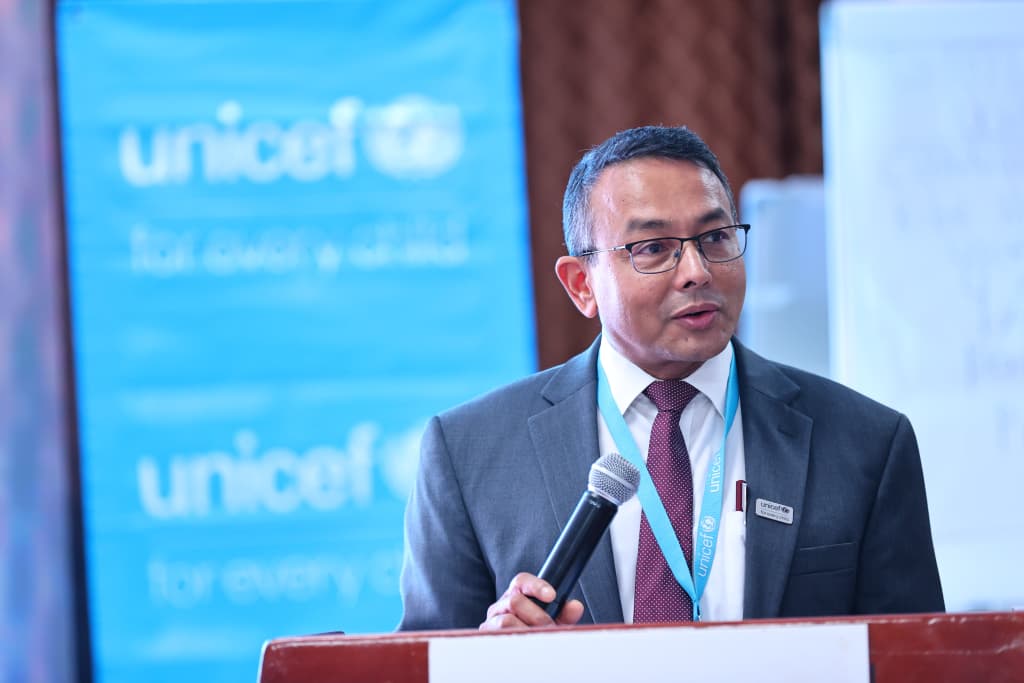
UNICEF Country Representative Dr Robin Nandy has warned that children across Uganda continue to face multiple and overlapping risks, including poverty, teenage pregnancy, malnutrition and disease outbreaks such as Ebola.
The warning came during the unveiling of a new five-year Country Programme for Uganda (2026–2030), which places child protection, nutrition, education, climate resilience and social protection at the centre of its agenda amid growing concern over risks facing millions of children.
The strategy, launched at UNICEF Uganda headquarters in Mbuya, was developed jointly with the government and signals a shift from short-term interventions to strengthening national systems capable of delivering sustainable services at scale.
“Children in Uganda are facing multiple risks,” Nandy said. “They face health challenges, communicable diseases, climate shocks and poverty. Many are pushed out of school into labour, while girls remain at risk of teenage pregnancy and early marriage.”
He noted that Uganda’s youthful population presents both an opportunity and a major development responsibility, requiring sustained investment in child-focused services.
The new programme will focus on strengthening systems across key sectors including health, education, gender and justice, rather than implementing isolated projects.
“We are not here to replace government systems or financing,” Nandy said. “Our role is catalytic — supporting policy reform, testing innovations and strengthening systems so that government can deliver services more effectively.”
UNICEF identified teenage pregnancy and malnutrition as some of the most pressing challenges affecting children.
Nandy described teenage pregnancy as a complex social and economic issue with long-term consequences for girls’ education and wellbeing.
“When girls become pregnant, many drop out of school and rarely return,” he said, emphasising that keeping girls in school remains one of the most effective interventions.
“Keeping girls in school is a win-win. It improves education outcomes and significantly reduces exposure to early pregnancy.”
On nutrition, he noted that Uganda’s malnutrition burden is driven less by food shortages and more by poor feeding practices.
“There is no shortage of food in Uganda. The challenge is dietary diversity and household feeding practices,” he said.
UNICEF’s child protection approach will operate at household, community and systems level, including promoting positive parenting, addressing harmful cultural practices and strengthening policy frameworks.
The agency also highlighted the national child helpline, SAUTI 116, as a key reporting and support platform for children facing abuse.
On health emergencies, UNICEF said it is working closely with the Ministry of Health and partners to strengthen Ebola preparedness and response.
Nandy said the agency is leading efforts in risk communication, community engagement, water, sanitation and hygiene (WASH), as well as infection prevention and control.
“Community engagement is critical because early detection and behaviour change are key to controlling outbreaks,” he said.
Authorities have prioritised 37 high-risk districts, particularly along Uganda’s border with the Democratic Republic of Congo, where population movement heightens transmission risks.
Nandy cautioned against misinformation, noting that Ebola is transmitted through direct contact with bodily fluids, not through airborne spread.
UNICEF also raised concerns over declining global development funding, revealing that its Uganda office reduced staff by about 25 percent in 2025 due to shrinking donor support.
“Most traditional donors have reduced development financing as priorities shift,” he said, adding that investment in children remains critical for long-term economic growth.
“You cannot achieve sustainable economic development without investing in human capital.”
The agency called for increased private sector involvement, particularly in education and skills development to prepare Uganda’s future workforce.
UNICEF Chief of Communication, Advocacy and Partnerships Yves Willemot said the programme is structured around five key pillars: health and nutrition, water and climate resilience, education and skills development, child protection and justice, and social protection and data systems.
“This is a jointly agreed programme with government,” Willemot said. “Our focus is on building systems that ensure every child can access essential services.”
He noted that UNICEF has operated in Uganda since 1960 and remains committed to supporting long-term development.
As implementation begins, officials said Uganda’s development trajectory will depend heavily on how effectively it invests in its children.
“The future of Uganda depends on how well we invest in children today,” Nandy said.
The post UNICEF Flags Rising Risks Facing Children, shifts focus to-systems appeared first on Daily Star.