Why investors are pouring billions into Nigeria's gas transport revolution
Nigeria's drive to expand compressed natural gas (CNG) infrastructure received a boost on Friday, May 29, 2026, with the commissioning of a high-capacity daughter booster station in Abuja, as government officials and industry stakeholders argued that private-sector investment is accelerating the country's shift away from petrol and diesel.
 Black News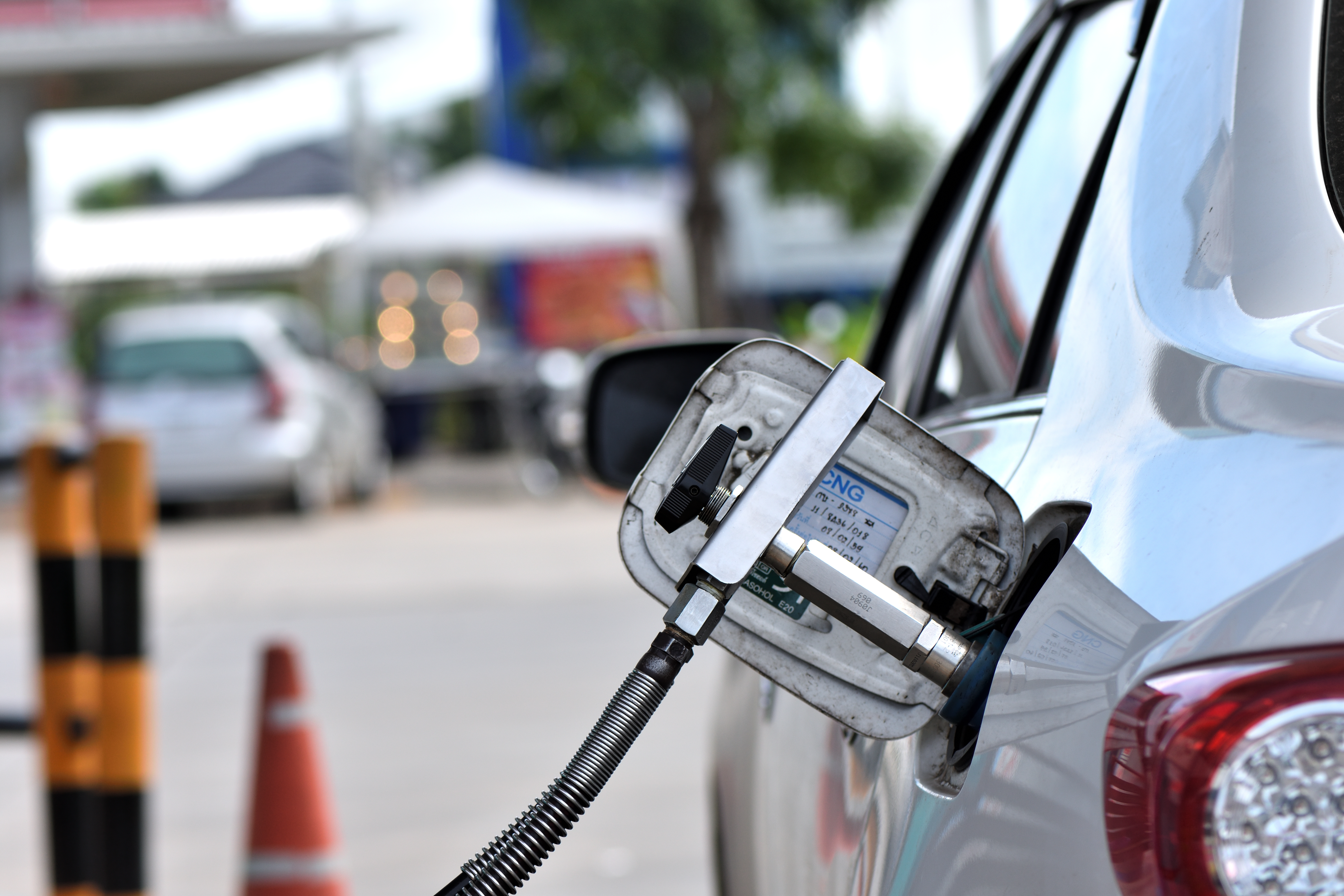
![Filling CNG fuel tank at a gas station. [Stock Photo/Getty Images]](https://ocdn.eu/pulscms/MDA_/fabe398bdf34c6b83095e285b4881929.jpg)
Nigeria's drive to expand compressed natural gas (CNG) infrastructure received a boost on Friday, May 29, 2026, with the commissioning of a high-capacity daughter booster station in Abuja, as government officials and industry stakeholders argued that private-sector investment is accelerating the country's shift away from petrol and diesel.
- Nigeria has commissioned a high-capacity CNG booster station in Abuja as part of efforts to accelerate gas adoption in transportation and industry.
- The facility can refuel up to 1,000 vehicles daily and forms part of a broader network of gas infrastructure investments backed by public and private capital.
- Officials say more than $2 billion in private-sector funding has flowed into Nigeria’s emerging CNG ecosystem, alongside substantial government support.
- However, infrastructure gaps, distribution challenges, financing needs, and consumer adoption remain critical hurdles to achieving nationwide gas penetration.
The facility, developed by Rolling Energy in partnership with the Midstream and Downstream Gas Infrastructure Fund (MDGIF), is one of four gas infrastructure projects commissioned nationwide under the government's broader gas expansion programme.
According to project details released, the station is equipped with a 1,000 standard cubic metre per hour compressor, 17,000 SCM of tube-skid storage capacity, ultra-fast dispensers, an on-site vehicle conversion centre, and the ability to serve up to 1,000 vehicles daily.
The project comes as Nigeria seeks to expand domestic gas utilisation following the removal of petrol subsidies and rising transportation costs, while positioning natural gas as a transition fuel within its long-term energy strategy.
Representing President Bola Tinubu at the commissioning, Minister of State for Petroleum Resources (Gas), Ekperikpe Ekpo, described the facility as part of efforts to strengthen Nigeria's gas value chain and support the Presidential Initiative on Compressed Natural Gas (Pi-CNG). He said the project forms part of a broader group of MDGIF-backed investments being commissioned across the country.
The development highlights the government's increasing reliance on gas to address energy affordability challenges while reducing pressure on imported fuels. Nigeria possesses an estimated 215 trillion cubic feet of proven gas reserves, yet domestic utilisation remains relatively low compared with its resource base. Government officials argue that expanding refuelling and distribution infrastructure is critical to unlocking wider adoption of CNG across the transport and industrial sectors.
Investment Drives Gas Adoption
Speaking to pressmen on the sidelines of the event, Ismaeel Ahmed, Executive Chairman and Chief Executive Officer of the Presidential Initiative on Compressed Natural Gas and Electric Vehicles, said more than $2 billion in private-sector capital has already been committed to Nigeria's gas mobility ecosystem, alongside over N400 billion in public investment.
"It can't be political optics. When the private sector has invested $2 billion and counting of its own funding, then it cannot be a joke," Ahmed said.
He acknowledged that infrastructure deployment remains one of the programme's biggest challenges, citing the cost of building mother stations, transmission networks, compression facilities, and refuelling stations across a country of more than 220 million people.
According to Ahmed, Nigeria has expanded from just two CNG refuelling stations before 2023 to 78 stations and 31 mother stations in less than three years. He described the pace of adoption as one of the fastest globally, although he cautioned that nationwide coverage would require sustained investment and patience.
"We are hoping that within the next two to three years, we are going to move astronomically to gas and electric vehicles," he said.
The Abuja facility also underscores the growing role of blended public-private financing in Nigeria's energy transition efforts.
Dr Hussaini Basaka, Director of Project Management at MDGIF, told pressmen that the fund has invested in 31 gas infrastructure projects comprising 125 separate assets nationwide, including flare commercialisation projects, LNG facilities, LPG storage infrastructure, mother stations, and daughter stations.
For the Rolling Energy project, Basaka said MDGIF holds a 45% stake and has supported a wider network that includes three mother stations, seven daughter stations and eight LNG loading facilities.
"So far, we have invested in 31 gas infrastructure projects made up of 125 gas infrastructures," he said, adding that several additional projects remain under construction.
Challenges to Nationwide Expansion
Despite the optimism, questions remain about the scale of investment required to achieve nationwide adoption. Analysts have consistently pointed to infrastructure gaps, financing constraints, distribution bottlenecks and public awareness challenges as potential obstacles to large-scale migration from petrol-powered transport.
The geographical mismatch between gas production in southern Nigeria and major population centres in the north also presents logistical challenges that will require continued investment in transportation and distribution networks.
Still, the commissioning of the Abuja station signals growing investor confidence in Nigeria's gas sector, as policymakers increasingly promote natural gas as a bridge fuel to support industrialisation, reduce transport costs, and improve energy security.
Whether those ambitions translate into mass adoption will depend less on commissioning ceremonies and more on the speed at which infrastructure, affordability and consumer confidence converge over the coming years.