Why is President Museveni quiet while his son shuts down Nation Media Group’s operations in Uganda?
By Evarist Chahali Muhoozi Kainerugaba says his father has blessed the move. But did he? On the night of 27 June 2026, General Muhoozi Kainerugaba, the Ugandan Chief of Defense Forces and son of President Yoweri Museveni, ordered the military closure of Nation Media Group’s outlets in the country. It should be taken into account […]
 Black News

By Evarist Chahali
Muhoozi Kainerugaba says his father has blessed the move. But did he?
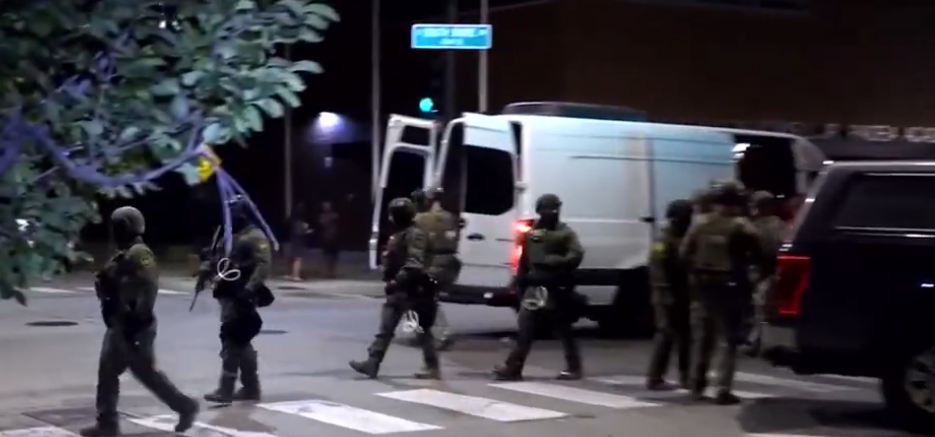
On the night of 27 June 2026, General Muhoozi Kainerugaba, the Ugandan Chief of Defense Forces and son of President Yoweri Museveni, ordered the military closure of Nation Media Group’s outlets in the country.
It should be taken into account that, Muhoozi Kainerugaba, who was born in Tanzania, has been boasting of succeeding his father at the State House.
His order affected the Nation TV (NTV) Uganda, Spark TV, KFM, Dembe FM, and the Daily Monitor newspaper.
They were taken off air and out of print without legal instrument, regulatory order, or formal government statement.
On the same day, Odrek Rwabwogo, Museveni’s son-in-law and Chairman of the Presidential Advisory Committee on Exports and Industrial Development (PACEID), published a video address cataloguing what he described as three existential threats to Uganda: weak execution, elite disunity, and the degradation of public leadership.
Both events occurred as Muhoozi formalized a restructuring of the Patriotic League of Uganda (PLU).
The General appointed Daudi Kabanda as Head of the PLU Chairman’s Office, a newly created coordination role, two weeks after removing him as Secretary General.
The National Media Group is now owned by Tanzanian billionaire Rostam Aziz, who acquired a controlling 54.08 percent stake in March 2026.
Uganda is not the only East African country fearing free media, across the country’s southern border in Tanzania, Twitter, now called ‘X’ remains banned by the government.
The NMG closure: what happened and what preceded it
Muhoozi announced the NMG closure through his personal X account, stating that President Museveni had approved the plan and that the outlets would remain closed until when he grants them his personal permission.
Armed security personnel were deployed at NMG’s Namuwongo headquarters and at Kampala Serena Hotel before midnight on 27 June, blocking staff from entering or leaving.
NTV Uganda and Spark TV went dark at approximately 5:00am on 28 June. At time of writing, neither the Uganda People’s Defense Forces, the Uganda Police Force, nor the Uganda Communications Commission had issued any formal statement citing a legal basis for the deployment.
This is not the first time that the Nation Media Group in Uganda has been subjected to state coercion.
In May 2013, police raided the Daily Monitor after the newspaper published a letter alleging the existence of a plan to position Muhoozi as Museveni’s successor.
The premises were sealed for more than a week.
In 2007, NTV Uganda was forced off air months after its launch.
The 2026 operation differs from both predecessors in one material respect: it was ordered explicitly in Muhoozi’s name, not in the name of the state, and was justified by Muhoozi’s personal displeasure with coverage rather than any stated regulatory violation.
What that distinction reveals about the current distribution of power in Uganda, and what the simultaneous Rwabwogo intervention and PLU restructuring signal about the pace of succession consolidation, is the subject of this assessment.