Why Men’s Mental Health Is Declining In Silence As Emotional Distress Takes Less Visible Forms
For years, society has laughed off the warning signs. We make memes about men punching drywall instead of going to therapy. We joke about “bro culture”, emotionally unavailable boyfriends and […]
 Black News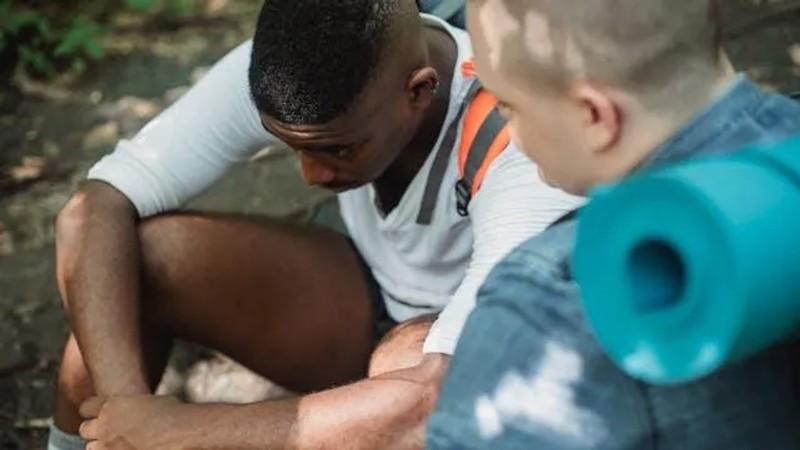
For years, society has laughed off the warning signs.
We make memes about men punching drywall instead of going to therapy. We joke about “bro culture”, emotionally unavailable boyfriends and fathers whose deepest expression of love is checking the oil in your car.
We watch men quietly disappear into alcohol, workaholism, sports betting apps, porn addiction or icy silence whenever life gets heavy.
But beneath the internet commentary and podcast gender wars, psychiatrists are issuing an urgent warning: a dark, silent crisis is unfolding in plain sight. Men are drowning emotionally but because their symptoms do not look like traditional depression, we are completely missing the flares.

The misconception: Depression is not always “soft”
The biggest flaw in how we view mental health is expecting male depression to look visible and soft. We expect tears, staying in bed all day or open conversations about sadness.
According to Dr Gagu Matsebula of the South African Society of Psychiatrists (SASOP), the standard tools used to diagnose anxiety and depression often fail men because they don’t account for how male distress actually presents.
Men are socialised to externalise or aggressively mask pain. When a man’s mental health declines, it rarely looks like sadness.
It looks like this:
Rage and irritability: Snapping over minor inconveniences because internal pressure has nowhere else to go.
Hyper-independence: Pushing everyone away with a defiant “I can handle it myself.”
The “tired” mask: Saying “I’m just tired” when the psychological reality is “I am completely overwhelmed.”
Escapism: Working 16-hour days, obsessing over gym metrics or doom-scrolling social media at 2 am to avoid an empty room.

The cultural gridlock: Indoda Ayikhali meets hustle culture
Today’s Gen Z and Millennial men are caught in an emotional contradiction.
On one side, the internet tells them to be vulnerable and open up. On the other side, traditional scripts still dictate that weakness is unsafe.
In South Africa, this is anchored deeply in phrases like indoda ayikhali (men don’t cry). From a young age, men are taught that vulnerability is a liability. This results in what Dr Matsebula calls restrictive emotionality, a survival mechanism where men suppress their feelings because showing them feels socially dangerous.
Compounding this is an aggressive online landscape. Young men are constantly bombarded with content about financial success, hyper-masculinity, dating failures and the pressure to provide.
They are told they are only valued if they are successful, leaving them mentally stranded when they face ordinary financial pressures or loneliness.
We often blame men for not having the vocabulary for their pain, but we rarely give them the words. If you are struggling, you do not need to adopt language that feels unnatural to you.
The ally playbook: How to step in shoulder-to-shoulder
If you are a partner, friend, or parent trying to support a man who is pulling away, drop the traditional interrogation tactics. Eye-to-eye, heavy conversations over a dinner table can feel like an audit, triggering defensiveness.
Men communicate best shoulder-to-shoulder.
Change the environment: Talk while driving, walking, lifting weights or fixing something. When eye contact is optional, defensive adrenaline drops.
Leverage his utility: Do not ask, “How are your feelings?” Instead, ask for his help or advice on a minor problem. Re-engaging his sense of competence lowers his guard, making it safer for him to naturally mention that he is struggling.
Listen without fixing: When he finally speaks, do not immediately offer solutions unless he asks for them. Sometimes the most powerful support is simply validating the weight: “That sounds like a heavy load to carry alone.” “I’ve got your back.”
The daily recalibration: micro-actions for survival
Overcoming emotional numbness does not require an immediate, massive lifestyle overhaul. It requires small, low-friction habits that build psychological resilience over time:
Protect the basics: Chronic sleep deprivation mimics clinical depression. Prioritise a consistent sleep routine and basic physical activity to help flush cortisol from your system.
Audit your inputs: If your social media feed leaves you feeling angry, inadequate or resentful after 20 minutes, mute the accounts driving the hustle-culture panic.
Build one high-trust bridge: you do not need a massive support group. You need one friend with whom you can drop the performance entirely.
Untreated mental health struggles cost our economy billions but the human cost of lives cut short, fractured families and silent suffering is immeasurable.
Real progress begins when we strip away the stigma and recognise that allowing men to be fully human isn’t weakness; it is a prerequisite for survival.
Emergency Support: If you or someone you know is struggling emotionally, you do not have to carry it by yourself. Contact SADAG’s Suicide Crisis Helpline on 0800 567 567 or SMS 31393 for free, confidential support from a counsellor who understands.








.png?h=c12e0b96&itok=5DLPGmQb#)