A Public Memorandum To Paul Kagame: You Stand Out Among Other Shameless Corrupt African Leaders
By Dr. Theogene Rudasingwa Photos: Wikimedia Commons The following document was written by former Rwandan Ambassador Dr. Theogene Rudasingwa to Rwanda’s President Paul Kagame. Paul Kagame, Two decades ago, I wrote to you resigning from the Government of Rwanda and the Rwandese Patriotic Front and asking that I be discharged from my responsibilities as Major in the Rwanda Defence Forces. In that letter, dated 4 April 2005, I reminded you that fourteen years earlier, when our country was at dangerous crossroads, I had voluntarily joined other young Rwandans who believed that Rwanda could be reborn as a just nation. I thanked you for the opportunity to serve Rwanda. I expressed my enduring pledge that never through me would Rwanda come to harm. I also stated clearly that I had reached another personal crossroads. My new calling, I wrote then, was to serve God, pursue academic work, and advocate globally for peace and prosperity. I further stated that I did not intend, then or in the future, to undertake political or government responsibilities. I asked only to be allowed to live as a free private citizen of Rwanda. I begin there because truth matters. Memory matters. Words written or spoken in moments of decision matter, for better or for worse. I write to you now as Rwanda marks two sacred dates in our national calendar: Independence Day on 1 July 2026, and Liberation Day on 4 July 2026. These are official public holidays of the Republic of Rwanda. These should not be taken lightly as mere ceremonial dates on which we raise flags, sing the national anthem, and proclaim victory. They raise unavoidable questions: What is independence without freedom? What is liberation without truth? What is sovereignty without justice? What is national unity without healing? A few days ago, at the Unity Club meeting in Kigali, in an hour-long haranguing monotone interspersed with fake applause, you spoke again about Rwanda’s history, memory, ideology, foreign influence, division, and the dangers you believe threaten the nation. The official excerpt of your remarks says that bad outcomes come from bad ideas, and that young Rwandans who study abroad may return having absorbed ideas that take them away from who they are. In the same setting, you named Kayumba Nyamwasa, Patrick Karegeya (whom you killed), un-named business-people and me as former officials whom you said foreign actors convinced could one day become president of Rwanda. I was not surprised by the familiar contents of your speech. I have heard these themes before: bad and contested history, memory, roles in history, political ideology, foreigners, red lines, bad education, historical revisionism, dehumanization of Africa, religion covering lies, the need for truth-telling, and the healing of the soul and society. These words are important if they express a genuine expression of a desire to seek a diagnosis and treatment of a whole-of-society cyclical tragedy of suffering, guilt, shame and death. But in your speech, they came across not as an invitation to national healing, but as another instrument of accusation, control, and fear. Most troubling, as I heard your message that essentially amounts to a hate speech, was the implication that the Hutu community remains collectively suspect: perpetrators by identity, culpable even in silence, morally indebted forever. Let me be clear. The genocide against the Tutsi was real, evil, and must never be denied or minimized. Yet this is not the whole truth about Rwanda’s tragic and convoluted history that as citizens, and especially leaders, are summoned to confront. You, Paul Kagame and those you command, still have a lot of accounting to do for killing three African Presidents (Juvenal Habyarimana, Cyprian Ntaryamira, and Laurent Kabila), war crimes, crimes against humanity, and even acts of genocide against Hutu in Rwanda and the Democratic Republic of Congo. Authentic unity, justice and reconciliation demand that all perpetrators must be held accountable. All victims must be remembered. All survivors must be honored. A wounded nation cannot be healed by assigning selective and permanent collective guilt to an entire community. No people can flourish under inherited accusation. No child should be born already condemned by history. You have often presented yourself as Rwanda’s liberator. At this stage in our history, the higher calling is no longer to be commander, accuser, prosecutor, or guardian of fear. The higher calling is to become what Rwanda urgently needs: a wounded healer, a Healer in Chief, one who leads a wounded nation from fear to truth, from accusation to responsibility, from silence to mourning, from domination to dignity, and from survival to shared flourishing. But the condition of the nation cannot be measured by an economy dominated by your family, GDP, roads, conferences, Kigali’s high rise buildings, or diplomatic branding alone. A nation is primarily meas
 Black News
By Dr. Theogene Rudasingwa
Photos: Wikimedia Commons
The following document was written by former Rwandan Ambassador Dr. Theogene Rudasingwa to Rwanda’s President Paul Kagame.
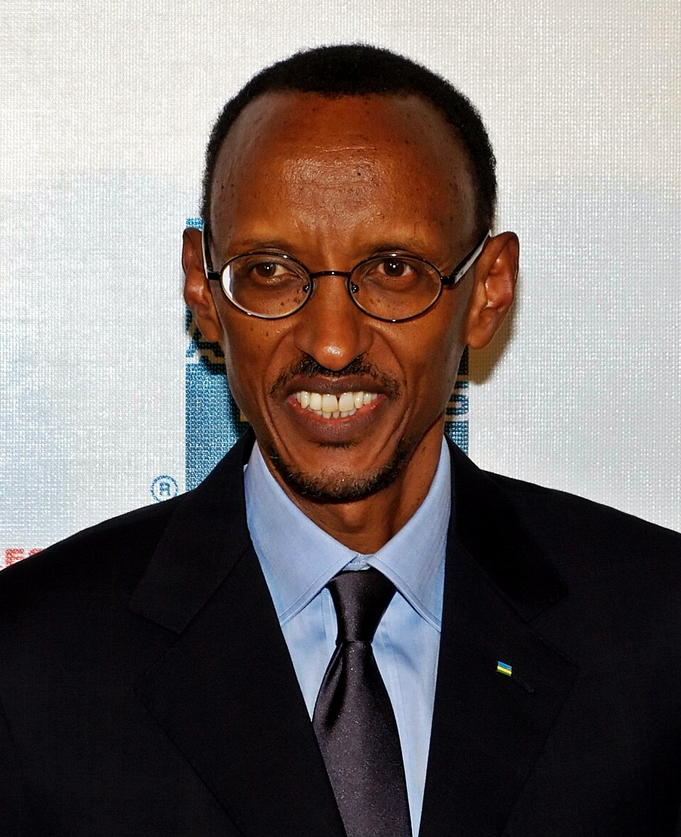
Paul Kagame,
Two decades ago, I wrote to you resigning from the Government of Rwanda and the Rwandese Patriotic Front and asking that I be discharged from my responsibilities as Major in the Rwanda Defence Forces.
In that letter, dated 4 April 2005, I reminded you that fourteen years earlier, when our country was at dangerous crossroads, I had voluntarily joined other young Rwandans who believed that Rwanda could be reborn as a just nation. I thanked you for the opportunity to serve Rwanda. I expressed my enduring pledge that never through me would Rwanda come to harm. I also stated clearly that I had reached another personal crossroads. My new calling, I wrote then, was to serve God, pursue academic work, and advocate globally for peace and prosperity. I further stated that I did not intend, then or in the future, to undertake political or government responsibilities. I asked only to be allowed to live as a free private citizen of Rwanda.
I begin there because truth matters. Memory matters. Words written or spoken in moments of decision matter, for better or for worse.
I write to you now as Rwanda marks two sacred dates in our national calendar: Independence Day on 1 July 2026, and Liberation Day on 4 July 2026. These are official public holidays of the Republic of Rwanda. These should not be taken lightly as mere ceremonial dates on which we raise flags, sing the national anthem, and proclaim victory. They raise unavoidable questions: What is independence without freedom? What is liberation without truth? What is sovereignty without justice? What is national unity without healing?
A few days ago, at the Unity Club meeting in Kigali, in an hour-long haranguing monotone interspersed with fake applause, you spoke again about Rwanda’s history, memory, ideology, foreign influence, division, and the dangers you believe threaten the nation. The official excerpt of your remarks says that bad outcomes come from bad ideas, and that young Rwandans who study abroad may return having absorbed ideas that take them away from who they are. In the same setting, you named Kayumba Nyamwasa, Patrick Karegeya (whom you killed), un-named business-people and me as former officials whom you said foreign actors convinced could one day become president of Rwanda.
I was not surprised by the familiar contents of your speech. I have heard these themes before: bad and contested history, memory, roles in history, political ideology, foreigners, red lines, bad education, historical revisionism, dehumanization of Africa, religion covering lies, the need for truth-telling, and the healing of the soul and society. These words are important if they express a genuine expression of a desire to seek a diagnosis and treatment of a whole-of-society cyclical tragedy of suffering, guilt, shame and death. But in your speech, they came across not as an invitation to national healing, but as another instrument of accusation, control, and fear.
Most troubling, as I heard your message that essentially amounts to a hate speech, was the implication that the Hutu community remains collectively suspect: perpetrators by identity, culpable even in silence, morally indebted forever. Let me be clear. The genocide against the Tutsi was real, evil, and must never be denied or minimized. Yet this is not the whole truth about Rwanda’s tragic and convoluted history that as citizens, and especially leaders, are summoned to confront. You, Paul Kagame and those you command, still have a lot of accounting to do for killing three African Presidents (Juvenal Habyarimana, Cyprian Ntaryamira, and Laurent Kabila), war crimes, crimes against humanity, and even acts of genocide against Hutu in Rwanda and the Democratic Republic of Congo. Authentic unity, justice and reconciliation demand that all perpetrators must be held accountable. All victims must be remembered. All survivors must be honored. A wounded nation cannot be healed by assigning selective and permanent collective guilt to an entire community. No people can flourish under inherited accusation. No child should be born already condemned by history.
You have often presented yourself as Rwanda’s liberator. At this stage in our history, the higher calling is no longer to be commander, accuser, prosecutor, or guardian of fear. The higher calling is to become what Rwanda urgently needs: a wounded healer, a Healer in Chief, one who leads a wounded nation from fear to truth, from accusation to responsibility, from silence to mourning, from domination to dignity, and from survival to shared flourishing.
But the condition of the nation cannot be measured by an economy dominated by your family, GDP, roads, conferences, Kigali’s high rise buildings, or diplomatic branding alone. A nation is primarily measured by the level of welfare of ordinary citizens, who speak without fear, organize without being crushed, return from exile without danger, mourn without permission, and disagree without being branded enemies who have crossed your “red lines”- and therefore must be imprisoned, disappeared, killed, forced to become refugees, or forced into armed rebellion as a last desperate measure.
Freedom House’s 2026 report rates Rwanda “Not Free,” with a score of 21 out of 100, and states that although the RPF government has maintained stability and economic growth, it continues to suppress dissent through surveillance, intimidation, arbitrary detention, torture, and renditions or suspected assassinations of exiled dissidents. Reuters reported that you were re-elected in 2024 with 99.18% of the vote, in an election in which critics noted restrictions on journalists, opposition, and civil society, while eight other candidates were barred from running.
You, Paul Kagame, have squandered substantial political and diplomatic capital built by RPF during the difficult years of war and the aftermath of genocide. Externally, Rwanda’s diplomatic position has deteriorated sharply. The United Kingdom stated in February 2025 that recent offensives by M23 and the RDF, including the capture of Goma and Bukavu, were an unacceptable violation of DRC sovereignty and the UN Charter; the UK then announced measures including pausing direct bilateral aid to the Government of Rwanda, suspending future defense training assistance, limiting trade promotion, and reviewing RDF export licenses.
United Nations Security Council Resolution 2773, adopted on 21 February 2025. passed unanimously under Chapter VII of the UN Charter, which allows binding measures to maintain or restore international peace and security, requires Rwanda Defence Force (RDF) to cease all support to M23 and immediately withdraw from DRC territory without preconditions.
The United States has gone further. In March 2026, the U.S. imposed sanctions on the Rwanda Defence Force and senior RDF officials over support for M23. In June 2026, the U.S. Treasury sanctioned Gasabo Gold Refinery (which you own and have personally benefited from) and associated actors, alleging that gold from RDF/M23-occupied areas in eastern DRC had been transported into Rwanda and refined in Kigali. The European Union had already listed Gasabo Gold and Rwandan-linked officials in March 2025, saying the refinery was responsible for illegally importing gold from M23-controlled regions of the DRC. Rwanda’s relations with Belgium also collapsed; Reuters reported that Rwanda and Belgium expelled each other’s diplomats in March 2025 as relations deteriorated over the eastern DRC conflict. Your three decades long enterprise of war to plunder the Democratic Republic of Congo has inflicted immense suffering, death and destruction of the Congolese people, in addition to Rwandans who continue to perish as cogs in your killing machinery.

Most importantly, the reputation you have built as a regional bully has left you isolated in East Africa. You have unfriended Uganda that once helped you to gain power in Rwanda. You have closed borders with Burundi and now intend to extend your unjust wars to a neighbor with whom we share a long history. You have had a cold war with Tanzania whom, as I know, you have accused of being pro-Hutu and anti-Tutsi. You have fought South Africa, Namibia, Zimbabwe, Tanzania, and Uganda in the Democratic Republic of Congo. Yet, in your speech you condemned and rejected the attempt by foreigners who dehumanize Africa. You stand out as one among other shameless and corrupt African leaders who, on behalf of self-interest, power and wealth have dehumanized fellow citizens and Africans. You do not practice what you preach and preach what you do not practice.
Now the Democratic Republic of Congo has again taken Rwanda to the International Court of Justice, filing a case in June 2026 over alleged decades-long violence and abuses in eastern Congo.
This is the condition of the nation in 2026: internally repressed, waging an unjust war in DRC, regionally isolated, diplomatically pressured, legally challenged, and morally wounded.
Against this background, you chose to mention my name. You suggested that I was one of those convinced by foreigners that I could become president of Rwanda.
Paul Kagame, really? Is that the reason you subjected me to your kangaroo military courts on false charges of treason and corruption, only to realize the futility of the case and acquit me of all the charges? Is that the reason you tried me in absentia and condemned me to twenty-four years in jail for telling you the truth in Rwanda Briefing? Is that the reason you have persistently tried to assassinate me? Is that the reason many Rwandans have been wrongly jailed, killed, disappeared and hounded in exile: Seth Sendashonga, Patrick Karegeya, Pasteur Bizimungu, Charles Ntakirutinka, Victoire Ingabire, Tom Byabagamba, Frank Rusagara, Aimable Karasira, Kizito Mihigo and many others? To you, telling the truth is crossing the red line, punishable with jail and death.
If you could become president, who could not or should not? Isn’t wanting to become President of Rwanda a right of every citizen who is legally able and willing? That is what you should have told the youth listening to you at the Unity Club.
Here is the truth about me:
No foreigner recruited me into loving Rwanda and Rwandans. No foreigner taught me the pain of exile. No foreigner walked with my mother through refugee camps of Burundi, Tanzania, and Uganda. No foreigner gave me the longing to return home. No foreigner made me study medicine. No foreigner made me join the RPF in 1990. No foreigner made me serve as a diplomat, ambassador, chief of staff, or secretary general. No foreigner made me resign. No foreigner made me speak. No foreigner made me care about truth, justice, healing, and Rwanda’s future.
My life trajectory is not a foreign project. It is a Rwandan journey: from childhood violence and refugee life, to education, medicine, military service, diplomacy, government service, conscience, exile, writing, and institution-building. In my own unfinished work, Healing A Nation, I have described Rwanda as an enduring nation whose people deserve freedom, security, dignity, and peace beyond the claims of any single person, party, region, or ethnic group.
If power had been my vocation, I would have chosen a different path. I would have chosen to be a sycophant and clapping automaton like the rest of the Tutsi clique you have built around yourself (abashumba). In 2005, while I was still one among top leaders inside the system, I wrote to you that I did not intend to undertake political or government responsibilities. I asked to be a free private citizen, in itself an irony that depicts the true nature of a totalitarian police state that you rule. Citizenship is not a privilege donated by a Supreme Leader to those that he likes or serve him. It is a sovereign right that comes with obligations. That was not the language of a man preparing himself for foreign-sponsored power. It was the language of a man trying to recover conscience, vocation, family, and freedom.
The deeper issue, however, is not Theogene Rudasingwa. The deeper issue is Rwanda.
In your hate speech you mentioned that Rwanda is the best “case study” for the good and bad in humanity.
What does humanity learn from Rwanda?
Theology teaches that every human being bears sacred dignity. No ruler owns a people. No state owns memory. No community owns suffering exclusively. Power without repentance becomes idolatry. Lament is not weakness; it is the beginning of truth before God.
Philosophy teaches that a nation cannot live by fear forever. History can be a teacher or a prison. Memory can liberate or dominate. Justice can restore order, but collective guilt destroys the moral foundations of citizenship. A republic worthy of the name must allow citizens to ask questions, examine truth, and hold leaders accountable without being treated as enemies.
Science now confirms what survivors have always known: trauma does not end when violence stops. Trauma lives in bodies, families, institutions, and public language. Our own nation remains a traumatized society. Fear, silence, surveillance, exile, suspicion, and domination are not signs of healing. They are symptoms of unresolved trauma. The Trauma-Informed Circle of Flourishing we have been developing in the Rwanda Truth Commission rests on the movement from Pause to Truth, from Truth to Heal, and from Heal to Flourish; its foundations are Safety, Memory, Dignity, Relationship, and Hope.
Rwanda needs a trauma-informed national transformation strategy. I call this, in my present work, Intelligent Sovereignty: the wisdom to choose life, heal communities, and create a future of flourishing for all. Its first principles are simple but demanding: truth before ideology; conscience before command; love before domination; dignity before identity; responsibility before blame; Ubuntu before exclusion; future generations before present power.
A national transformation strategy for Rwanda should begin with a pause. Stop the politics of permanent coercion, war and emergency. Stop naming citizens as enemies because they disagree. Stop treating exiles as traitors. Stop making fear the operating system of the state.
Second, Rwanda needs truth. Not selective truth. Not one community’s truth imposed on another. A serious national truth process must honor the genocide against the Tutsi while also acknowledging that all Rwandans need to speak responsibly about crimes committed against Hutu, Twa, and Congolese victims. Truth must not become revisionism, but neither should anti-revisionism become censorship.
Third, Rwanda needs forgiveness, reconciliation and healing. Healing cannot be decreed by the state. It requires safe spaces where survivors, former perpetrators, returnees, exiles, widows, orphans, soldiers, prisoners, and young people can speak, listen, mourn, and rebuild trust. Forgiveness cannot be forced. It must be invited by truth, justice, repentance, and restored dignity.
Fourth, Rwanda needs a restorative justice. Justice must be independent, impartial, and humane. The judiciary must no longer be an extension of political power. Political prisoners and prisoners of conscience must be released or retried fairly. The right of peaceful political organization must be respected. The security services must be brought under constitutional accountability to ensure the security of all citizens instead of being instruments of coercion, terror, and mercenary foreign wars on your behalf.

Fifth, Rwanda needs regional repentance and reconstruction. There can be no true liberation of Rwanda while eastern Congo bleeds. Rwanda’s legitimate security concerns cannot justify permanent military intervention, mineral exploitation, proxy warfare, or the suffering of Congolese civilians. Rwanda must withdraw from war logic and help build a Great Lakes peace architecture rooted in sovereignty, mutual security, lawful trade, and human dignity.
Sixth, Rwanda needs educational renewal. Young Rwandans should not be taught fear of questions. They should be taught history, ethics, science, empathy, critical thinking, and civic courage. Education must liberate, not indoctrinate. It must prepare citizens, not subjects.
Seventh, Rwanda needs a new civic covenant. The covenant should be simple: no Rwandan shall be excluded from belonging; no victim shall be denied memory; no perpetrator shall be above accountability; no leader shall be above law; no citizen shall be forced to lie in order to survive; no child shall inherit hatred as destiny.
This is the work of true independence. This is the meaning of liberation. That is what you should have taught the applauding crowd at the Unity Club. You chose not to do so. Despite acknowledging that you inherited Catholicism, you belittled and ridiculed repentance, the very foundation of what Jesus Christ taught us in the Lord’s Prayer: “Forgive our trespasses as we forgive those who trespass against us”. A contrite and repentant heart is pathway to humility and leading with wisdom.
Paul Kagame, you have spent much of your adult life dispensing violence, commanding soldiers, institutions, narratives, and fears. But one ancient Jewish king, King Solomon asked for something higher than command (1 Kings 3:7-14). When God appeared to Solomon in a dream and said, “Ask what I should give you,” Solomon did not ask for long life, wealth, or the death of his enemies. He asked for an understanding heart to govern the people and to distinguish between good and evil. God was pleased with that request and gave him wisdom. That is the challenge before you now: not to defeat another enemy, but to seek the wisdom to heal a wounded people.
My late mother taught me that peace does not belong to one person, one family, one ethnic group, one party, or one ruler. Peace belongs to all.
My daughter Tina, when she was still only five years old wrote down these words when I asked my children what we should be grateful for at the end of 2005.

My wife and I were profoundly surprised and awed by these prophetic words from a child. I have since called it “Tina’s Equation of Life“.
LOVE + FORGIVENESS + FREEDOM = LIFE
It occurs to me that every Rwandan citizen, including you and me, must re-examine our hearts to see how much love, forgiveness and freedom we have in our inventory. We have repeatedly exhibited deficits in these most treasured possessions, and no wonder we continue to lead desolate lives.
To grasp, lead and enjoy abundant lives we must embrace love, forgiveness and freedom.
That is the radical prophecy, fearless hope, and existential calling of our generation.
Rwanda needs truth that heals, justice that restores, memory that humanizes, leadership that listens, and sovereignty that serves life.
That is why I write to you now — not as a foreigner’s instrument, not as a seeker of office, not as an enemy of Rwanda, but as Theogene Rudasingwa, a citizen of Rwanda, still thinking, working and praying for the healing of our nation.
Peace belongs to all.
Theogene Rudasingwa
A citizen of Rwanda
Washington DC
USA
July 1, 2026
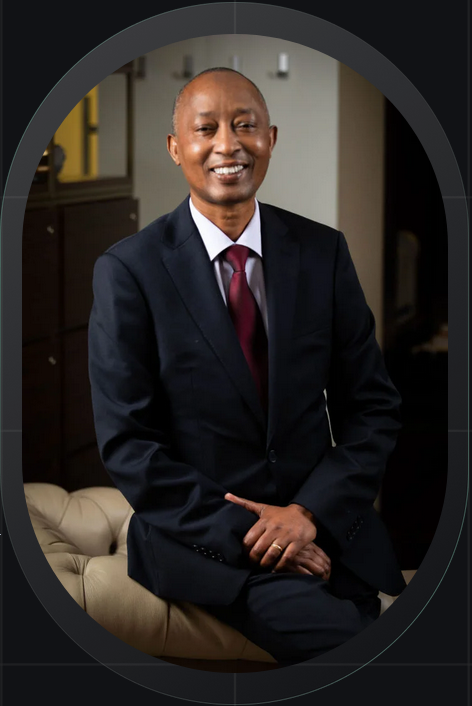
Dr. Theogene Rudasingwa formerly held positions of RPF Secretary General (1993-1996), Ambassador of Rwanda to the United States (1996-1999), and Chief of Staff for President Paul Kagame (2000-2004). He has testified before French Judges Marc Trevidic and Natalie Poux in the investigation of the shooting down of the President Habyarimana plane in 1994, as well as before the Spanish Judge Fernando Andreu Merelles in the case in which General Karenzi Karake and others are indicted. He has authored “Healing A Nation” and “Urgent Call.”