Africa CDC warns Bundibugyo Ebola outbreak could become continent’s worst as cases exceed 800, deaths pass190
Africa’s top public health agency has warned that the Ebola outbreak spreading across the Democratic Republic of Congo (DRC) and neighbouring Uganda could become one of the continent’s worst epidemics in years, as deaths surpass 190 and health authorities struggle to trace thousands of potential contacts.
 Black News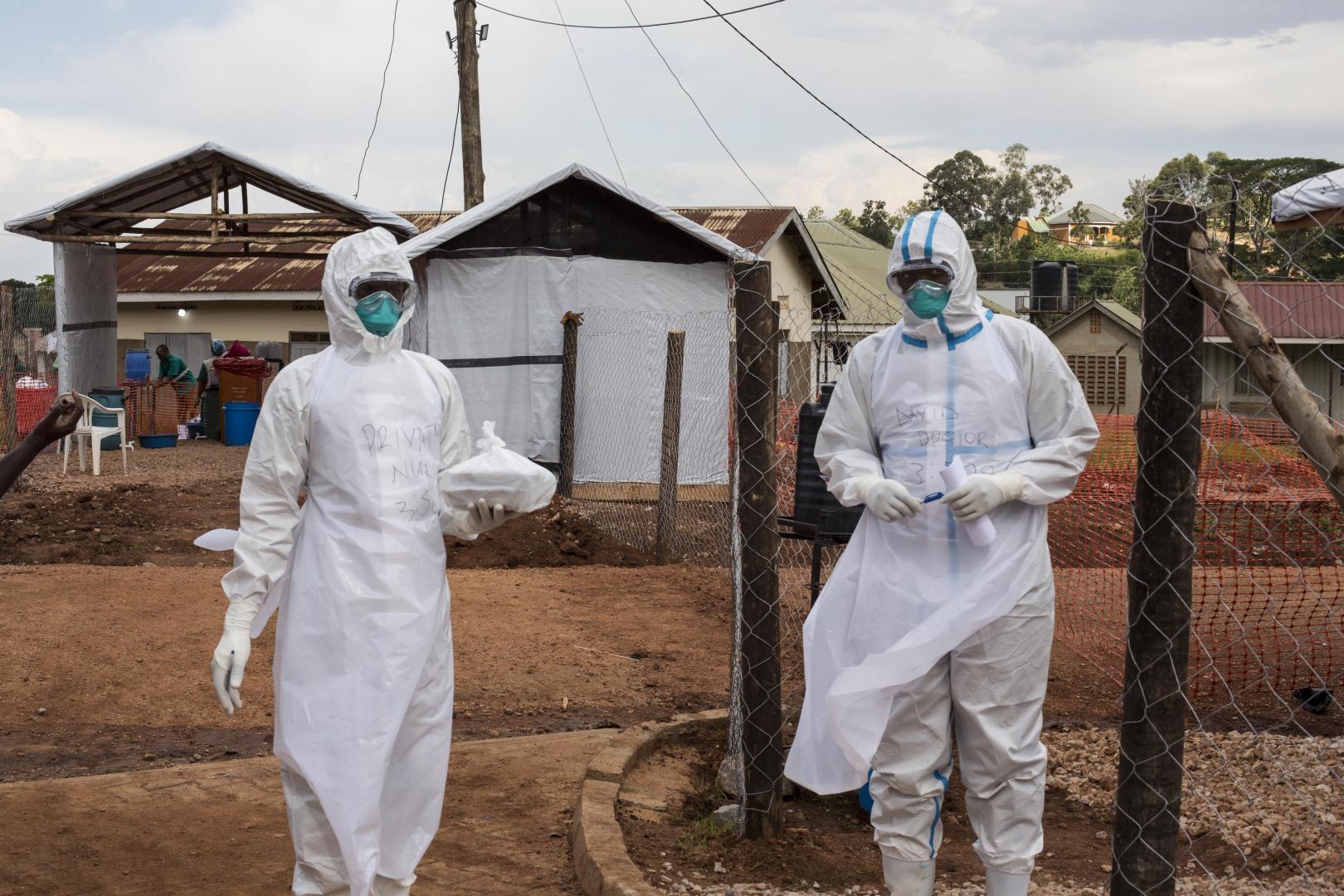

Africa’s top public health agency has warned that the Ebola outbreak spreading across the Democratic Republic of Congo (DRC) and neighbouring Uganda could become one of the continent’s worst epidemics in years, as deaths surpass 190 and health authorities struggle to trace thousands of potential contacts.
- Africa CDC has warned that the Ebola outbreak in the DRC could become one of the continent’s worst epidemics if transmission is not contained quickly.
- The outbreak has reached 808 confirmed cases and 192 deaths in the DRC, with Uganda reporting additional infections and fatalities.
- Health officials are concerned that tens of thousands of potential contacts have not been fully traced.
- The crisis is being driven by the Bundibugyo strain of Ebola, which currently has no approved vaccine.
Speaking during a virtual meeting of African leaders and donors on Tuesday, Africa Centres for Disease Control and Prevention (Africa CDC) Director-General Jean Kaseya said the outbreak could eclipse previous Ebola crises if transmission is not brought under control quickly.
“If we don’t stop the outbreak very soon, it will be worse than what we had in West Africa and eastern DRC,” Kaseya said.
The warning comes as health authorities report 808 confirmed cases and 192 deaths in the DRC, while Uganda has recorded 19 confirmed cases and two deaths linked to cross-border transmission.
The figures make it the largest Bundibugyo Ebola outbreak ever recorded and one of Africa’s most serious public health emergencies since the 2014-2016 West African epidemic that killed more than 11,000 people across Guinea, Liberia and Sierra Leone.
Why officials are increasingly alarmed
The latest warning reflects the growing concern among health authorities that the outbreak is expanding faster than response teams can contain it.
Unlike several previous Ebola outbreaks, the current epidemic is being driven by the Bundibugyo strain of the virus, for which there is currently no approved vaccine.
Health experts say the outbreak spread undetected for weeks before it was officially identified, allowing multiple transmission chains to become established across affected communities.
World Health Organization Director-General Tedros Adhanom Ghebreyesus warned earlier that response teams were effectively “playing catch-up” after the virus circulated unnoticed before detection.
The outbreak has affected multiple health zones across eastern Congo, particularly in Ituri province, where most infections have been recorded.
Tens of thousands of contacts remain untraced
A major concern for Africa CDC is the difficulty of monitoring people who may have been exposed to infected individuals.
Kaseya said tens of thousands of potential contacts have not been fully traced, raising fears that many infections remain undetected.
Contact tracing is widely regarded as one of the most effective tools for containing Ebola because exposed individuals can be identified, monitored and isolated before transmitting the virus to others.
However, health officials say surveillance teams are struggling to keep pace with the scale of the outbreak, particularly in remote and insecure areas.
The U.S. Centers for Disease Control and Prevention has warned that, without stronger interventions, the outbreak could grow significantly larger and potentially approach the scale of previous major Ebola epidemics.
Cross-border spread heightens regional risks
The outbreak is no longer confined to the DRC. Uganda has reported imported cases and secondary infections linked to travellers arriving from affected areas in eastern Congo, prompting authorities to intensify surveillance and screening measures.
Health officials have strengthened monitoring at border crossings and transport hubs amid concerns that continued movement of traders, workers and families could facilitate wider regional transmission.
The World Health Organization has classified the outbreak as a Public Health Emergency of International Concern, underscoring concerns about its international implications.
Funding gaps threaten response efforts
The warning from Africa CDC also highlights growing concerns about funding. WHO and Africa CDC recently launched a joint six-month response plan valued at approximately $518 million to strengthen surveillance, laboratory testing, treatment centres, community engagement and cross-border preparedness.
However, Burundi President Évariste Ndayishimiye, who currently chairs the African Union, said only a fraction of the required funding has so far been secured.
The funding gap threatens to slow response efforts at a time when health agencies are attempting to scale up testing, contact tracing and treatment operations.
Community resistance complicates containment
Health workers continue to face challenges beyond medical treatment. Reports from affected communities indicate that some patients are seeking treatment from traditional healers rather than specialised Ebola treatment centres, delaying diagnosis and increasing the risk of further transmission.
Misinformation, fear of isolation facilities and distrust of authorities have also complicated response efforts in some areas.
Previous Ebola outbreaks have shown that community cooperation is often critical to breaking transmission chains and containing the disease.
Economic impact begins to emerge
Beyond the health implications, the outbreak is beginning to affect economic activity in eastern Congo.
The affected region sits along key trade corridors linking Congo with Uganda and other neighbouring countries and is home to significant deposits of gold and critical minerals used in global supply chains.
Local businesses, transport operators, traders and schools have reported disruptions as authorities intensify containment measures and residents reduce travel and commercial activity.
A prolonged outbreak could affect cross-border trade, labour mobility and local economic activity at a time when several African economies are already grappling with fiscal pressures and rising healthcare costs.
Health authorities insist the outbreak can still be contained. But the combination of rising infections, cross-border spread, weak contact tracing, community resistance, funding shortfalls and the absence of an approved vaccine for the Bundibugyo strain has heightened concern among public health experts.
For now, Africa’s health agencies are focused on preventing the outbreak from becoming another defining health crisis for the continent.
The coming weeks are likely to determine whether the epidemic can be brought under control or develops into Africa’s most serious Ebola emergency in more than a decade.