Black Churches Transform Food Aid Into Food Justice
Black churches have long fed struggling families. Now, a growing movement is pushing congregations beyond charity and into food justice — confronting food deserts, chronic illness and racial inequities embedded in America’s food system. The post Black Churches Transform Food Aid Into Food Justice appeared first on Word In Black.
 Black News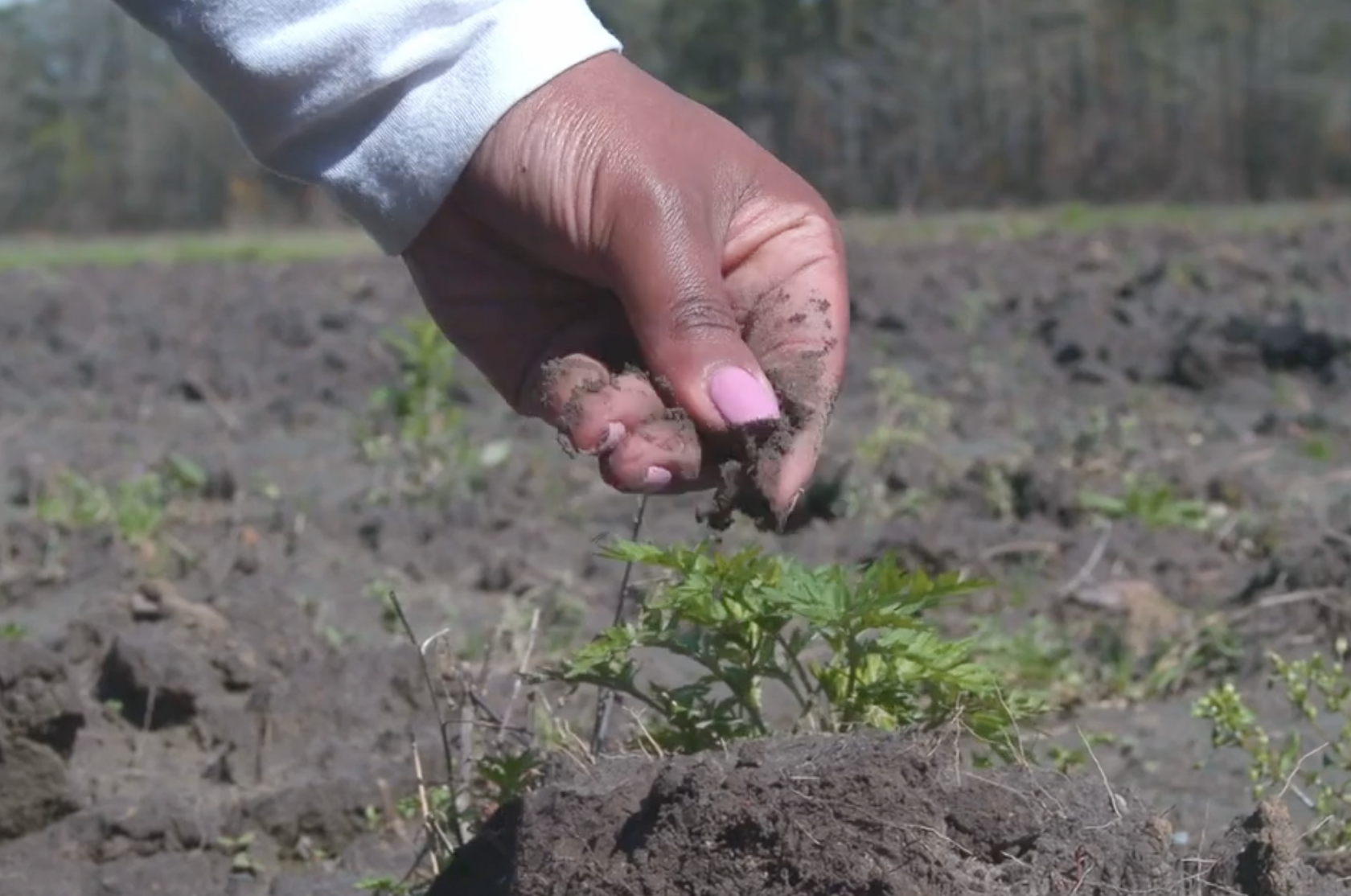

The Black church has long understood that hunger is political.
Long before researchers coined phrases like “food insecurity” or “food apartheid,” Black congregations were feeding families abandoned by segregated systems, economic inequality and government neglect. But a new generation of faith leaders is asking a harder question: What if the church stopped merely responding to hunger and started confronting the system producing it?
Across the country, Black churches are building gardens, supporting Black farmers, and reframing food as an issue of justice, health, and self-determination. At the center of that movement is the Black Church Food Security Network, which emerged from Baltimore’s 2015 uprising with a mission that goes far beyond emergency meals: helping Black communities reclaim power over what they eat, where it comes from, and who profits from it.
LEARN MORE: Amid the Shutdown Void, Black Churches Filled Empty Stomachs
That mission is unfolding against the backdrop of a worsening hunger crisis — driven by inflation, food deserts, and nutritional inequity — that disproportionately affects Black Americans.
Worsening Crisis
The Urban Institute reported in 2025 that more than one in three Black adults reported household food insecurity, nearly double the rate for white adults. Among Black working-age adults, the number climbed to 39%. As many as 23% of Black children live in poverty, up to three times higher than white children.
The modern issues surrounding hunger and food access in Black neighborhoods have required new solutions, including a drive to not just put food in stomachs but also address what should be on the plates of hungry people.
The Black church has always understood the power of feeding people. Meals open doors for ministry, healing, and relationships in ways few other things can.
Rick Bernstein, Co-founder, First Fruits Farm
In Baltimore, seeds of that movement were planted following the 2015 police killing of Freddie Gray. The protests, curfews and service shutdowns it triggered left many Black residents struggling to access basic necessities — and inspired Rev. Heber Brown III, founder of the Black Church Food Security Network, to create a solution.
In a 2019 essay, Brown wrote that the moment of crisis, “when public services provided by city government and nonprofit organizations withdrew from the African American community,” that “a window of opportunity opened for the church to step forward.”
‘Alternative Food System’
Churches quickly transformed from worship spaces into emergency response hubs, coordinating food distribution after residents called saying neighborhood stores had shut down during the unrest. Drawing inspiration from figures like Fannie Lou Hamer, the effort connected Black churches with Black farmers to create what Brown described as “an alternative food system.”
“Abandoned by government and nonprofits and forced to fend for ourselves, we in the African American community organized and created a system to meet our own basic needs,” Brown wrote.

That emergency response eventually evolved into the Black Church Food Security Network, which now partners with congregations, seminaries, and farmers across multiple states. The goal is to address what Brown calls “the systemic problem of food apartheid” in Black communities.
“Our current food system — which is characterized by greed, abuses of power, expediency at any cost, legacies of enslavement, and conscience-less consumption — does not resemble the truest virtues of the Christian faith,” Brown wrote. “This corporatized food system is not only inhibiting human flourishing, but it is literally killing humans.”
Elsewhere in Maryland, one ministry has become a striking example of what happens when faith and food justice meet in the soil.
Obedience, not Charity
First Fruits Farm was founded by Rick and Carol Bernstein with a mission rooted deeply in scripture and service; the name itself refers to the Biblical principle of offering one’s “first fruits” to God — the best and the first, not leftovers. The concept behind the farm is simple: all of the produce grown there is donated to feed hungry people.
Church volunteers and civic groups plant, harvest and package fresh vegetables. The food is then distributed through food banks, shelters and community ministries.
After COVID, the farm distributed more than 1.1 million pounds of potatoes, 406,000 pounds of corn, 95,000 pounds of cabbage, and other produce to food banks, homeless shelters, churches, and households. First Fruits has delivered as far away as Texas.
“We believe God called us to grow food for people who need it most,” Bernstein said in previous interviews about the ministry’s mission. “This is not about charity—it’s about obedience and stewardship.”
That spirit of stewardship resonates strongly within the Black church, where congregations understood hunger as a communal responsibility. If a member struggled, the church responded by providing meals or groceries.
Theology of Care
During the Civil Rights Movement, churches not only organized protests and voter drives; they also organized meals. Women’s auxiliaries prepared food for marchers. Congregations fed families displaced by economic retaliation.
Today, that same spirit continues through community refrigerators, mobile pantries, meal delivery programs and Black churches are adapting to meet modern needs while practicing a theology of care.
In cities where grocery stores have disappeared, some congregations host weekly food giveaways that serve hundreds of families. Others operate soup kitchens, school backpack programs, and senior meal deliveries. Increasingly, churches are also teaching nutrition, gardening and sustainability as part of holistic ministry.
“It’s the church being the church outside the building,” Bernstein said. “The Black church has always understood the power of feeding people. Meals open doors for ministry, healing, and relationships in ways few other things can.”
The post Black Churches Transform Food Aid Into Food Justice appeared first on Word In Black.










![‘Authenticity Is The New Flex’ — Meet CEO Michele Y. Smith, The Black Woman Bringing Real Culture To MoPOP [Exclusive]](https://madamenoire.com/wp-content/uploads/sites/9/2026/04/17770457888798.jpg?quality=80&strip=all&w=1024&crop=0,0,100,683px#)