Botswana's goal to shift from diamonds to critical minerals takes it deeper into the Gulf region
Seeking to diversify its revenue streams, Botswana has engaged in some agreements with Oman to collaborate on mineral exploration, oil storage infrastructure, and renewable energy initiatives.
 Black News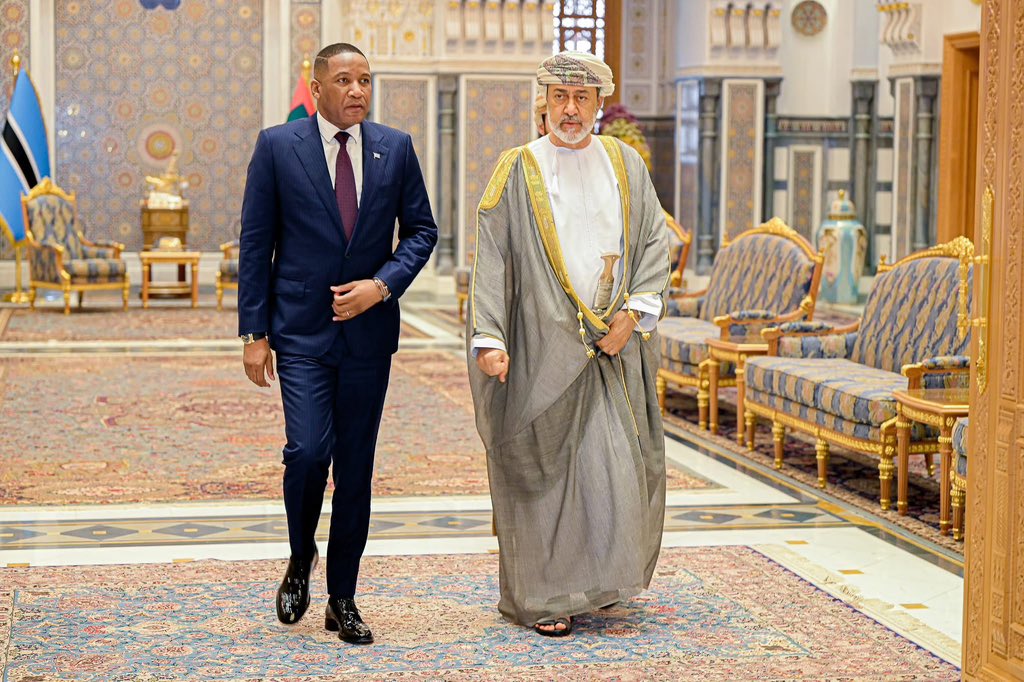
![L-R: President of Botswana Duma Boko, and Sultan Haitham bin Tariq of Oman [X: @BWPresidency]](https://ocdn.eu/pulscms/MDA_/dfa76f048ba409711207e81085692936.jpg)
Seeking to diversify its revenue streams, Botswana has engaged in some agreements with Oman to collaborate on mineral exploration, oil storage infrastructure, and renewable energy initiatives.
- Botswana has signed agreements with Oman to collaborate on mineral exploration, oil storage infrastructure, and renewable energy, including a 500-megawatt solar power facility.
- President Duma Boko secured these deals during his three-day official visit to Oman, aiming to diversify Botswana's economy and strengthen bilateral ties.
- The mineral exploration agreement targets an uncharted region covering over 70% of Botswana's land, as the country looks to expand beyond diamond trading.
- Botswana faces significant challenges in the diamond sector due to oversupply and falling global demand, which has reduced revenues from its primary export.
These deals were secured by Duma Boko, the president of the Southern African country, during his trip to Oman.
Botswana’s presidency, as seen on Reuters, noted that the visit was intended to open dialogue on strengthening bilateral ties between both nations.
This trip was a strategic move long in development, as the Southern African nation looked toward the Middle East to further its objectives of expanding beyond diamond trading and into the supply of critical minerals.
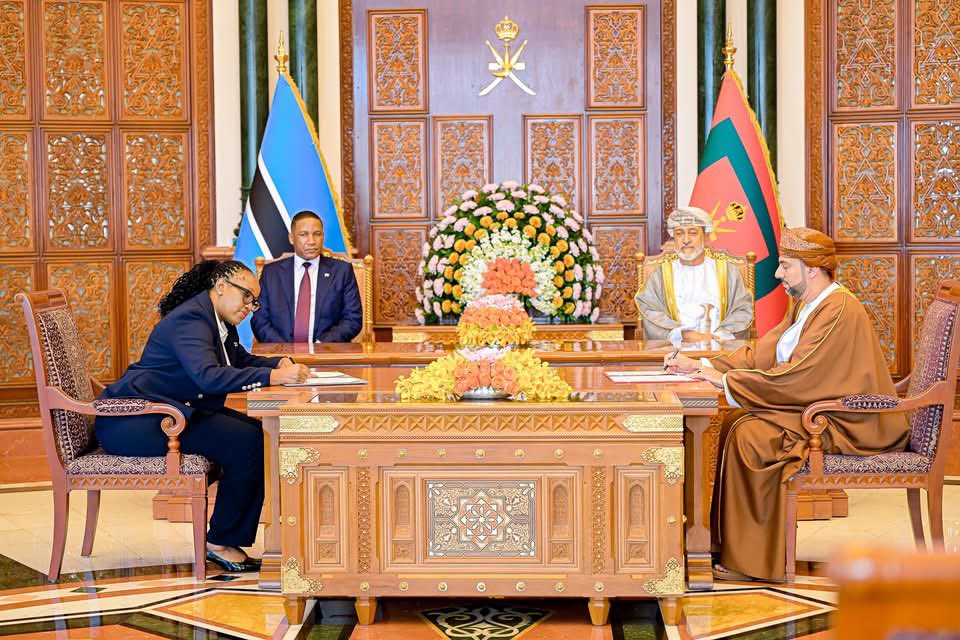
Per the presidency, the Botswanan president, who is on a three-day visit, oversaw the signing of agreements with Haitham bin Tariq, the Sultan of Oman.
They included a cooperative mineral exploration agreement whereby Botswana aims to expand mining exploration, focusing on an uncharted region that accounts for over 70% of its land.
DON’T MISS THIS: After losing a key uranium mine in Niger, France turns to Botswana for new mining deals as Europe scrambles for supply
The global diamond market has been affected by economic instability and the growing popularity of lab-grown stones, which has resulted in a decline in revenue from diamond sales, which normally make up over one-third of Botswana's national income.
Additionally, Botswana secured a deal with Oman for the establishment of a 500-megawatt solar power facility.
This development succeeds an announcement made on March 20, which confirmed that NAQAA Sustainable Energy LLC, a subsidiary of Oman's state-owned O-Green, had been appointed to oversee the design, financing, construction, and operation of the plant situated in northwestern Botswana.
Botswana’s diamond struggles
In January, reports showed that Africa’s leading diamond producer, Botswana, began facing a major oversupply crisis that immediately affected government revenues.
According to the 2026/27 Budget Strategy Paper, the country's diamond stockpile reached 12 million carats at the end of December 2025, which is over 85% higher than the government's authorized threshold of 6.5 million carats.
The excess came amid persistently low global demand and falling prices, leaving the country unable to increase output to improve its economy.

Diamonds account for almost one-third of Botswana's national revenue and three-quarters of its foreign exchange receipts, demonstrating the sector's important role.
Shortly after, the diamond-producing nation began intensifying plans to diversify its mining pipeline with the exploration of critical minerals.
While the country is not completely moving its economic focus away from diamond mining, it recognizes the huge impact market vulnerabilities may have on an economy that is totally dependent on one commodity.
Botswana is also aware of the increasing demand for vital minerals such as copper, cobalt, lithium, and the like, and is eager to enter the market.
In February, Canadian mineral exploration company Tsodilo Resources Limited confirmed a significant rare earth and critical minerals discovery in Botswana.
The discovery was made at the Canadian company’s Gchwihaba Metals project near Shakawe in north-west Botswana.