Climate models failing to reflect inequality and Global South realities, study warns
Scientists say dominant climate and biodiversity models rely too heavily on existing economic systems and overlook inequality, Global South perspectives and Indigenous knowledge, calling for more transformative and inclusive scenario-building
 Black News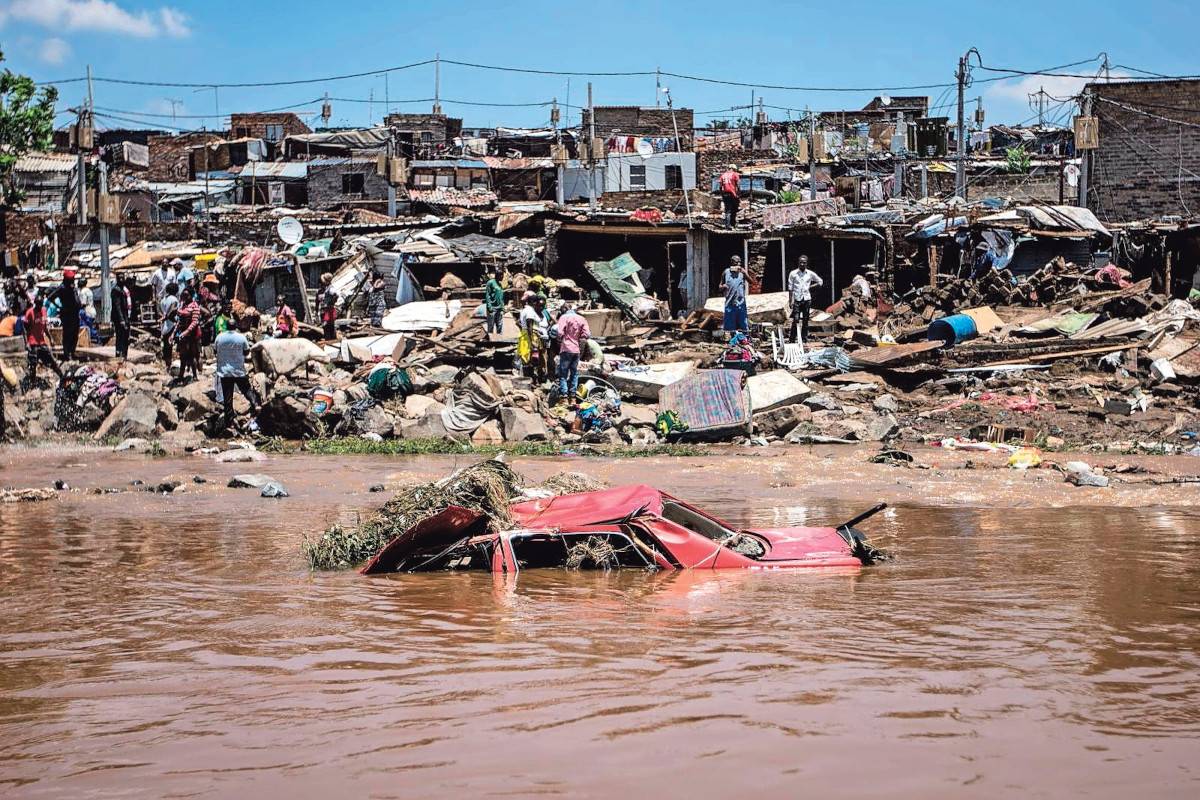
Scientists are calling for a radical rethink of the climate models used to shape global environmental policy, warning that many of today’s dominant scenarios are too rooted in the very economic and political systems that created the climate crisis.
In a new paper, researchers argue that widely used climate and biodiversity models focus too heavily on technological fixes while paying too little attention to inequality, power and the perspectives of the Global South and Indigenous communities.
The paper, published in the journal One Earth, found that many existing global scenarios are built on assumptions that economies, governance systems and social norms will remain largely unchanged, even as countries attempt to rapidly cut emissions and halt the loss of nature.
“Right now, many of our global scenarios are effectively asking how to fix the future without really changing the present,” said Laura Pereira, the lead author of the study and a commissioner with the Earth Commission. She is one of 23 commissioners on the Earth Commission, four of whom are from Africa.
Convened by Future Earth, the world’s largest network of sustainability researchers, the commission brings together an international team of natural and social scientists to identify the planet’s critical thresholds, to ensure there is clean air and water, biodiversity and a stable climate in which all life can thrive.
“If we want pathways that work, we need tools that can explore different economic models, different power structures and different relationships between people and nature, not just different technologies,” she said.
The researchers argue that this approach is too narrow for a world facing multiple interconnected crises at once, including climate change, the collapse of biodiversity and widening inequality.
Climate scenarios and models play a major role in shaping international policy. Their outputs feed into global scientific assessments and negotiations under bodies such as the Intergovernmental Panel on Climate Change and the Convention on Biological Diversity, helping governments decide how to respond to environmental threats.
But the study argues that many models focus on incremental adjustments rather than deeper structural transformation. Key questions are often left unasked: who benefits from climate policies, who bears the costs and whose voices are included in imagining the future.
The paper also highlights Africa’s limited representation in the modelling systems that underpin global climate decision-making. Scientists often rely on integrated assessment models (IAMs), which combine climate, economic and social data to project future scenarios. However, Africa remains the only region without its own IAM.
According to the researchers, this limits the ability of climate models to fully capture African realities, including poverty, inequality, development pressures and local environmental challenges.
To address this, the authors propose a Global South-led “scenarios secretariat” that would help shape future climate pathways and research priorities.
The study also calls for a new generation of “integrated transformative scenarios” that combine climate, biodiversity and equity goals and are co-developed with Indigenous Peoples and local communities.
Rather than treating Indigenous groups only as vulnerable populations, the researchers argue that local and Indigenous knowledge systems should help shape future sustainability pathways.
“We find there’s a real need to move beyond business-as-usual modelling,” said Albert Norström, the commission’s science director, “and start co-creating futures that reflect the diversity of societies, knowledge and values around the world.”
The paper argues that to support sustainability policy and decision-making effectively, research needs to showcase clear options that allow the world’s societies to achieve not only the 1.5°C target but also the internationally agreed biodiversity targets while achieving the Sustainable Development Goals.
“This is no easy task but it is among the most pressing requirements of our time. This challenge underscores an urgent need to formulate and adopt diverse, alternative narratives of transformative change.”
Imagining fair and sustainable futures has become increasingly urgent as influential technology billionaires promote what the researchers describe as narrow and often dystopian visions of the future.
“There is growing visibility of wildly unreasonable scenarios put forward by the world’s ‘tech-bro billionaires’: either the techno-optimism of colonising space by Elon Musk or the environmental antichrist narratives of Peter Thiel.”
Instead, the researchers argue for alternative visions grounded in principles such as “living in harmony with nature” and “leaving no one behind”.
“Alternative scenarios that are embedded with the aspirations of ‘living in harmony with nature’ or ‘leaving no one behind’ must be developed to counter these dystopian futures and inspire public mobilisation and policy action,” the paper states.
The scientists also push for “alternative economic thinking”, including post-growth models and approaches focused on wellbeing, equity and sustainability rather than endless economic expansion.
The researchers argue that current climate scenarios often assume economic growth and existing power structures will continue largely unchanged, limiting the ability of policymakers and scientists to imagine more equitable futures.
Some initiatives are already moving in this direction, including justice-focused modelling projects and nature-centred scenarios that integrate environmental sustainability with social equity.