From Aid to Investment: France’s Africa strategy faces test amid China, Russia Competition
The forthcoming France–Africa Summit, slated for 11–12 May 2026 in Nairobi, Kenya, is shaping up to be a significant moment in the redefinition of relations between Paris and African capitals, with implications that extend beyond diplomacy to trade, migration, and long-term economic development.
 Black News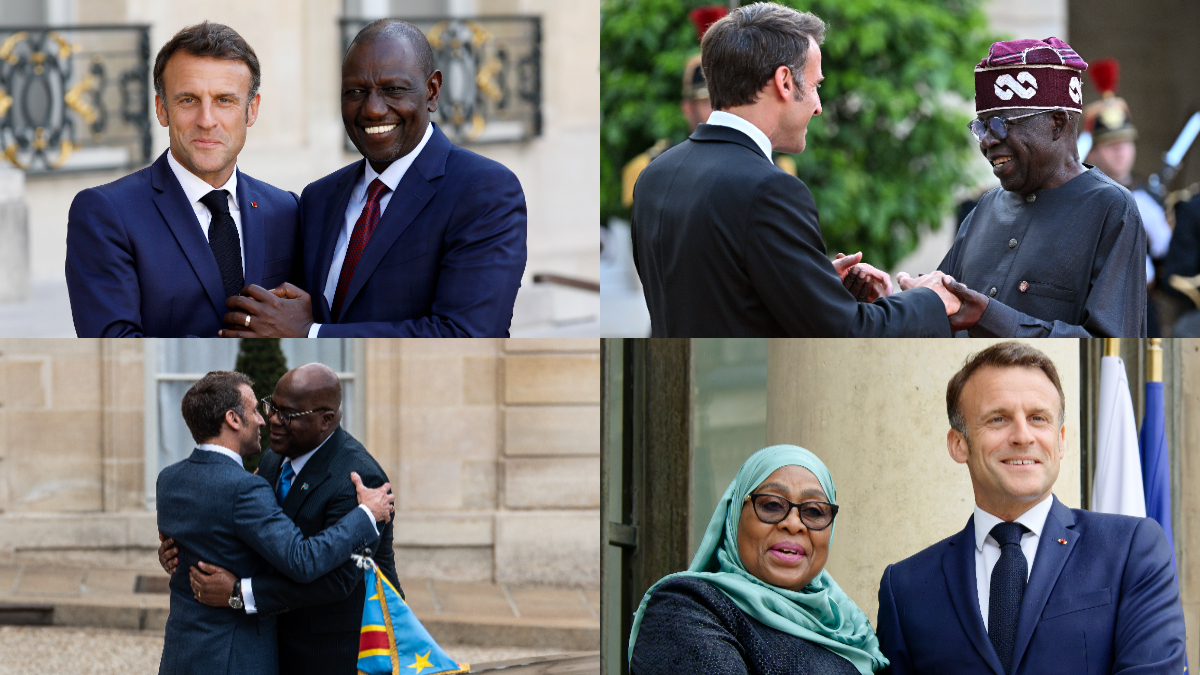
![French President Emmanuel Macron will meet African leaders later in May at the France–Africa Summit in Nairobi, Kenya, as both sides seek to redefine trade, migration, and diplomatic ties in a rapidly shifting global landscape. [Photo by Getty Images]](https://ocdn.eu/pulscms/MDA_/214f3df886c8972adbfd4f7e1d67c47e.jpg)
The forthcoming France–Africa Summit, slated for 11–12 May 2026 in Nairobi, Kenya, is shaping up to be a significant moment in the redefinition of relations between Paris and African capitals, with implications that extend beyond diplomacy to trade, migration, and long-term economic development.
- The upcoming France–Africa Summit signals a strategic reset in relations between France and African nations amid rising global competition.
- Discussions are expected to centre on trade, economic growth, and Africa’s role in Europe’s supply chain diversification.
- Migration remains a contentious issue, with calls for balanced policies that address both border controls and development.
- The summit could reshape diplomatic ties, positioning Africa as a stronger, more assertive partner on the global stage.
As Emmanuel Macron continues efforts to recalibrate France’s role on the continent, the summit reflects a broader shift in Africa–Europe engagement amid growing competition from global powers such as China, Russia, and the Gulf states
At the heart of the summit is a projected renewed focus on economic cooperation. Historically, France has maintained strong commercial ties with its former colonies through networks often criticised as paternalistic.
However, recent policy shifts suggest a move towards more equal partnerships. France is increasingly prioritising investment in sectors such as renewable energy, digital infrastructure, and agribusiness.
Africa’s economic outlook remains mixed, while the World Bank projects the continent to grow at around 3–4% annually. Structural challenges, ranging from debt burdens to climate vulnerability, continue to constrain progress.
The summit is expected to offer France an opportunity to align its investment strategy with Africa’s development priorities, particularly by supporting small and medium-sized enterprises and regional value chains.
Crucially, the engagement is also framed within the broader context of Europe’s economic interests. The European Union has increasingly viewed Africa as a key partner in diversifying supply chains and securing critical raw materials essential for the green transition. If structured effectively, summit agreements could accelerate industrialisation across African economies while providing Europe with more resilient trade networks.
Trade and Market Access
![A file photo taken on April 12, 2005 shows the Apapa Terminal parked full with containers in the main Nigerian seaport in Lagos. [Photo credit should read PIUS UTOMI EKPEI/AFP via Getty Images]](https://ocdn.eu/pulscms/MDA_/5fb65f02536e2eea939aa8bd72a04ff7.jpg)
Trade remains a cornerstone of France–Africa relations, but the balance is evolving. African leaders are expected to push for greater access to European markets, particularly through frameworks such as the African Continental Free Trade Area (AfCFTA).
Aligning French trade policy with AfCFTA could unlock intra-African trade while enhancing Europe’s role as a complementary partner rather than a dominant one.
France has already signalled its support for African manufacturing and local processing industries, a departure from earlier models centred on raw-material exports.
However, critics argue that European agricultural subsidies and regulatory barriers still disadvantage African producers. Addressing these issues will be critical if the summit is to deliver tangible outcomes.
Migration: A Persistent Flashpoint
![Aircraft at Addis Ababa’s main airport as Ethiopia signals caution on opening its aviation market to foreign private airlines. [Getty Images]](https://ocdn.eu/pulscms/MDA_/6ca1e07090804a3a3e149bc4cf00ffc8.jpg)
Migration is likely to be one of the most sensitive issues on the agenda. Europe continues to grapple with irregular migration flows from Africa, driven by economic disparities, conflict, and climate pressures. France, in particular, faces domestic political pressure to tighten immigration policies.
Yet, African leaders have consistently emphasised the need for a more balanced approach, one that addresses root causes rather than focusing solely on border control.
Reports from Al Jazeera highlight calls for increased investment in job creation and education as part of any migration framework.
The summit could see renewed commitments to legal migration pathways, including student mobility and skilled labour exchanges.
Such initiatives may help mitigate concerns about brain drain while fostering knowledge transfer between the two regions. However, tensions are likely to persist unless both sides reconcile differing priorities.
Diplomatic Reset and Strategic Competition
![French President Emmanuel Macron (front row, C) speaks with King Mohammed VI of Morocco (front row, R) as leaders pose for a family photo during the 5th African Union - European Union (AU-EU) summit in Abidjan, on November 29, 2017. [Photo by ISSOUF SANOGO/AFP via Getty Images]](https://ocdn.eu/pulscms/MDA_/5a586277c38983483e935d312f5db2dc.jpg)
Beyond economics and migration, the summit represents a broader diplomatic recalibration. France’s influence in parts of West and Central Africa has declined in recent years, particularly following its military withdrawals from countries such as Mali and Burkina Faso.
This has created space for other actors, including Russia and China, to expand their presence.
Macron’s strategy has emphasised partnership over intervention, with a focus on civil society engagement and youth-driven initiatives.
According to an analysis by The Guardian UK, this approach aims to rebuild trust and counter perceptions of neocolonialism.
At the same time, regional organisations such as the Economic Community of West African States (ECOWAS) are playing a more assertive role in shaping Africa’s external partnerships.
Their involvement underscores a shift towards collective bargaining power, which could redefine how African states engage with Europe.
Looking Ahead
The success of the upcoming France–Africa Summit will ultimately depend on whether it moves beyond rhetoric to deliver concrete outcomes.
For Africa, the stakes are high: meaningful partnerships could accelerate economic diversification, strengthen regional integration, and create new opportunities for its rapidly growing population.
For France and the wider European bloc, the summit offers a chance to reposition themselves as credible, long-term partners in Africa’s development journey.
In an increasingly multipolar world, the ability to forge equitable and forward-looking relationships may determine Europe’s relevance on the continent.
As global competition intensifies, the summit is less about reaffirming historical ties and more about defining a new framework for cooperation, one that reflects Africa’s growing agency and Europe’s evolving strategic interests.