What Does it Take to Keep a Magazine Alive Today?
As BRICKS celebrates twelve years of independent print publishing, Editor & founder Tori West shares what it’s really like to build a media empire from scratch. Spoiler alert: it takes a village, and a whole lot of audacity. The post What Does it Take to Keep a Magazine Alive Today? appeared first on BRICKS Magazine.
 Black News
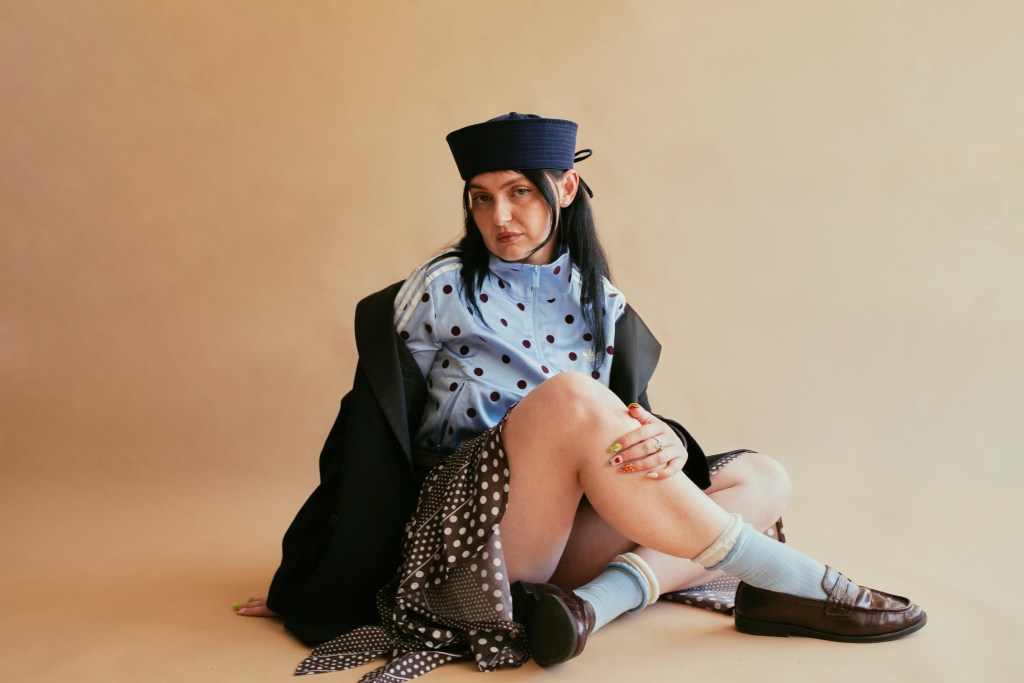
PHOTOGRAPHY Maya Wanelik
PHOTO ASSISTANT Alex Galloway
When I launched BRICKS as my final university project in 2014, I didn’t want to let it go once I graduated as I enjoyed the creative collaboration so much. A few months later, I took my 64-page print bundle on the Bristol-to-London Megabus, and sat down over an overpriced Shoreditch coffee with a distributor who’d been in the publishing industry longer than I’d been alive. He flipped through the pages, paused, and said he’d take the next issue into stores, but not before issuing me with a warning: most new magazines don’t make it past five years, and advertisers won’t touch you until you’ve proven you can survive at least eight issues. I don’t think it was said to discourage me; I suppose he wanted to caution me about the reality of trying to build something new in an industry already struggling to keep print alive. Luckily, he didn’t scare me off and this April, BRICKS celebrated its 12th birthday. As much as this milestone is worthy of celebration, it has, of course, not come without struggle.
Whenever someone asks how I managed to start a magazine on my bedroom floor and keep it running for this long, I have to push back on the idea that there’s nothing straightforward about that story. I don’t think I’ve ever quite achieved my ‘Carrie Bradshaw moment’ (there’s no Manolo Blahniks or walk-in wardrobe I once dreamed about, but I can’t walk in heels anyway ). My path through publishing hasn’t followed the neat, upward trajectory the industry likes to package “success stories” as — especially as I come from a low-income background.
At one point, I stepped away from BRICKS entirely, spending nearly three years working as a full-time cleaner just to stay afloat before returning to rebuild it properly in 2019. I suppose that conversation with our old distributor was the most valuable advice I ever received, because the reason we’ve survived is because I never expected the magazine’s success to be linear. We’ve had to adapt quickly, rethink constantly, and build multiple income streams just to keep financially afloat. I was warned that “making it”wouldn’t happen overnight, so I suppose I accepted the relentless uphill battle for credibility and for people to believe in our voice.


Of course, 2026 has brought a new set of challenges, from the growing threat of AI reshaping creativity and journalism, to the shifting balance of influence between social media creators, traditional publications, and the billionaire Tech Bros taking them over. But in this new era of digital saturation and increasing censorship, physical media feels more necessary than ever.
As BRICKS marks this new milestone, I find myself reflecting on how we’re still here, why that matters, and what it has taken to survive. If even one person reading this feels inspired enough to think, I could do this too, and go on to start their own printed publication, then this rollercoaster of a creative journey feels worthwhile. Because despite the difficulties, starting BRICKS is the best decision I ever made.

Believe in your editor energy
A magazine is only ever as coherent as the people shaping it, and BRICKS wouldn’t exist in its current form without its editors. Finding writers and journalists who could not only capture the magazine’s tone of voice, but genuinely understand and live its ethos, has always been essential to its survival. For me, it was never just about commissioning content; it was about building a shared sensibility, where contributors instinctively understood what BRICKS was trying to say, and why it needed to be said in the first place.
You can have a strong vision at the top, but without editors who can interpret, protect, and evolve that vision, it quickly becomes diluted. The best editorial teams don’t just execute ideas, they challenge them. In a crowded media landscape, people don’t just return for individual stories, they return for perspective and the people that shape them. Maintaining your “Editor energy” is what keeps a publication alive when resources are limited. There will be times you can’t always rely on budget, scale, or infrastructure: when that happens, you can only rely on your judgment, taste, and instinct on the reason why something still deserves to be seen, finances or not.
Maintaining your “Editor energy” is what keeps a publication alive when resources are limited. Having good editors and journalists is what makes small teams like ours, feel bigger than they are.
Having good editors and journalists is what makes small teams, like ours, feel bigger than they are. I know some of our readers will have met members of the BRICKS team over the years, whether at fashion weeks, press days or events, and the main feedback I receive is that it’s like meeting a much-needed friendly face in an industry that’s historically felt exclusionary. Of course, they’re representatives of BRICKS and my own ‘bubble’ in the publication industry I wanted to build, but they also make me feel at home during my work hours, and that’s such a privilege I’ll be forever grateful for it. BRICKS wouldn’t be here without our full team and editors, because it would be impossible for me to do this without them.

Community shouldn’t be treated as a marketing buzzword
When I first started BRICKS on my bedroom floor, there were no investors, no equipment, and no high-fashion brands knocking on the door to advertise. What I did have, however, was a community of like-minded people who simply wanted to make things. In those early years, BRICKS relied heavily on skill-sharing: I would write for other independent magazines, and in return, someone might photograph a shoot for us. A friend of mine might have needed images shot or needed press for their latest collection to help bag their MA spot, and I’d publish it, because it also helped me with styling samples.
The truth is, no matter how convincingly it’s packaged by a PR or marketing person, money can’t buy a community. It can support one, amplify one, even help accelerate it, but it can’t replicate the mutual trust, generosity, and exchange that actually sustains independent creative work. Eventually, however, when you do start making money, it’s important to bring those creatives with you. I’m proud that over the years, as BRICKS has grown, we’ve funded and supported the work of thousands of creative talents and voices, some of whom have been with us since day one – and to be honest, the cost of that still continues to be worth every single penny.
Of course, metrics matter to our survival, but they’ve never been the point. What matters more is the people behind them.
You’re nothing without your readers – listen to them too
Something people are often surprised by with BRICKS is how genuinely personal our relationship with our audience is. I’ve never been particularly driven by numbers, how many followers we have on Instagram, or how many copies we sell. Of course, those metrics matter to our survival, but they’ve never been the point. What matters more is the people behind them.
Over the years, my team and I have come to know many of our readers by name. We invite them into the office to see issues before they reach newsstands, run open days where we mentor and offer small business advice, and include them in events that would traditionally be industry-only or invite-only. Some of our audience have ended up becoming team members, been represented by our talent agency, the BRICKS Collective, and we even set up our alternative education channel The Learner Platform to chat to them more directly.
As much as they believe we offer an invaluable service and industry insight, the relationship is far more reciprocal than it might appear. Speaking with them directly, understanding what they care about and what they’re struggling with only sharpens our own publishing perspective. It helps us create content that is not just relevant, but genuinely responsive to the creative world they’re navigating. I don’t know what it’s like to be a student or how hard it is to be a graduate photographer in 2026, unless I speak to them.

The only credibility you need is the amount you choose to give yourself
When you’re starting from nothing, there’s a strange silence at the beginning; no emails coming in, no brands reaching out, no external validation to confirm you’re on the right track. Out of every hundred emails you send, you might only get one reply. But maybe you only need that one reply to get the ball rolling.
Silence can feel like proof that something isn’t working, when really, it’s just the reality of building something from scratch. At some point, you have to be the one to make the first move, to sell yourself and put yourself out there, and that takes a lot of guts and audacity. My advice? Send that email, pitch that idea, and learn to put your work out into the world before anyone is even looking for it. There is no queue of people waiting to fund you or validate you at the beginning, the only thing that bridges that gap is belief; not in a guaranteed outcome, but in your own ability to keep going long enough to create one. If you don’t believe in your own credibility, how can you expect someone else to validate it?
Clearpay is unregulated credit. Use responsibly. T&Cs & late fees apply clearpay.co.uk/terms.
Enjoyed this story? Help keep independent queer-led publishing alive and unlock the BRICKS Learner Platform, full of resources for emerging and aspiring creatives sent to you every week via newsletter. Start your 30-day free trial now.
The post What Does it Take to Keep a Magazine Alive Today? appeared first on BRICKS Magazine.