From Buraka to the World: They’re Back!
More than a comeback, Buraka Som Sistema's return signals a renewed moment for Afro-diasporic club music, and a reminder of the sound that helped shape it.
 Black News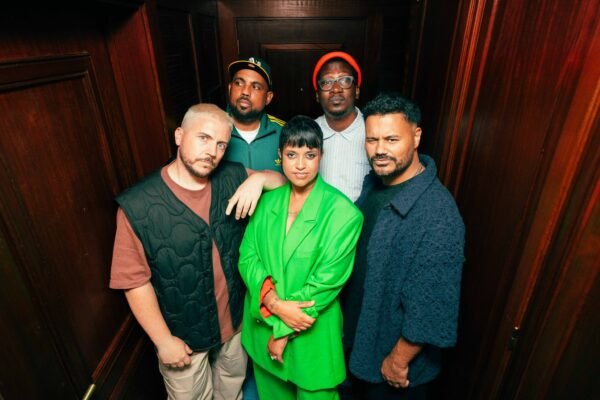
In 2026, Buraka Som Sistema returns not as a nostalgia act, but as a necessary presence. More than a decade after stepping away, their re-emergence arrives at a moment when Afro-diasporic club music sits at the center of global culture, a space they helped build long before the industry knew how to define it. Their first major statement back is closing the NOS Alive main stage on July 11th, as the first confirmed act of the festival’s 18th edition. That is not a warm-up slot. That is a declaration.
Formed in the early 2000s on the outskirts of Lisbon, Branko, Riot, Conductor, and Kalaf Epalanga emerged from a city uniquely positioned between continents. Lisbon was not simply a backdrop. It was the condition that made them possible, shaped by post-colonial migration, rooted African communities, and a generation navigating identity across languages and geographies. Portugal’s colonial history had created deep, lasting ties with Angola, Mozambique, and Cape Verde, and the communities that settled in Greater Lisbon brought with them musical traditions that would prove difficult to ignore. The suburbs absorbed these sounds and began producing something new, something that belonged to both worlds without being fully claimed by either.
The very name Buraka carries meaning beyond music. Taken from Buraca, a peripheral area within Greater Lisbon in the municipality of Amadora, it became a symbol of transformation. This was not a neighbourhood that appeared on cultural maps. It was working class, largely immigrant, and consistently overlooked by the institutions and media that shaped national identity. Through their rise, that place was projected onto the global stage and redefined through sound. Buraka became more than a location. It became a cultural marker, associated with a new way of thinking about music, identity, and belonging that travelled far beyond its geography.
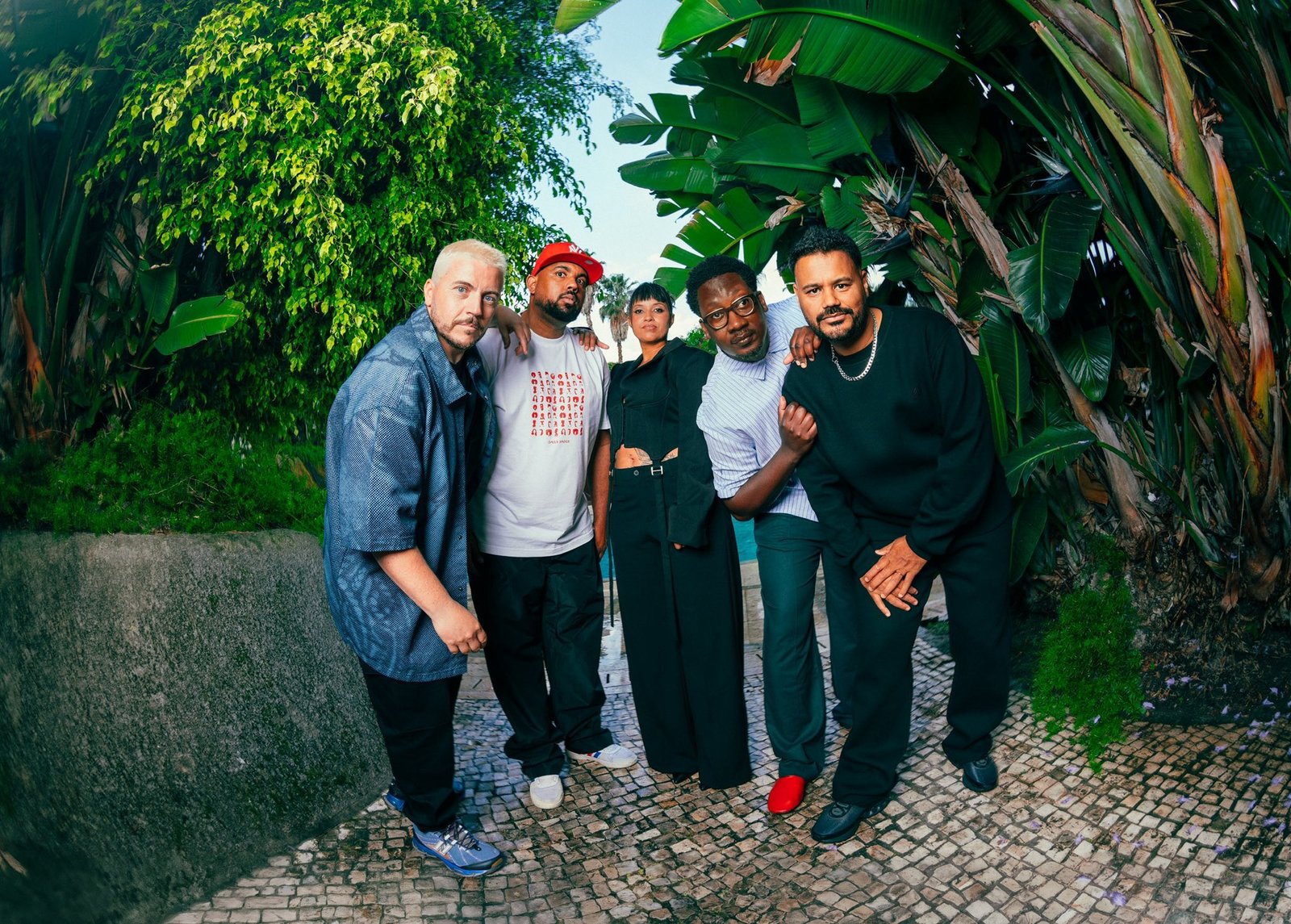
At the center of that identity was kuduro, a genre born in Angola in the late 1980s, forged in the energy of a country emerging from civil war. Raw, percussive, and physically demanding, kuduro carried within it a spirit of resistance and celebration that resonated wherever it landed. By recontextualising kuduro within European electronic frameworks, Buraka Som Sistema transformed it into a transnational language, connecting Luanda to Lisbon and projecting that dialogue globally. They did not soften the source material to make it more accessible. They amplified it, trusting that its power would translate across borders, cultures, and languages. It did.
Their debut EP, From Buraka to the World, released in 2006 on Enchufada, introduced that formula to a wider audience almost immediately. Tracks like Kalemba (Wegue Wegue) and Sound of Kuduro became global anthems, and their 2008 collaboration with M.I.A. on the latter brought kuduro to audiences who had never heard of Angola, let alone its music. That collaboration was not incidental. It reflected a consistent approach: building outward from the core without diluting it, finding points of connection across wildly different musical worlds without compromising what made the sound distinctive in the first place.
Crucially, Buraka Som Sistema were never a closed formation. Female artists such as Petty, Pongo, and Blaya were central to their ecosystem. Their voices helped define the group’s sonic and visual language, expanding its emotional range and global reach. These were not secondary contributions. They were part of the DNA of what made Buraka resonate across different audiences and geographies. Blaya in particular became a defining presence, her energy and charisma central to the group’s live shows and recordings.
Their second album Black Diamond, released in 2008 on Sony BMG, went Gold. They received an MTV Europe Music Award nomination and scored a number one single in Spain. Their music appeared in FIFA 10, the 2010 FIFA World Cup video game, and Just Dance 2016, reaching audiences far beyond the club circuit. Coverage came from the New York Times, Pitchfork, Billboard, The Guardian, and NME, at a time when none of those outlets were paying much attention to music coming out of Lisbon. That attention was not given. It was earned through the quality and originality of what they were making and the relentlessness with which they took it to the world.
Beyond their own records and performances, Buraka Som Sistema played a foundational role in building the infrastructure around the music they loved. Enchufada, the label co-founded by Branko and Kalaf, became one of the key platforms for promoting kuduro and related genres internationally. It was not just a vehicle for their own releases. It was a deliberate attempt to create space for a broader ecosystem of artists working in similar territory, and its influence on the global club music landscape continues to be felt today. The label’s 20th anniversary compilation, A Lisbon Club Story, is itself a document of that history.
When the group stepped away in the mid-2010s, announcing their hiatus in 2015 and performing their final show in Lisbon on July 1st, 2016, the landscape they left behind was already shifting in the direction they had pointed. Afro house expanded internationally.
Amapiano rose to global prominence. Diaspora-driven club scenes gained the kind of critical recognition that had been slow to arrive. Artists across Portugal, Angola, Mozambique and the broader diaspora began finding larger audiences for music rooted in the same cultural intersections Buraka had explored years earlier. The industry began paying attention to a sonic and cultural reality that Buraka had already mapped.
During that period, each member continued working. Branko built connections within global club culture, collaborating with artists across different scenes and geographies. Kalaf Epalanga expanded into writing and cultural commentary, publishing work that engaged with questions of identity, diaspora, and belonging. DJ Riot and Conductor remained active within music, contributing to the broader ecosystem the group had helped build. Their individual paths kept the Buraka influence alive in different registers, even as the collective itself was on pause.
Their influence is perhaps most visible in the generation that followed. One of the clearest examples is Pedro Mafama. Before establishing himself as one of the most distinctive voices in Portuguese music, Mafama was an intern with Buraka Som Sistema, moving within their creative ecosystem, a proximity that left a lasting imprint on his artistic path.
Today, his music blends traditional Portuguese references with Afro-diasporic rhythms, creating a sound that feels both deeply local and unmistakably global. His 2025 single Gandaia, created in collaboration with Petty, acts as a direct thread between past and present, showing how strongly the Buraka legacy continues to run through contemporary Portuguese music.
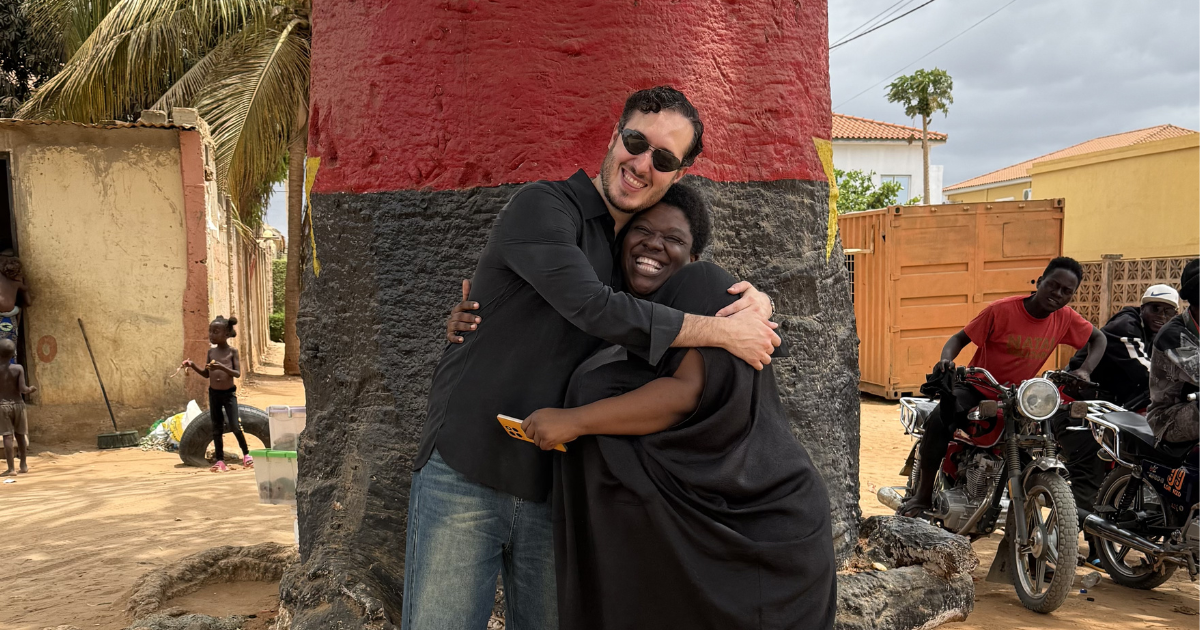
Now Buraka Som Sistema return with Puro Mambo, released on April 10th, the final single from A Lisbon Club Story, Enchufada’s 20-year compilation, and the group’s first original release in twelve years. Drawn from Angolan musical tradition and built for the dancefloor, it does not attempt to recreate what came before, and it does not need to. There is no nostalgia here, only forward motion, proof that the source material never dried up, only waited.
Before the world caught on, Buraka Som Sistema had already changed the sound of it. The dancefloor on July 11th will know exactly what that means.












![Taylor Polidore Williams Says Indie Film ‘HPV: Her Pretty Vagina’ Is Bigger Than Entertainment: ‘I Knew It Was A Necessary Conversation’ [Exclusive]](https://bossip.com/wp-content/uploads/sites/28/2026/05/17794757122146.jpg?quality=80&strip=all&w=1024&crop=0,0,100,683px#)