
Iran tightens grip on Strait of Hormuz as new transit rules follow reported “punishment” strike on Liberian oil tanker
Iran has moved to formalise its control over the Strait of Hormuz, one of the world’s most important maritime chokepoints, by launching a new authority that now requires vessels to seek clearance and potentially pay millions of dollars before crossing the strategic waterway.
 Black News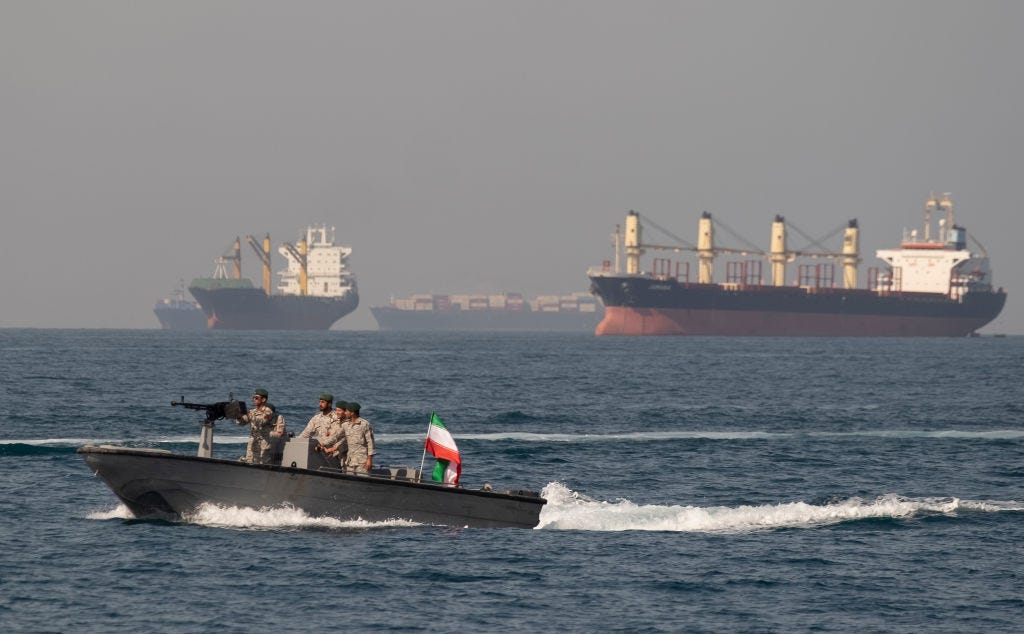
Iran has moved to formalise its control over the Strait of Hormuz, one of the world’s most important maritime chokepoints, by launching a new authority that now requires vessels to seek clearance and potentially pay millions of dollars before crossing the strategic waterway.
- Iran has established the Persian Gulf Strait Authority (PGSA) to control and require authorization and potential fees for vessels transiting the Strait of Hormuz.
- The PGSA claims legal management of the strait, which handles nearly one-fifth of global oil and LNG shipments, requesting detailed ship and cargo information before transit.
- Reports suggest some vessels have already paid up to $2 million per passage, with payments in Chinese yuan; African-linked and other international ships are affected.
- The move has drawn criticism from the US, Gulf States, and European governments, with the UAE strongly rejecting Iran's claims and calling the control attempts illegitimate.
Tehran recently announced the creation of the Persian Gulf Strait Authority (PGSA), declaring that no vessel may transit the Strait of Hormuz without approval from Iranian authorities, tightening control over the strategic waterway despite the ongoing US blockade
The PGSA said it is now the “legal entity and representative authority” managing vessel movement through the strait, adding that "transit through this area for the purpose of passing through the Strait of Hormuz requires coordination with, and authorization from, the Persian Gulf Strait Authority."
A map published by the authority and cited by the BBC claimed “Iranian armed forces oversight” across more than 22,000 square kilometres of the strategic waterway.
Under the new system, shipping companies must submit more than 40 categories of information before passage, including cargo details, crew nationalities, ownership structures, and destinations.
While no official tariff has been announced, reports indicate that some vessels have already paid up to $2 million per transit, with payments reportedly made in Chinese yuan.
The development is raising fresh concerns across global shipping and energy markets, including in Africa, where several African-linked vessels have already been affected by tensions in the Gulf.
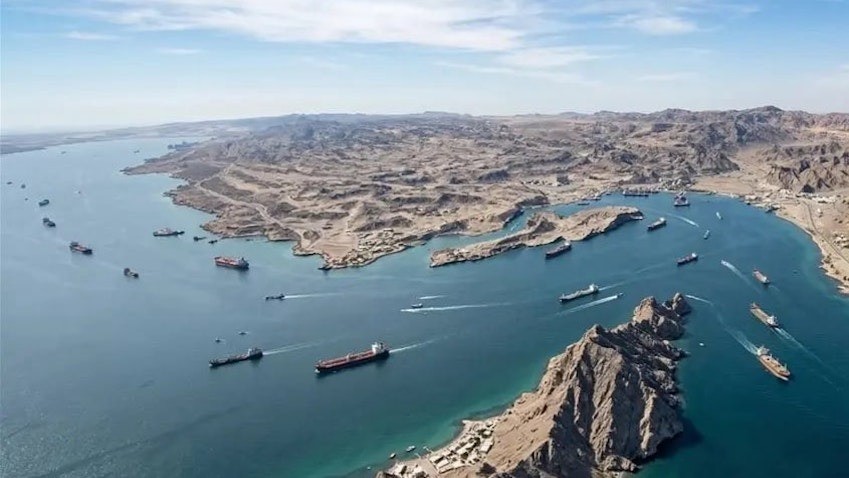
African-linked vessels already affected.
Earlier this year, Business Insider Africa reported that the Gabon-flagged oil tanker MSG became one of the first non-Iranian vessels to transit the strait after the fragile ceasefire was announced in April, transporting approximately 7,000 tonnes of Emirati fuel oil to India, according to MarineTraffic data.
Reuters also reported in April that the Liberian-flagged tanker Navig8 Macallister was transporting around 500,000 barrels of UAE naphtha to South Korea, while the Liberian-flagged Very Large Crude Carrier Fpmc C Lord was carrying nearly 2 million barrels of Saudi crude bound for Taiwan.
However, at the same time, a Botswana-flagged liquefied natural gas tanker, Nidi, was forced to reverse course after attempting to leave the Persian Gulf before being redirected by Iran’s Islamic Revolutionary Guard Corps.
Separately, BBC Verify reported that footage released by Iranian-linked media showing a “punishment” strike on a tanker in the strait appeared to match the Liberian-flagged tanker Barakah, which operators said had been struck by unknown projectiles in early May.
The crude oil tanker Barakah (IMO 9902615), built in 2021, is managed by Abu Dhabi National Oil Corporation (ADNOC) Logistics & Services in the United Arab Emirates.
Shipping traffic drops sharply
According to ship-tracking data from Kpler, only 279 ships transited the strait between February 28 and April 12, far below the pre-conflict average of about 100 ships per day.
Iran’s Islamic Revolutionary Guard Corps said it coordinated the passage of at least 35 ships within a 24-hour period, including oil tankers and container vessels, insisting that traffic through the strait remains operational under Iranian security coordination.
The new transit regime has drawn criticism from the United States, Gulf countries, and European governments, many of which argue the move violates international maritime law under the United Nations Convention on the Law of the Sea.
The United Arab Emirates also rejected Tehran’s claims, describing Iran’s attempts to control the strategic waterway as “nothing but fragments of dreams.”
“The regime is trying to establish a new reality born from a clear military defeat, but attempts to control the Strait of Hormuz or infringe on the UAE's maritime sovereignty are nothing but pipe dreams,” UAE presidential adviser Anwar Gargash wrote on X.












![Taylor Polidore Williams Says Indie Film ‘HPV: Her Pretty Vagina’ Is Bigger Than Entertainment: ‘I Knew It Was A Necessary Conversation’ [Exclusive]](https://bossip.com/wp-content/uploads/sites/28/2026/05/17794757122146.jpg?quality=80&strip=all&w=1024&crop=0,0,100,683px#)
