Nearly 200 illegal gold companies uncovered in Cameroon amid anti-foreign mining push
Cameroon is intensifying efforts to clean up its gold mining sector after authorities identified nearly 200 illegal mining companies operating across the country’s East and Adamawa regions, with more than 95% of them reportedly foreign-owned.
 Black News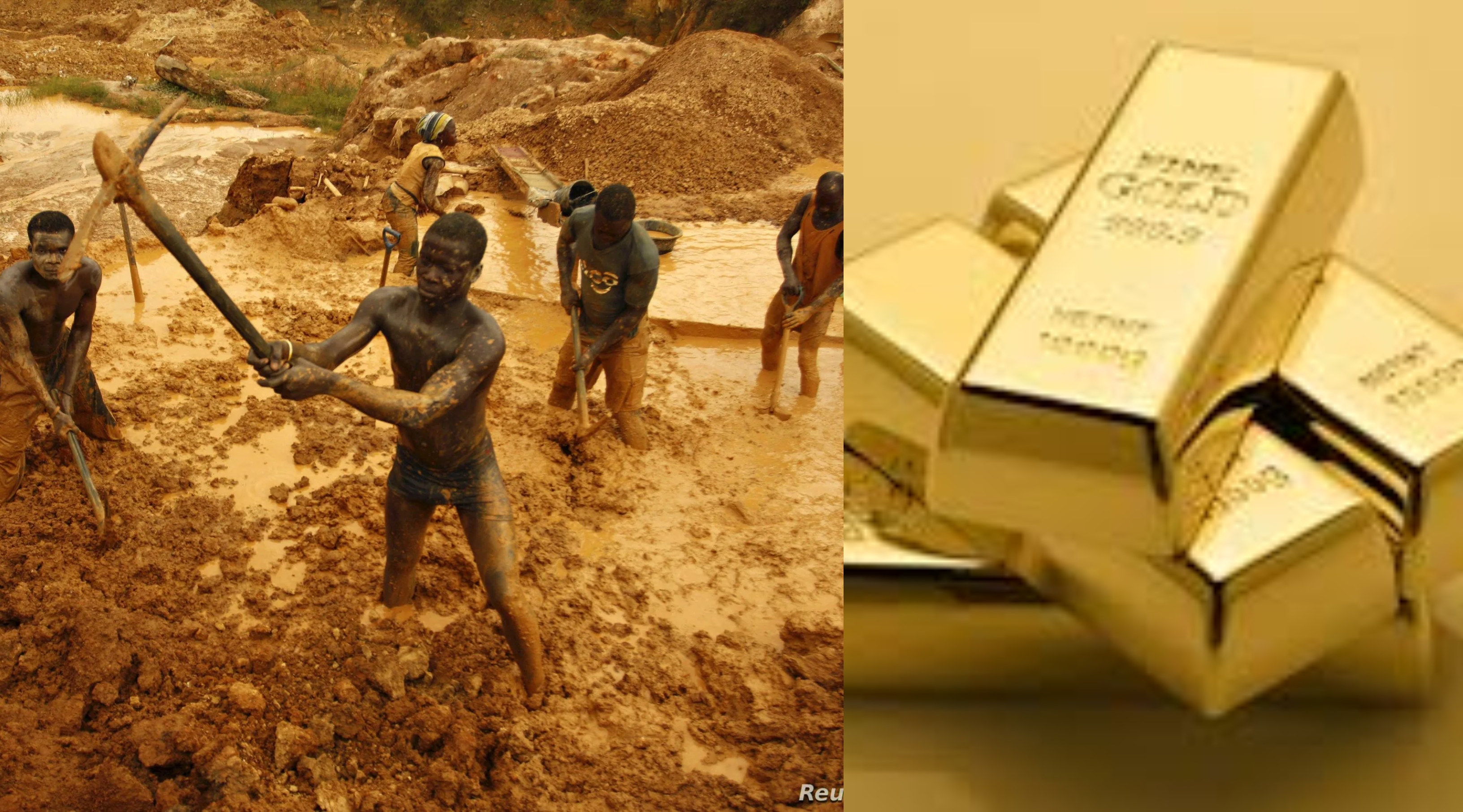

Cameroon is intensifying efforts to clean up its gold mining sector after authorities identified nearly 200 illegal mining companies operating across the country’s East and Adamawa regions, with more than 95% of them reportedly foreign-owned.
- Cameroon is cracking down on illegal gold mining, identifying nearly 200 such companies with over 95% foreign-owned.
- Authorities ordered all operators without valid licenses to stop activities immediately and dismantle mining facilities.
- The crackdown aligns with broader reforms to address weak oversight and poor traceability in Cameroon’s gold sector.
- A major discrepancy exists between officially recorded gold exports and much larger imports reported by foreign countries like the UAE.
In a recent press release signed by Fuh Calistus Gentry in his capacity as Acting Minister of Mines, Industry and Technological Development, the ministry said the operation forms part of a broader reform and restructuring campaign targeting illegal semi-mechanised artisanal gold mining activities.
The ministry ordered operators without valid licences, or those violating mining regulations, to immediately halt activities and dismantle gold-bearing gravel processing units and related facilities.
Authorities warned that non-compliant sites could be demolished at the operators’ expense, with possible legal proceedings to follow.
The government’s intervention comes amid growing concern over illegal mining activity in mineral-rich regions of Cameroon, where informal and semi-mechanised gold operations have expanded rapidly in recent years as global gold prices climbed.
Cameroon’s gold sector is a key source of livelihoods in the eastern and Adamawa regions, where artisanal and semi-mechanised mining dominates. However, the industry has long suffered from weak oversight and limited traceability.
Recent EITI reporting highlights the scale of the problem: Cameroon officially recorded just 22.3kg of gold exports in 2023, while the UAE alone reported importing more than 15 tonnes of Cameroonian gold during the same period — nearly 700 times higher.

Civil society groups argued that the reforms are necessary to protect Cameroon’s economic interests, public revenues, and local communities affected by unregulated mining activity.
Africa’s mining nationalism grows
The developments in Cameroon mirror a broader shift across Africa’s mining sector, where governments are increasingly moving to tighten control over mineral resources and reduce foreign dominance in strategic extractive industries.
In the Sahel, military-led governments in Mali, Burkina Faso, and Niger have adopted more assertive positions toward foreign mining companies, particularly Western operators, while revising mining codes to increase state participation and revenues.
Meanwhile, countries such as Ghana, Tanzania, and Zimbabwe have intensified oversight of mining operations and tightened controls on illegal extraction and mineral exports.
The growing push for mining sector reform reflects a wider continental effort to secure greater economic returns from Africa’s vast mineral wealth amid rising global demand for gold and other strategic resources.







![‘Authenticity Is The New Flex’ — Meet CEO Michele Y. Smith, The Black Woman Bringing Real Culture To MoPOP [Exclusive]](https://madamenoire.com/wp-content/uploads/sites/9/2026/04/17770457888798.jpg?quality=80&strip=all&w=1024&crop=0,0,100,683px#)