South Africa may take over Africa’s richest city as it nears financial collapse
South Africa could be forced to place Johannesburg under government administration as years of financial mismanagement, political instability and deteriorating public services push the country’s commercial capital closer to a fiscal collapse that business leaders warn could undermine the national economy.
 Black News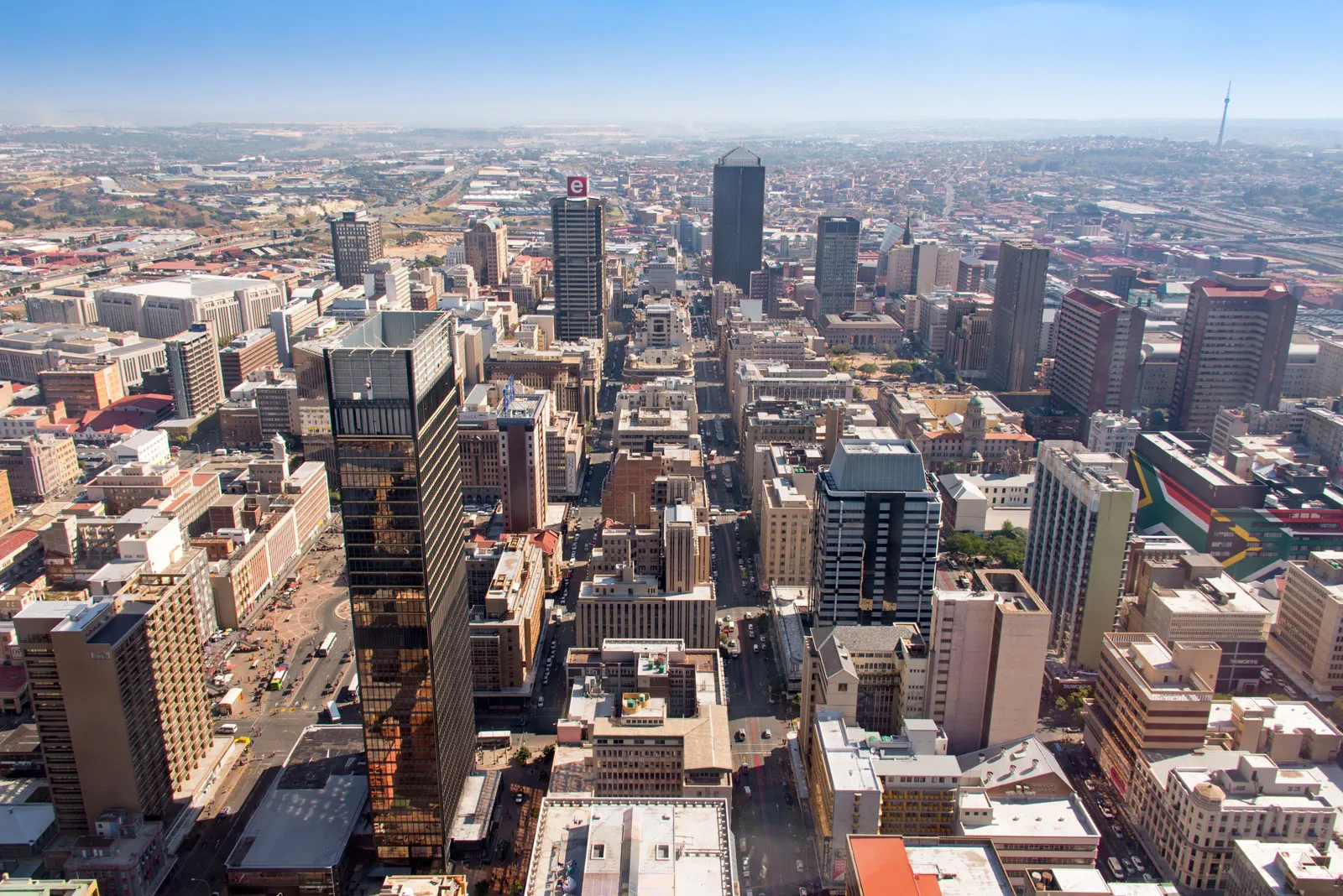

South Africa could be forced to place Johannesburg under government administration as years of financial mismanagement, political instability and deteriorating public services push the country’s commercial capital closer to a fiscal collapse that business leaders warn could undermine the national economy.
- South Africa has been warned it may need to take over Johannesburg to prevent the country’s commercial capital from sliding into financial collapse.
- The warning comes as Finance Minister Enoch Godongwana threatens to withhold R8 billion ($486 million) in annual funding if the city fails to fix its finances.
- Business leaders say Johannesburg’s deteriorating finances now pose a national economic risk because the city contributes about 16% of South Africa’s GDP.
- Years of political instability, rising debt and declining infrastructure have left Africa’s richest city facing one of its deepest governance crises.
Bloomberg quoted Genesis Analytics partner Lael Bethlehem, who led a study commissioned by Business Leadership South Africa (BLSA) and Business for South Africa (B4SA), as saying “The City of Johannesburg is essentially bankrupt. We may have a situation where they may not be able to limp on until November and the government will have to implement” a takeover plan.
The warning comes as Finance Minister Enoch Godongwana has given Johannesburg until Friday to explain how it intends to address serious financial shortcomings or risk losing R8 billion ($486 million) in annual government funding, about one-tenth of the city’s budget. Mayor Dada Morero is expected to respond next week.
The crisis extends far beyond municipal politics. Johannesburg is South Africa’s economic powerhouse, contributing about 16% of the country’s gross domestic product.
It is home to the Johannesburg Stock Exchange (JSE), Africa’s largest stock exchange, and serves as the headquarters or regional base for many of the continent’s biggest banks, mining companies, retailers and multinational corporations.
Any prolonged financial deterioration could weaken investor confidence, slow economic activity and reduce tax revenues across South Africa.
The latest warning also reflects growing concern within government and the private sector over the condition of South Africa’s largest municipalities.
Earlier this month, BLSA described Johannesburg’s decline as a “national economic emergency,” arguing that the city’s deterioration threatens South Africa’s improving economic outlook at a time when business confidence has begun recovering following progress in addressing the country’s electricity shortages.
The business group said Johannesburg’s fiscal crisis has been building for years across successive administrations and unstable coalition governments rather than under a single political leadership.
Political uncertainty has compounded the city’s financial challenges. Since the African National Congress lost its outright majority in Johannesburg in 2021, the city has experienced repeated changes in political leadership, coalition disputes and motions of no confidence, making long-term planning and infrastructure investment increasingly difficult.
The city’s future is expected to become one of the defining issues in South Africa’s municipal elections scheduled for 4 November, where Johannesburg is likely to be among the country’s most fiercely contested battlegrounds.
Johannesburg’s financial position has continued to deteriorate despite its sizeable budget.
According to the Genesis Analytics study, the city spends more per resident than any of South Africa’s other major metropolitan municipalities but performs worse on many key indicators of financial management and service delivery.
The report found that Johannesburg employs 8.5 municipal workers for every 1,000 residents, above the metropolitan average of 6.4, yet loses around 45% of treated water through leaks and theft.
Nearly one-third of electricity supplied to the city is also lost through theft or technical failures, almost three times the level recorded in Cape Town.
Meanwhile, operating expenditure has nearly doubled since 2010, while capital investment has declined by 13%, leaving roads, water infrastructure and other public assets increasingly neglected.
Over the same period, inflation-adjusted residential property prices in Johannesburg have fallen by about 20%, compared with a 34% increase in Cape Town.
The city owes hundreds of millions of dollars to state-owned electricity and water utilities, has faced threats of power cuts over unpaid debts, and recently ran out of fuel for vehicles used to provide essential municipal services, including road maintenance.
Despite its financial strain, Johannesburg plans to increase its workforce by about 1,700 employees this financial year to more than 40,000.
Godongwana has also instructed the city to reverse what he described as an illegal wage agreement that would add R10.3 billion ($627 million) to employee costs over the next two years, warning that Johannesburg must adopt a credible and fully funded budget if it wants to continue receiving national government support.
Business leaders say restoring Johannesburg will require far more than additional funding.
“The state of the city has become a matter of national importance,” BLSA Chief Executive Officer Busi Mavuso said while introducing the report.
Bethlehem argued that fixing Johannesburg would require stronger governance, greater accountability and decisive action against corruption and organised criminal networks that have contributed to years of institutional decline.
“Johannesburg is in a deep, systemic and escalating crisis,” she said. “Addressing the problems of Johannesburg will involve a reckoning with criminal syndicates.”
Should Johannesburg fail to satisfy the Treasury’s conditions, the national government could invoke constitutional provisions to withhold funding, a move that analysts say may ultimately force provincial authorities to appoint an administrator to run Africa’s richest city.