Tanzania’s $112 Million Stadium That Could Redefine East African Football Forever
At the foot of Mount Kilimanjaro, in the rapidly expanding Olomoti area of Arusha, Tanzania is constructing what may become the defining symbol of East Africa’s sporting future. The Samia Suluhu Hassan Stadium — a $112 million, 30,000-seat arena rising from northern Tanzania’s plains — is far more than a football venue. It is a [...]
 Black News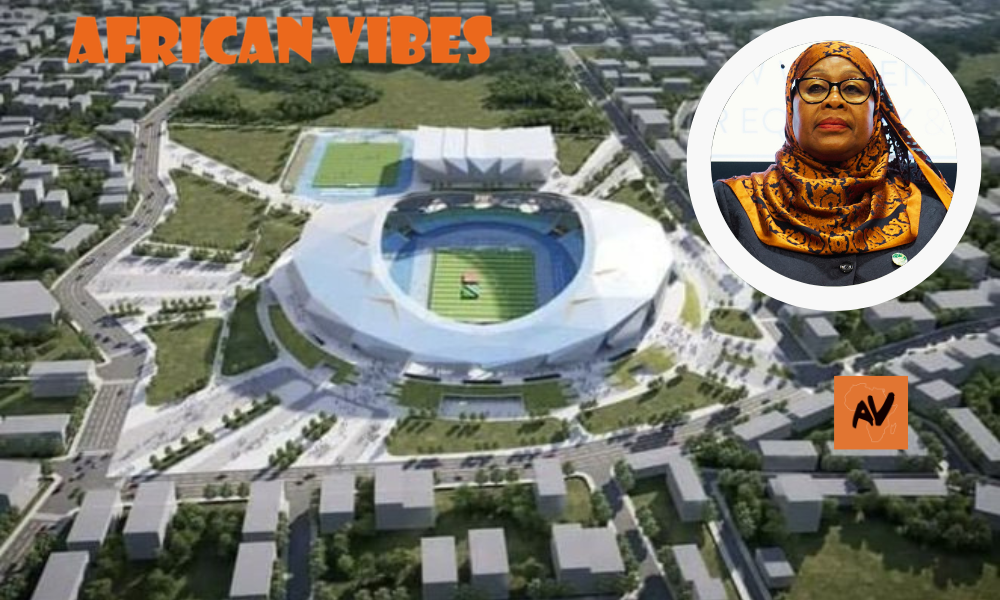
At the foot of Mount Kilimanjaro, in the rapidly expanding Olomoti area of Arusha, Tanzania is constructing what may become the defining symbol of East Africa’s sporting future.
The Samia Suluhu Hassan Stadium — a $112 million, 30,000-seat arena rising from northern Tanzania’s plains — is far more than a football venue. It is a declaration of ambition, identity, and regional power. And with the 2027 Africa Cup of Nations approaching, the project has become one of the most important sporting developments on the African continent.
When construction officially began on 8 April 2024, it marked more than the start of another infrastructure project. It marked East Africa’s return to the centre of African football after nearly half a century on the sidelines.
For Tanzania, Kenya, and Uganda, AFCON 2027 is not simply a tournament. It is a geopolitical and cultural moment — one capable of reshaping how the region is viewed by the rest of the continent and the world.
East Africa’s Long Wait for Football’s Biggest Stage
To understand why this stadium matters, you need to go back to 1976.
That was the last time East Africa hosted the Africa Cup of Nations, when Ethiopia staged the tournament nearly 50 years ago. Since then, the continent’s football spotlight has largely belonged to West and North Africa, with countries like Egypt, Nigeria, Morocco, Senegal, and Ivory Coast dominating both infrastructure investment and continental influence.
Now, history is shifting.
In 2027, Tanzania, Kenya, and Uganda will jointly host AFCON for the first time ever — the first three-country hosting arrangement in the tournament’s history. The decision represents one of the boldest moves the Confederation of African Football has made in decades.
And at the centre of Tanzania’s contribution stands the Samia Suluhu Hassan Stadium.
ALSO READ: African Vibes’ 10 All-Time Greatest African Soccer Players
Inside Tanzania’s $112 Million Football Megaproject
The scale of the project is difficult to ignore.
Built on a 14.57-hectare site in Arusha, the stadium is being developed by China Railway Construction Engineering Group (CRCEG), a major Chinese state-owned contractor with extensive experience across East Africa.
Once complete, the stadium will feature:
- 30,000 seats
- A FIFA-standard 105m × 68m grass pitch
- Fully covered spectator seating
- VIP and executive hospitality sections
- Media and broadcasting facilities
- Administrative offices
- Event and conference spaces
- A museum and community areas
Unlike many African stadiums built purely for tournament use, Tanzania’s vision extends beyond football.
The venue is designed as a multi-purpose civic hub capable of hosting concerts, cultural festivals, athletics events, and regional gatherings long after AFCON 2027 ends.
That long-term thinking is central to why the project is attracting so much attention.
A Stadium Inspired by Tanzania Itself
Architecturally, the stadium tells a distinctly Tanzanian story.
Its design draws inspiration from Tanzanite — the rare blue-violet gemstone found only in Tanzania — alongside Mount Kilimanjaro, Africa’s highest peak and one of the continent’s most recognisable landmarks.
The structure’s colour palette incorporates the national colours of Tanzania’s flag: green, blue, yellow, and black.
The result is a stadium that does not simply imitate European or Gulf-state sports architecture. Instead, it attempts to root modern design within local cultural identity.
According to CRCEG engineers, the stadium’s lightweight steel framework and sweeping cantilever roof were specifically designed to integrate with Arusha’s surrounding landscape while ensuring uninterrupted views for every spectator.
From above, the venue resembles a fusion of sport, tourism, and national branding — a building designed as much for symbolism as for football.
Construction Is Moving Faster Than Many Expected
As of early 2026, construction has surpassed 75 percent completion.
The primary steel superstructure has already been completed, with work now concentrated on roofing systems, seating installation, electrical infrastructure, fire safety systems, and digital communication technology.
Tanzanian officials say the project remains on track for a mid-2026 handover, leaving sufficient time for inspection and certification by both CAF and FIFA before the tournament begins in 2027.
That timeline matters.
Across Africa, major tournament infrastructure projects have historically faced delays, funding disputes, and political complications. Tanzania’s ability to keep the project moving steadily has strengthened confidence that East Africa will be ready when the continent arrives in 2027.
Government officials have credited consistent contractor payments, inter-agency coordination, and oversight from international consultants Dar Al-Handasah for the project’s pace.
Why Arusha Matters More Than Dar es Salaam
Tanzania already possesses one internationally recognised football venue: the Benjamin Mkapa Stadium in Dar es Salaam.
So why invest another $112 million in Arusha?
The answer is strategic.
Arusha is already one of East Africa’s most important diplomatic cities. It hosts the headquarters of the East African Community and the African Court on Human and Peoples’ Rights, making it a centre of regional political influence.
Now Tanzania is extending that identity into sport.
Positioning a world-class football stadium in Arusha transforms the city into a dual-purpose hub — political by weekday, global sporting destination by weekend.
There is also a major tourism calculation behind the decision.
Arusha sits at the gateway to Tanzania’s northern safari circuit, including the Serengeti, Ngorongoro Crater, and Kilimanjaro region. For visiting supporters, AFCON 2027 could become a unique combination of football and tourism rarely seen in international sport.
Very few tournaments in the world can realistically offer fans elite football in the afternoon and a safari experience the following morning.
Tanzania knows that.
ALSO READ: Who Really Deserves the AFCON Trophy – Senegal or Morocco?
East Africa’s Infrastructure Revolution Has Already Begun
The Samia Suluhu Hassan Stadium is only one piece of a much larger transformation happening across East Africa.
In Uganda, the Hoima Stadium project has dramatically expanded the country’s sporting infrastructure footprint.
In Kenya, major renovation work is underway at Kasarani Stadium, while Talanta Stadium — expected to become one of the country’s flagship venues — represents another massive investment tied directly to AFCON 2027 preparations.
Collectively, Tanzania, Kenya, and Uganda are building something East Africa has historically lacked: a connected ecosystem of modern sporting infrastructure.
That matters far beyond football.
Modern stadiums generate jobs, tourism revenue, sponsorship opportunities, broadcasting rights, transportation upgrades, and urban development. They become anchors around which new hotels, restaurants, roads, and entertainment districts emerge.
For East Africa, AFCON 2027 is becoming less about a single tournament and more about regional economic acceleration.
The Political Meaning Behind the Stadium’s Name
Naming the stadium after President Samia Suluhu Hassan carries enormous symbolic significance.
President Hassan became Africa’s first female leader of a major nation when she assumed office in 2021. Since then, her administration has aggressively pursued infrastructure expansion, economic modernisation, and renewed international engagement.
The stadium reflects that political identity.
It is not simply a sports project attached to her name. It is a physical representation of the image Tanzania wants to project: modern, ambitious, stable, and regionally influential.
For many young Tanzanians — especially women and girls — seeing Africa’s largest football tournament hosted inside a stadium named after a female president sends a message that extends beyond politics.
It becomes part of the country’s national story.
Why AFCON 2027 Could Permanently Change East African Football
For decades, East African football has struggled for consistent continental recognition.
The region has produced talented players and passionate fan bases, but the investment gap between East Africa and football powerhouses in West and North Africa has remained significant.
AFCON 2027 could alter that balance in several ways.
1. Global Visibility
For one month, the world’s football media will focus intensely on East Africa.
That exposure benefits domestic leagues, local clubs, academies, sponsors, broadcasters, and emerging talent across the region.
Visibility attracts investment — and investment changes football ecosystems.
2. Higher Standards
CAF tournament requirements are forcing upgrades in stadium quality, transportation systems, hospitality, security, officiating, and broadcasting infrastructure.
Those improvements do not disappear after the tournament ends. They become permanent assets.
3. Regional Integration
A three-country hosting model requires unprecedented logistical cooperation between Tanzania, Kenya, and Uganda.
That collaboration could eventually evolve into deeper sporting integration, including regional leagues, youth competitions, and future joint bids for global events.
4. Tourism and Economic Growth
Major international tournaments generate hundreds of millions of dollars in direct and indirect economic activity.
Hotels, airlines, restaurants, local businesses, tour operators, and transportation networks all benefit from the influx of fans and media attention.
For East Africa, AFCON 2027 doubles as a global tourism campaign.
The Stadium That Could Outlive the Tournament
The easiest way to view the Samia Suluhu Hassan Stadium is as a football arena for AFCON 2027.
But that view is too small.
Long after the tournament ends, the stadium will continue shaping Arusha and Tanzania itself. It will host league matches, concerts, regional tournaments, school competitions, festivals, conferences, and civic events for decades.
Its economic value will compound over time through tourism, employment, taxation, and surrounding urban development.
That is why the $112 million investment matters.
Not because of one tournament.
But because of what the stadium represents: a region investing in itself with confidence after decades of waiting for global attention.
East Africa’s Moment Is Almost Here
Nearly 50 years after East Africa last hosted AFCON, the region is preparing to welcome the continent back on entirely different terms.
The roads are expanding. The stadiums are rising. The investment is accelerating.
And in Arusha, beneath the shadow of Kilimanjaro, Tanzania’s most ambitious sporting project in modern history is nearing completion.
By the time the opening whistle of AFCON 2027 blows, the Samia Suluhu Hassan Stadium may represent something larger than football itself.
A reminder that East Africa is no longer asking to be included in Africa’s sporting future.
It is building that future in concrete and steel.