Temporal Fugitives and Anita Mui
This essay examines how collective memory of the singer Anita Mui unfolds across cultural productions in post-2019 Hong Kong. It begins with an analysis of memorial narratives associated with the 2021 biographical movie Anita, then examines a 2023 public debate about urban planning for museums, including the Hong Kong Heritage Museum, which at the time hosted an exhibition about the singer. Tracing the online circulation of memory narratives, the essay introduces the concept of ‘temporal fugitives’ to describe those who strategically withdraw from a politically turbulent present by retreating into a reconstructed past to seek solace. The post Temporal Fugitives and Anita Mui appeared first on Made in China Journal.
 Black News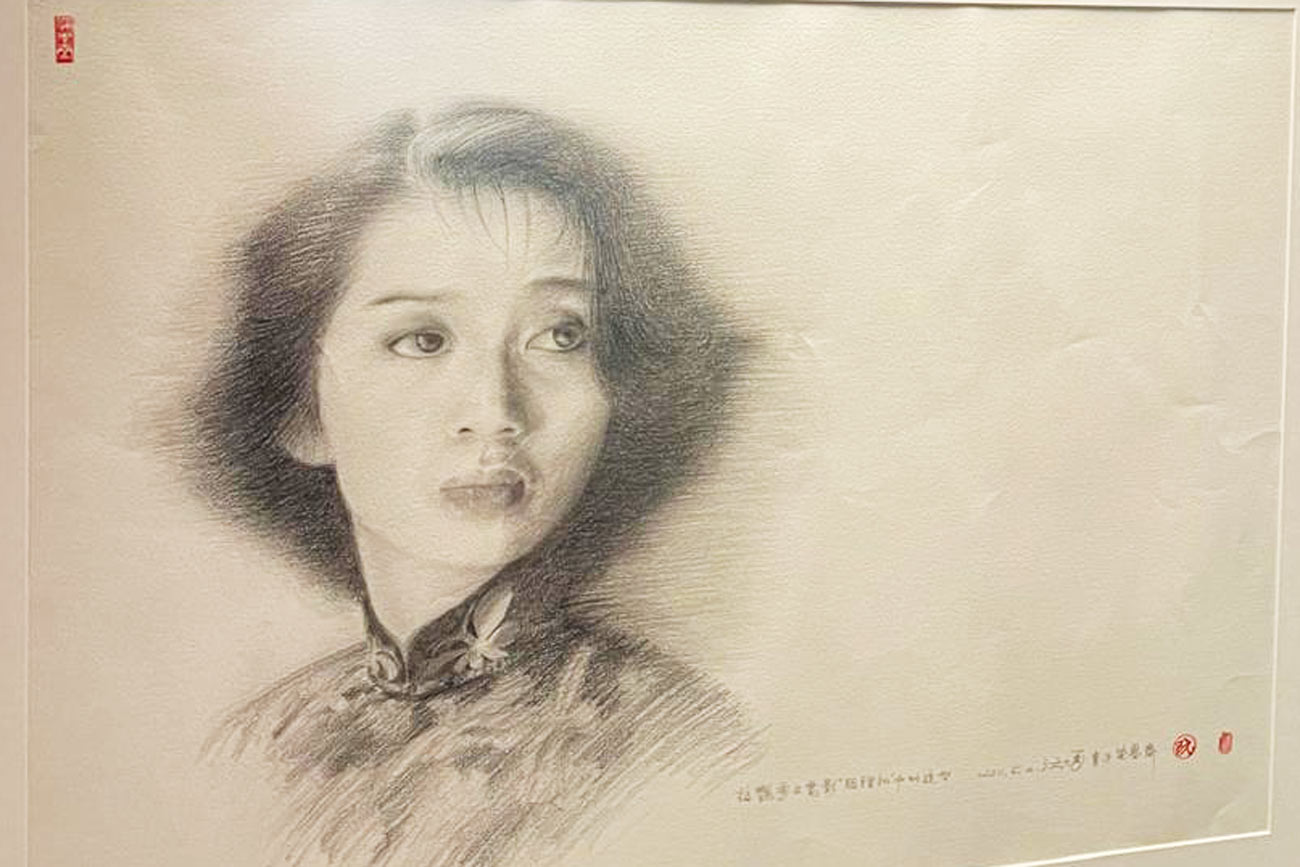
In 2003, Anita Mui, a legendary pop diva from Hong Kong, died at the age of forty. Eighteen years later, in 2021, the biographical movie Anita, directed by Longman Leung, was released. It depicted Anita’s colourful life, as she transformed from a four-year-old street singer into an Asian pop sensation of the 1980s. The movie stirred fervent nostalgia on the internet, with its portrayal of colonial Hong Kong striking a special chord in the hearts of many locals who, just one year earlier, had experienced the city’s sudden political shifts in the wake of the enactment of the 2020 National Security Law (NSL).
By illuminating online nostalgia about Anita Mui and Hong Kong in the 1980s—the golden era depicted in Leung’s film—this essay examines a politics of collective memory in a time of political rupture. Since the enactment of the NSL, international human rights organisations, activist groups, and scholars have observed an increasing erosion of civil freedoms of speech, the press, and protest in the city (HRW 2025; Ortmann 2024; Ortmann et al. 2025), while the local government has promoted a counternarrative of a flourishing city, exemplified by the ‘Tell Good Stories of Hong Kong’ initiative launched in 2022. Beyond these polarising portrayals, ordinary people’s memorial narratives offer a window into their embodied experience of political transformation (Halbwachs 1992; Nora 1989; Trouillot 1995).
In addition to tracing online reactions to the Anita movie, this essay addresses a 2023 controversy, when the Hong Kong Government proposed replacing a museum that chronicles the city’s popular culture (including an exhibition about Anita Mui) to make space for a new museum celebrating national achievements. Based on online responses from netizens, the essay argues that the government has unintentionally deepened the symbolic power of Anita Mui as an icon of local culture. As such, the government has ironically reinforced the binary perception of the national and the local—an ideological divergence it studiously tried to downplay. By exploring the online discursive terrain regarding the movie and the museum, this essay aims to show how cultural memory functions as an affective reserve of shared grief under political depression.
Intriguingly, the online public in post-2019 Hong Kong has shown an alternative form of politics that emphasises detachment and emotional recuperation, rather than the reinsertion into state-making processes that scholars have observed among Chinese netizens more broadly (Negro 2017). In a way, this online nostalgia is oriented more towards ‘redress’ than ‘protest’ (Bayat 2013). And, in the debate about the land use of museums, local netizens expressed a fatalistic outlook for the city’s future; their political expressions prioritise creating emotional resonance over making political demands. Building on the notion of political disengagement (Meier 2023), I employ the concept of ‘temporal fugitives’ to describe netizens who withdraw from a politically turbulent present by inhabiting a reconstructed, romanticised past mediated through cultural production.
Remembering That Era
Beyond her stardom, Anita Mui is remembered for her philanthropic career and civic engagement. A statue of Mui, known as the ‘Daughter of Hong Kong’, stands on the Avenue of Stars. Released in November 2021, the movie Anita presents Hong Kong in different eras, from the 1960s to the 2000s. It re-enacts major events in the city’s history, including the 1997 handover from the United Kingdom to China and the 2003 Severe Acute Respiratory Syndrome (SARS) epidemic, showing historical landmarks that no longer exist, such as Lai Yuen and Millie’s Centre. The cast wears costumes, wigs, and make-up that represent the fashion styles of each decade; they also speak with the linguistic features of each era. At the film’s premiere, former financial secretary John Tsang commented: ‘It is more than a biography; it is a period piece’ (Edko Films Limited 2021). The movie performed well at the box office; at the time of writing, in late 2025, it was the seventh highest selling domestic production in local history. It was later adapted into a globally available miniseries.
The movie vividly reconstructs historical Hong Kong through its careful orchestration of music, props, lighting, language, and spatial design. The 1980s is portrayed as a vibrant era—a stark contrast with the landscape of late 2021 when the city went through a quelled social movement, prolonged pandemic lockdowns, and political shifts. Thanks to Anita’s fame and the allure of an old Hong Kong, the movie attracted widespread online attention. I have collected online comments posted to various trailers and promotional clips on YouTube that demonstrate how audiences expressed their collective memory. To protect users’ identities, I have anonymised their account names, translated their comments, and made minor modifications.
Online users commonly saw Anita as a cultural figure who embodied the city’s glorious 1980s. For many, the movie is more than nostalgic entertainment; it transports audiences back in time. ‘If you cry while watching the movie, you are not only missing Anita; you are missing that era. Our youthful years are gone,’ wrote one netizen. ‘The universe only granted Hong Kong 20 years of glory … Although it ended already, it stays with me forever,’ wrote another. ‘I miss Hong Kong under the British rule, the most prosperous 1980s and 1990s,’ wrote a third. The movie emplaces the audience in 1980s Hong Kong, creating a vicarious experience through which these temporal fugitives can revisit their ‘youthful’ and ‘glorious years’.
To many local people familiar with Anita’s life history, this child street singer who became Asia’s leading pop diva represents the city’s bubbling economy in the 1980s. Anita’s death has thus become symbolic of the loss of the glorious past. As one netizen wrote: ‘The daughter of Hong Kong. Her passing represents the end of a generation, a dreamy metropolis.’ Another lamented: ‘When I saw the old Hong Kong and looked at the present, I can’t but weep.’
In other comments, the themes of death and rebirth are deployed to describe Anita and the Hong Kong portrayed on screen. One netizen wrote: ‘Watching the movie felt like witnessing the rebirth of three old friends: Anita, Leslie, and Hong Kong.’ (Leslie Cheung was another local pop icon who also tragically died in 2003.) This netizen framed the experience of watching the movie as ‘witnessing the rebirth’ of Hong Kong. This implies that the netizen considered the 1980s to be alive and the present dead. Considering the above quotes collectively, Anita’s death indexes three historical transitions: the end of the glorious 1980s, the postcolonial turn, and the present. Through these associations, netizens emotionally synchronised their temporal orientation to the past and away from the present, forming a cohort of temporal fugitives.
As a cultural medium, the movie reconstitutes an affective connection between people, space, and history—a connection that netizens depict as lost to the present. The movie powerfully infuses this connection into a wide audience; it even allows those who came after the narrated past to feel nostalgic, creating what John Koenig (2014) calls ‘anemoia’. For example, netizens wrote comments such as, ‘I am not from that generation. But I still miss that generation’; ‘I am from the post-00s. I wept while watching the movie’; ‘I am from the post-00s. Anita owed us a live concert!’; and ‘I am not from that generation. You can’t compare singers these days with divas from that era. The music in the trailer crushed my heart.’ None of these writers was born in the 1980s but all felt nostalgic for a Hong Kong they never experienced. This phenomenon shows that ‘temporal fugitives’ are defined not by the generation into which they were born, but by collective experiences and emotional and political resonance.
That said, the reconstruction of the 1980s is a dialectic process between the movie and its audience. Not only did the movie re-create scenes from the 1980s, but also the audience actively supplemented what the movie missed, such as Anita’s well-known civic engagement. For example, one netizen wrote: ‘The production team was thoughtful not to put Anita’s friends at risk. But the audience knows it all; we will keep the unspeakable to our hearts. The daughter of Hong Kong.’ This netizen gestures to the partial portrayal of Anita’s civic participation in the movie, especially the omission of parts that might now be considered sensitive, such as her publicly remembered support for the 1989 protests. Nevertheless, as the quote suggests, the ‘unspeakable’ continues to circulate in the public memories of Anita.
Anita’s democratic pursuits also resonated with the 2019 protests in complex ways. One writer articulated entangled feelings about Anita’s early death:
Anita and Leslie left at the right time … Nowadays, many singers I liked have changed. Their deaths marked the end of the best era of the local music industry. Lucky we don’t have to see if they would have changed their stance.
To put this in context, some of Anita’s local contemporaries who joined civic engagements in the late 1980s openly condemned protestors in 2019. Some fans consider these singers’ changing attitude as a political gesture to maintain career opportunities in mainland China, and a form of betrayal. This netizen therefore found consolation in the idea that Anita’s political commitments are preserved in the past and she remains the symbolic ‘Daughter of Hong Kong’ imagined as supportive of democratic values.
Taken together, these online comments demonstrate three traits about the workings of cultural memory. The first is nostalgia and the shared desire for a temporal retreat. A politically fraught present crucially shapes the ways the 1980s and Anita are remembered and, more importantly, missed. Second, this politics of memory is organised around emotional resonance rather than the generation to which one belongs. In other words, temporal fugitives are bound together not by age but by a shared affective orientation towards the past. Third, the reconstruction of the past works not unilaterally but dialectically between the movie and the audience. The audience fills in gaps in the movie with their own knowledge, negotiating the limits of cultural productions while preserving the past as they know it.
Museum, Pride, and Grief
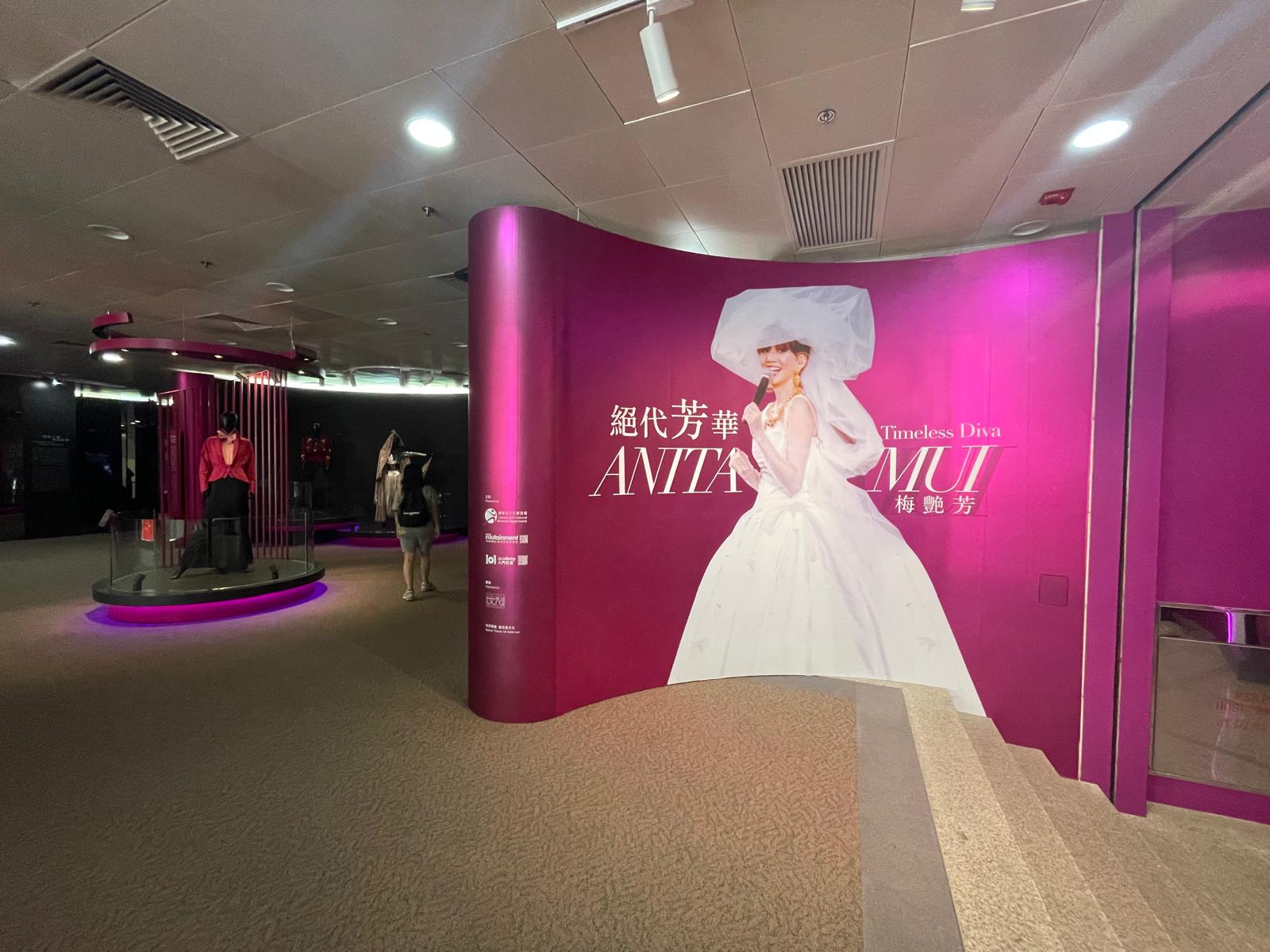
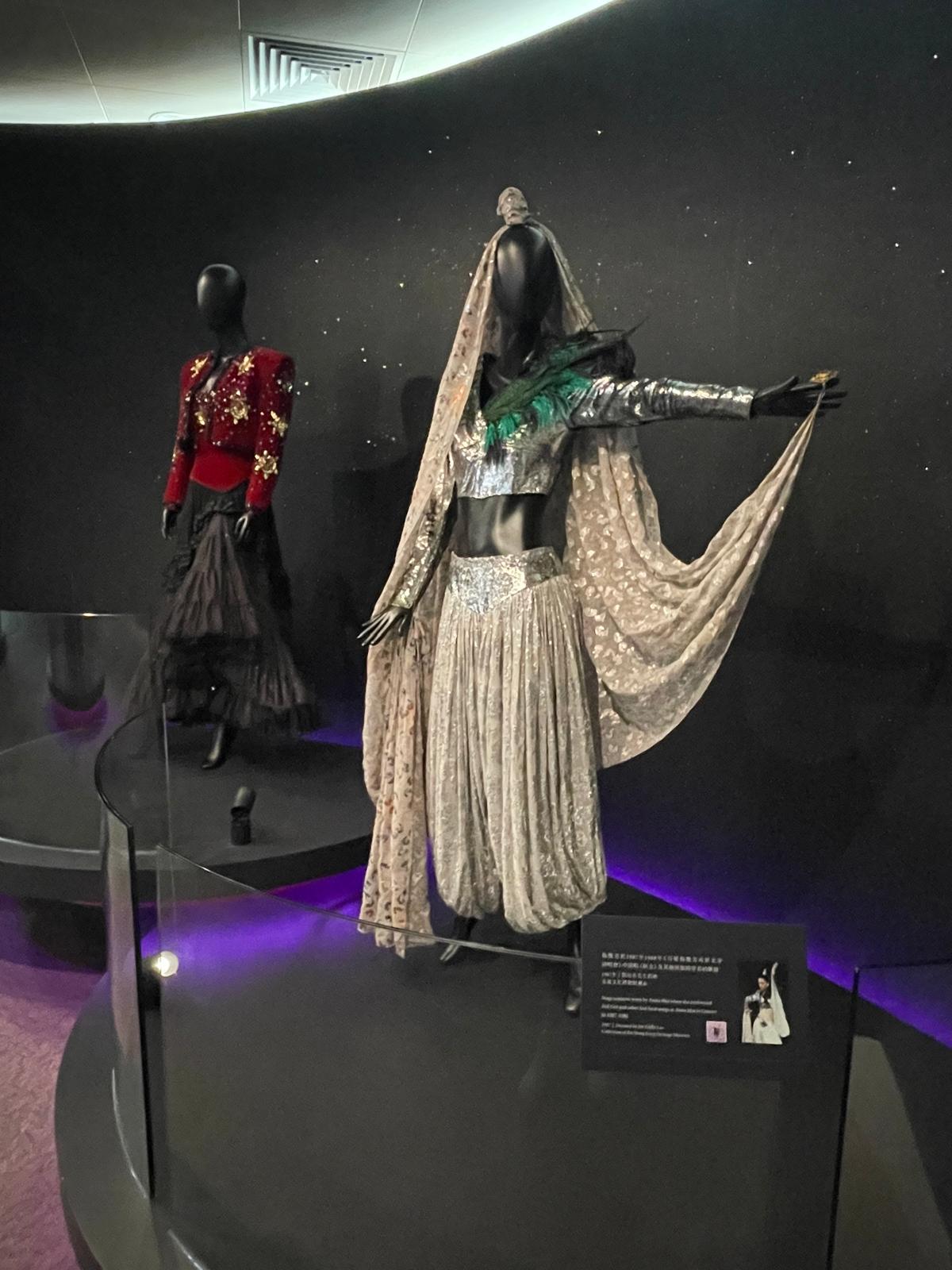
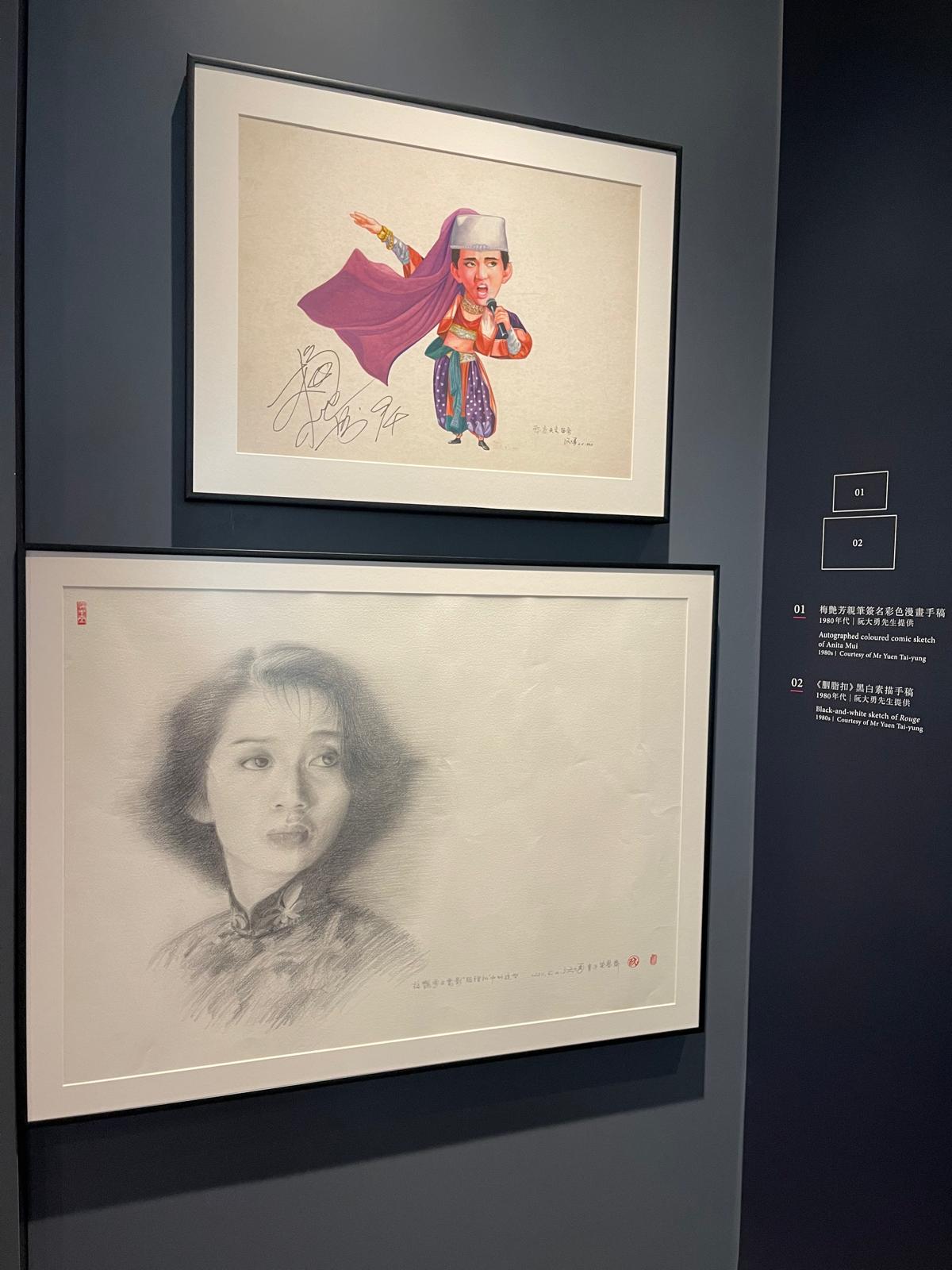
In December 2023, to commemorate the twentieth anniversary of Anita’s death, the Heritage Museum launched an exhibition titled ‘Timeless Diva: Anita Mui’ to honour the singer’s legacy and her contributions to Hong Kong’s popular culture. I visited the exhibition in Sha Tin in 2024 with friends aged in their forties, who lived through Anita’s prime era. The exhibition displayed Anita’s stage costumes, awards, and album covers. Her major hits such as ‘Flaming Red Lips’ (烈焰紅唇), ‘Lady’ (淑女), and ‘Dream Mate’ (夢伴) drifted through the air. A large screen played a looped montage of Anita’s comedy Wu Yen (鐘無艷), in which she performed the role of Emperor Qi. Wearing the costume of a lascivious ancient king, Anita humorously recited a suggestive poem written by his beautiful concubine, Yin Chun.
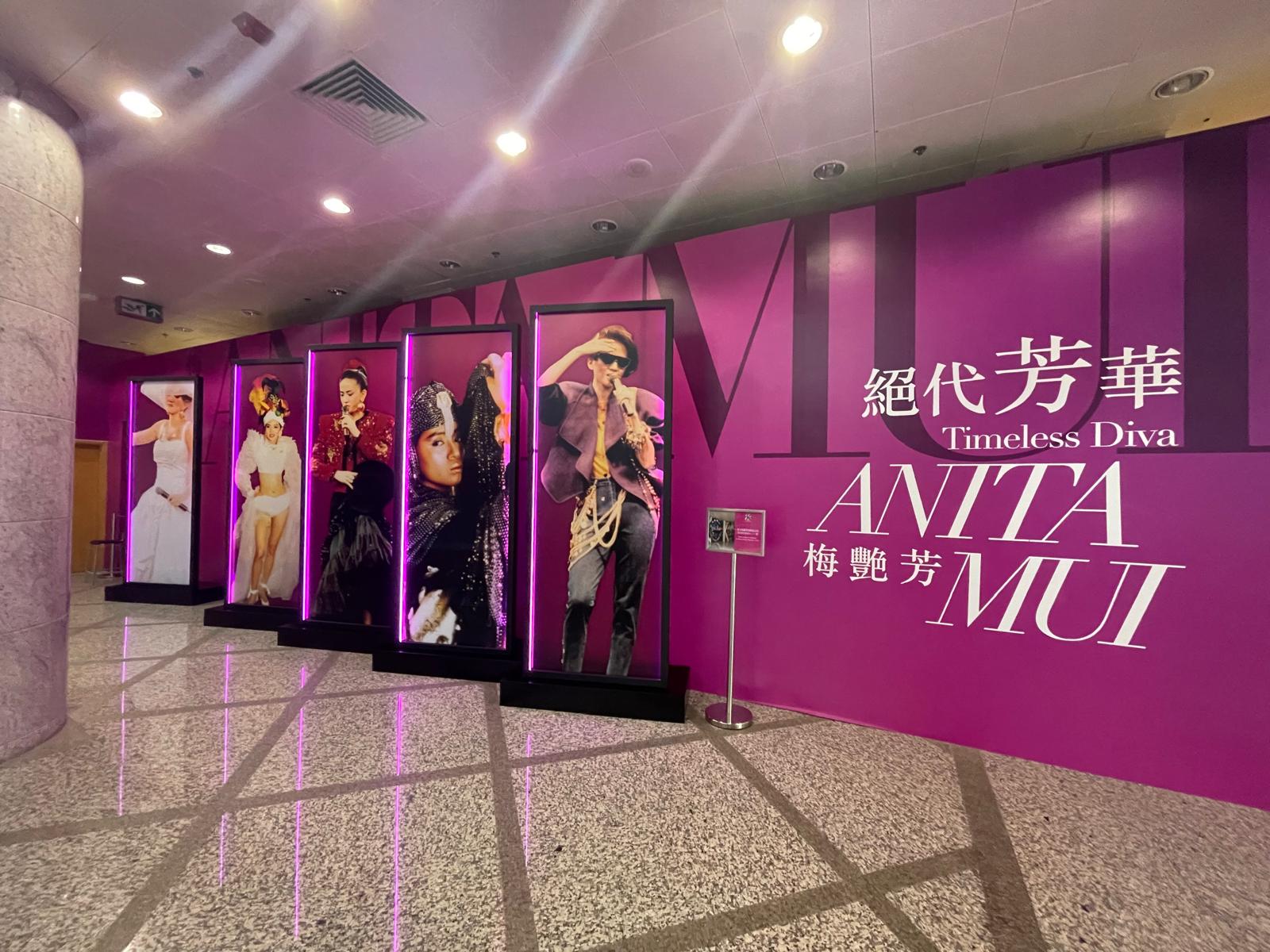
I chuckled, turned, and saw a friend weeping quietly. I resisted the urge to approach him; I did not want to break the moment. The others, too, stayed silent. Perhaps we all understood that Anita, as a queer icon, connected deeply with closeted teens such as my friend had once been, living through the more homophobic 1980s (see Lai 2021). Perhaps my friend wept because the museum configured Anita as part of a past that is irretrievable, thus ‘petrifying’ a cultural icon who once radiated youth, grit, and liberation (Bennett 1995). A few months later, I had a chance to confirm my suspicions. When I asked what had moved him at the exhibition, my friend fell silent for a moment before replying: ‘When I was there, I felt that her era was long gone.’
In his 2023 policy address, Hong Kong Chief Executive John Lee proposed building two new museums to showcase national development and promote patriotism. The government planned to build the first on the site of the Hong Kong Science Museum in Tsim Sha Tsui East; the Science Museum would then be relocated to Sha Tin to replace the Heritage Museum, which hosted the Anita exhibition and other local popular culture exhibitions. The government did not mention how the Heritage Museum’s existing collections would be handled, leading to heated discussions on the internet. Eventually, the plan to replace the Heritage Museum was suspended, in March 2024. Below is an anonymised excerpt from an Instagram post in late 2023. With several thousand likes and hundreds of comments, it reflects some of the prominent public opinions voiced in response to the government’s proposal:
I am proud of this exhibition, that my idol’s CDs, magazines, awards, costumes, jewellery became part of the museum’s collection. She is not only a former pop idol; she has officially become part of Hong Kong’s history … We should have seen it coming. In this era, our country comes first; Hong Kong’s cultures, values, and identities surely have to yield … I thought that the museum would be the best and final host to her belongings; and she could receive the well-deserved respect and recognition … Who could have known that this might be her last exhibition at the Heritage Museum? No words could convey my grief. Her belongings might once again lose their home. Perhaps I was too optimistic about this fading city. ‘Setting aside science, abandoning culture’—the most fitting epitaph for the city.
Taking pride in Anita’s exhibition, this writer saw the rumoured replacement of the Heritage Museum as a rebuke of local culture. This resonated with other views posted on Instagram: ‘Saddening news. Everything is disappearing, but our hearts remain unchanged’; ‘When a place is dying culturally, is it still a place?’; ‘I did see it coming. Patriotism, surely, comes first’; ‘I’ve got to visit the exhibition in the next couple days. This is a lot.’ The end of the long Instagram post above—overflowing with resigned grief—demonstrates a mode of affective management that blends disengagement with fatalism.
The wave of shared grief online is unsurprising if we consider the way museums function as negotiated sites of representation and collective memory. Museums do not merely preserve the past; they also shape history and public identities through technologies of selection, preservation, and display (Crane 2000). The government’s original plan was to showcase national identity in a prime location in the city, possibly replacing existing museums of science and local culture. This caused a backlash from the online public, who read this as a sign that the government prioritises patriotic education over scientific learning and, perhaps more notably, the preservation of local culture. This official plan created unintended ideological effects. It paradoxically reinforced an ideological divergence of a national identity and a local identity—one that the government itself sought to dilute through a ‘reinvigorated’ national education campaign in recent years (Vickers 2024).
Temporal Fugitives
In Anita’s signature ballad, ‘The Years Flow Like Water’ (似水流年), she sings: ‘Only reminiscence remains—the entangled strands, evermore [留下只有思念一串串永遠纏].’ I borrow this line to conclude this essay because it gives shape to the otherwise amorphous workings of memory. Memory unfolds in these never-ending ‘strands’, evoking transpersonal experiences across time and space. The power of memory lies in this form of ontological ‘openness’ (Massumi 2002: 35); it allows affective connections between residents and their city to be felt across bodies with little mediation (Thrift 2004). In contexts such as post-NSL Hong Kong, this means that memory can circulate beyond the reach of the authorities who seek to manage it. The lyric ‘captures’ the invisible flow of memory, much as this essay seeks to preserve a spectacular moment in the city’s affective life.
By considering two cultural sites associated with Anita Mui, the movie and the museum, this essay brings into relief a politics of cultural memory amid the post-2019 political rupture in Hong Kong. Through analyses of online memorial narratives of the 2021 biographical movie Anita and the 2023 public debate about the potential replacement of a museum hosting her exhibition, this essay shows how netizens orient themselves temporally towards a reconstructed past, imagined as glorious though lost, as a way to retreat from a present with which they no longer identify.
This nostalgic movement nevertheless differs from the one that emerged from the 1997 British handover of Hong Kong to China. During that postcolonial turn, local people explored their Chinese cultural roots through food and religion to address an identity crisis (Bosco 2015; Cheng 1997; Cheung 2005). These cultural pursuits reflected Hongkongers’ reaffirmation of a national sociocultural identity, which was imminent with the former colony’s formal reintegration with China. Departing from their predecessors, however, Hong Kong netizens demonstrated a different form of cultural longing in the post-NSL early 2020s. They responded to this turbulent period by rallying around a local cultural figure, who emerged from the city’s prime era, whose personal history resonates with local economic success, and whose legacy evokes a sense of belonging. These different choices in ‘the past’ reflect divergent preferences for collective identity—one national and the other local—and show the agency of temporal fugitives who, when facing political rupture, decide for themselves who they were, who they are, and who they may become.
People remember in context. They produce collective memory in dialogue with the present (Olick 2008). I use the term ‘temporal fugitives’ to describe individuals who affectively retreat from the politically turbulent present into a romanticised past that they may not even have personally experienced. They search in the past for a map with which to navigate present and future uncertainties. In the 2020s, Anita Mui remains one of the most resonant cultural icons and the glorious 1980s looms in her shadow, mesmerising those worn down by the present. Sometimes, memory reveals less about the past than the moment of its recollection.
References
Bayat, Asaf. 2013. Life as Politics: How Ordinary People Change the Middle East. Stanford, CA: Stanford University Press.
Berlant, Lauren. 2011. Cruel Optimism. Durham, NC: Duke University Press.
Bennett, Tony. 1995. The Birth of the Museum: History, Theory, Politics. London: Routledge.
Bosco, Joseph. 2015. ‘Chinese Popular Religion and Hong Kong Identity.’ Asian Anthropology 14(1): 8–20.
Cheng, Sea Ling. 1997. ‘Back to the Future: Herbal Tea Shops in Hong Kong.’ In Hong Kong: The Anthropology of a Chinese Metropolis, edited by Grant Evans and Maria Tam, 51–73. Honolulu: University of Hawai`i Press.
Cheung, Sidney C.H. 2005. ‘Consuming “Low” Cuisine after Hong Kong’s Handover: Village Banquets and Private Kitchens.’ Asian Studies Review 29(3): 259–73.
Crane, Susan A., ed. 2000. Museums and Memory. Stanford, CA: Stanford University Press.
Edko Films Limited. 2021. ‘《梅艷芳》名人觀後感 [Celebrity Reviews of “Anita”].’ YouTube, 19 November. www.youtube.com/watch?v=x-O24En98GA.
Halbwachs, Maurice. 1992. On Collective Memory. Edited and translated by Lewis A. Coser. Chicago, IL: University of Chicago Press.
Hong Kong Government. 2022. ‘Chief Executive’s 2022 Policy Address: Tell Good Stories of Hong Kong.’ 19 October. Hong Kong: Hong Kong Special Administrative Region of the People’s Republic of China. www.policyaddress.gov.hk/2022/en/p143.html.
Human Rights Watch (HRW). 2025. ‘China: Building a “Patriots Only” Hong Kong.’ News, 29 June. New York, NY: Human Rights Watch. www.hrw.org/news/2025/06/29/china-building-a-patriots-only-hong-kong.
Koenig, John. 2014. ‘Anemoia: Nostalgia for a Time You Never Experienced.’ The Dictionary of Obscure Sorrows, 21 December. www.thedictionaryofobscuresorrows.com/concept/anemoia.
Lai, Josephine Y.Y. 2021. ‘Bad Girl, Femme Fatale, and the Androgynous Body: Cantopop Queen Anita Mui’s Gender Game.’ Visual Anthropology 34(2): 163–77.
Massumi, Brian. 2002. Parables for the Virtual: Movement, Affect, Sensation. Durham, NC: Duke University Press.
Meier, Isabel. 2023. ‘Acts of Disengagement in Border Struggles: Fugitive Practices of Refusal.’ Antipode 55(6): 1860–76.
Negro, Gianluigi. 2017. The Internet in China: From Infrastructure to a Nascent Civil Society. Cham, Switzerland: Springer International Publishing.
Nora, Pierre. 1989. ‘Between Memory and History: Les Lieux de Mémoire.’ Representations 26: 7–24.
Olick, Jeffrey K. 2008. ‘From Collective Memory to the Sociology of Mnemonic Practices and Products.’ In Cultural Memory Studies: An International and Interdisciplinary Handbook, edited by Astrid Erll and Ansgar Nünning, 151–61. Berlin: De Gruyter.
Ortmann, Stephen. 2024. ‘Hong Kong’s Semi-Democracy Continues Its Decay.’ East Asia Forum, 22 January. www.eastasiaforum.org/2024/01/22/hong-kongs-semi-democracy-continues-its-decay.
Ortmann, Stephen, Raymond Kwun-Sun Lau, and Kenneth Ka-Lok Chan, eds. 2025. Hong Kong Politics after the National Security Law: Autocratization and Its Consequences. London: Routledge.
Thrift, Nigel. 2004. ‘Intensities of Feeling: Towards a Spatial Politics of Affect.’ Geografiska Annaler: Series B, Human Geography 86: 57–78.
Trouillot, Michel-Rolph. 1995. Silencing the Past: Power and the Production of History. Boston, MA: Beacon Press.
Vickers, Edward. 2024. ‘The Motherland’s Suffocating Embrace: Schooling and Public Discourse on Hong Kong Identity Under the National Security Law.’ Comparative Education 60(1): 138–58.
The post Temporal Fugitives and Anita Mui appeared first on Made in China Journal.