
AI and the New Machinery of African Repression
Artificial intelligence is lowering the cost of authoritarian control in Africa. The danger is not only mass surveillance, but a state that can abort reformist change before it is even born. Dictatorship used to be expensive. It needed informants, prisons, police files, propaganda and visible violence. Today, some of that work can be bought as software, financed through loans, connected to biometric systems and sold as modernization. The African question is not whether AI will suddenly turn a democracy into a dictatorship. It is whether AI can strengthen habits of rule that already exist: executive impunity, politicised security services, weak […] The post AI and the New Machinery of African Repression appeared first on African Arguments.
 Black News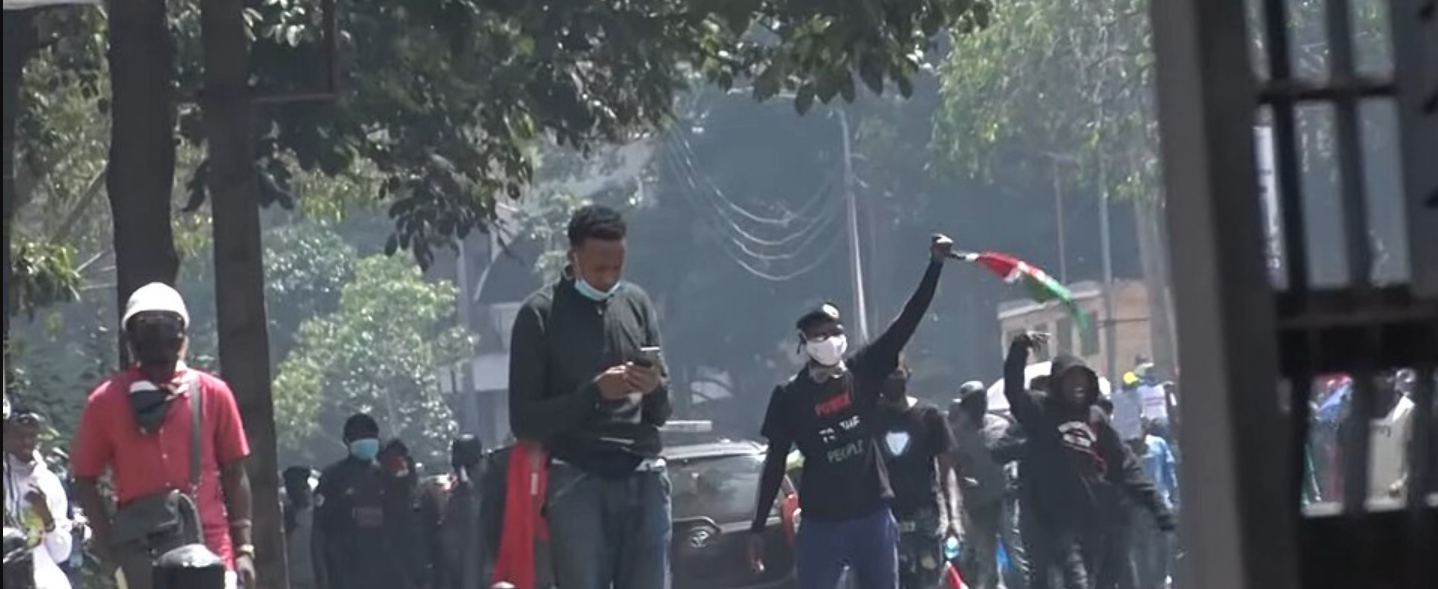
Artificial intelligence is lowering the cost of authoritarian control in Africa. The danger is not only mass surveillance, but a state that can abort reformist change before it is even born.
Dictatorship used to be expensive. It needed informants, prisons, police files, propaganda and visible violence. Today, some of that work can be bought as software, financed through loans, connected to biometric systems and sold as modernization.
The African question is not whether AI will suddenly turn a democracy into a dictatorship. It is whether AI can strengthen habits of rule that already exist: executive impunity, politicised security services, weak courts, opaque procurement and the treatment of dissent as a security problem. In many states, AI makes scattered records searchable.
The surveillance rush
A March 2026 study by the Institute of Development Studies and the African Digital Rights Network found that at least 11 African governments had spent more than USD 2 billion on AI-enabled smart-city surveillance systems. The countries named were Algeria, Egypt, Kenya, Mauritius, Mozambique, Nigeria, Rwanda, Senegal, Uganda, Zambia and Zimbabwe. Nigeria alone accounted for more than USD 470 million; Mauritius for USD 456 million; Kenya for USD 219 million.
The equipment is not abstract. It includes high-definition CCTV cameras, automatic number-plate recognition, facial recognition, biometric identity layers, analytics platforms and command centres where the feeds converge. Much of it is supplied or financed by Chinese firms and banks. Other layers come from spyware and digital-forensics companies, including NSO Group, Cellebrite and Intellexa-linked firms whose tools have appeared in African and Middle Eastern political cases.
The sales language is familiar: public safety, traffic management, counter-terrorism, efficient cities. But the African pattern is not neutral. Wairagala Wakabi of CIPESA, one of the editors of the IDS/ADRN report, has warned that these systems are being used to monitor activists, track protesters and silence dissent. The report found little independent evidence that the cameras reduce crime. It found clearer evidence that surveillance infrastructure appears around opposition activity, protest routes, central business districts and politically sensitive neighbourhoods.
Kenya makes the point concrete. Its Gen Z-led protests of 2024 and 2025 were organised through phones, hashtags, livestreams and mobile-money solidarity. Amnesty International later reported that authorities and allied groups used online intimidation, disinformation and surveillance to suppress the movement, and linked the crackdown to at least 128 deaths, more than 3,000 arrests and over 83 enforced disappearances. The same digital networks that helped young citizens bypass old party structures also gave the state a map of mobilisation.
This is the uniquely African implication. In countries where politics is often mediated by the police station, the court, the ruling party and the street, AI does not replace older power. It helps older power see earlier, sort faster and punish more selectively. Kenyan writer Nanjala Nyabola has argued that digital politics cannot be separated from analogue politics. AI makes that connection harder to escape.
Amnesty International reported on how authorities in Kenya used technology to monitor and target protestors in 2024 and 2025.
Old states, new engines
Control through information is not new in Africa. Colonial administrations counted bodies, mapped communities, issued passes and built files for policing labour and movement. Postcolonial states added national IDs, voter rolls, tax, telecom, school, bank and welfare records. AI changes retrieval: a face, number plate, transaction history and contact network can be joined in seconds.
The Atlantic Council and Paradigm Initiative reported in 2025 that 49 African countries had at least one biometric system, and that 35 of the continent’s 54 countries used biometrics in elections. Foreign technology firms dominate much of this ecosystem. In one sample cited by the report, only 38 percent of citizens surveyed knew their governments had purchased biometric, facial-recognition or AI systems.
That ignorance matters. A citizen cannot challenge a database they do not know exists, correct a watchlist they cannot see, or contest a machine match police treat as neutral truth. Where courts are slow and data-protection authorities weak, error can become a political weapon.
Uganda and Zambia show how quickly public-safety systems can become political tools. In 2019, the Wall Street Journal reported that Huawei technicians had helped security agencies in both countries spy on political opponents, including Uganda’s Bobi Wine movement and Zambian opposition bloggers. Huawei denied wrongdoing, and the governments disputed the framing. But Uganda’s police separately confirmed that a Huawei safe-city CCTV system with facial recognition and AI was being rolled out nationwide. Once the infrastructure is installed, the public has little way to know when crime control becomes opposition control.
Zimbabwe shows another layer, data extraction. In 2018, Zimbabwe entered a partnership with the Chinese firm CloudWalk for a mass facial-recognition project. Rights groups warned that Zimbabwean faces could become training material for systems later sold elsewhere. Ethiopian-born AI scholar Abeba Birhane has described this wider pattern as algorithmic colonialism: African bodies, data and social problems become raw material for technologies designed, owned and governed elsewhere.
The target list
Every movement for change begins with a calculation. People decide that visibility is less risky than silence. They gather, post, march and film. Sometimes government retreats; sometimes it cracks down. The decisive moment is when scattered frustration becomes visible as a movement.
AI-enabled surveillance changes that calculation. It does not have to arrest everyone. It only has to identify enough organisers, leaders, donors, livestreamers, and activists to make the next protest feel traceable. A face, plate number, phone movement or old hashtag becomes a thread in a political profile.
The effect is pre-emptive. For instance, a protest planned for Sunday and detected on Saturday through metadata, social-media monitoring and face-matching may not need police. The organisers know they have been seen, employers can be called, Passports can be delayed, and Tax files can be reopened. Often, the protest simply does not form.
The logic compresses: the algorithm flags a likely organiser; the flag is treated as proof the event would have occurred; and the person cannot be innocent because the alarm itself becomes evidence. With thin courts and politicised security services, intention starts to look like guilt.
This is why the African context matters. Surveillance abuses exist in richer democracies too, but they often face stronger courts, media, procurement records and civil-society litigation. In many African states, the control room is funded before the oversight body, and cameras are installed before the law defines search, storage or redress.
Those who refuse
There is a hopeful conference question: could smart tools in citizens’ hands become a catalyst for democratic change, as mobile phones did in earlier protests? Sometimes, but not symmetrically. African journalists and civic technologists document abuses, fact-check generative propaganda, monitor hate speech, trace disinformation and build safer tools for reporters and activists. Groups such as CIPESA, Paradigm Initiative, Amnesty Kenya and MISA Zimbabwe make the invisible architecture more visible.
But the asymmetry is enormous. Infrastructure, compute, contracts, training data and technical support sit mostly with the state and foreign suppliers. A civic-tech app can expose corruption; it cannot match a command centre connected to cameras, telecom records, border systems and biometric registries. A fact-check cannot stop an activist’s phone being located by a security unit.
The democratic demand is not that citizens out-compute the state. It is that states justify and limit what they buy. Smart surveillance should require law, warrants, independent oversight, procurement transparency, human-rights impact assessments, deletion rules and remedies for abuse. Without those constraints, innovation becomes a cover for political sorting.
The upgrade
The danger is not that AI invents authoritarianism in Africa. It is that it upgrades authoritarianism where it already has roots. It lowers the cost of watching, raises the speed of sorting and makes punishment selective. A government need not terrorise everyone if it can identify the few people around whom others might gather.
AI can still support development and well-being in Africa, such as health systems, agriculture, translation, education, public services and expression. But without democracy, a free press, independent courts and enforceable digital rights, the same tools become a machine for narrowing civic life. The promise is efficiency, but the risk is obedience.
This piece was made possible by support from the International Center for Journalists’ Michael Elliott Award, which is celebrating its ten-year anniversary.
The post AI and the New Machinery of African Repression appeared first on African Arguments.









![Taylor Polidore Williams Says Indie Film ‘HPV: Her Pretty Vagina’ Is Bigger Than Entertainment: ‘I Knew It Was A Necessary Conversation’ [Exclusive]](https://bossip.com/wp-content/uploads/sites/28/2026/05/17794757122146.jpg?quality=80&strip=all&w=1024&crop=0,0,100,683px#)
