An evening with the South London Warlords
The art of war — From Warhammer to Burrows and Badgers, the small Dulwich community has been fortifying defences and launching invasions since 1971. Ryan Loftus dives into the wonderful world of wargaming.
 Black News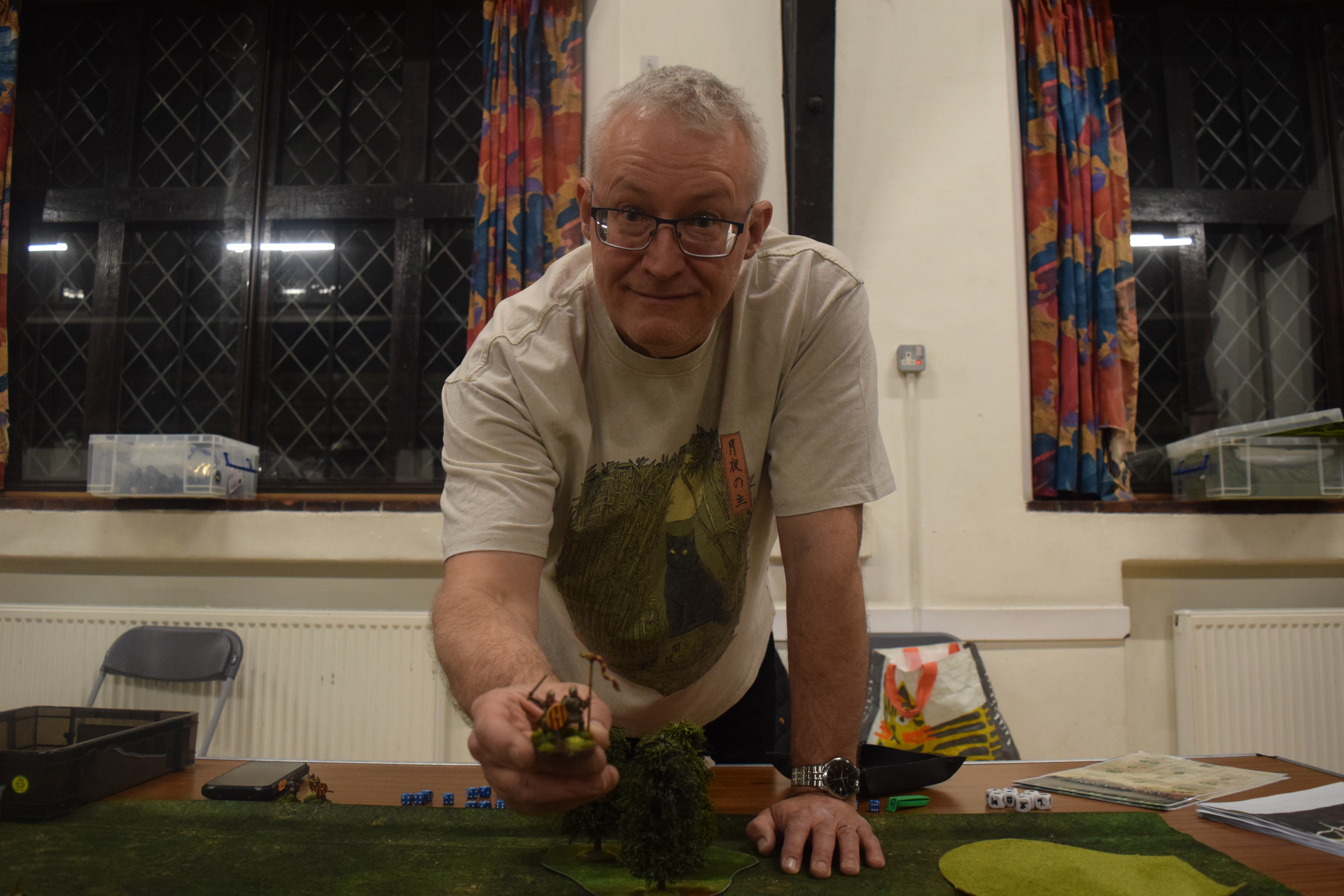

The art of war — From Warhammer to Burrows and Badgers, the small Dulwich community has been fortifying defences and launching invasions since 1971. Ryan Loftus dives into the wonderful world of wargaming.
American tanks crunch across the gravel of a small town in occupied France; German troops, decimated and dwindling, hide in small houses and on rooftops.
Meanwhile, deep in the recesses of outer space, a fleet of futuristic ships navigates asteroid-ridden galaxies, and on the coast of Suffolk, angry Anglo-Saxons defend their lands against invading Vikings, who have come for more than just chicken legs. Modern-day London mutters away in the distance, and the suggestive smell of sourdough, wafting out from a local bakery, anchors you in the present. The year is 989, 1944, and 2026, all in the space of a single heartbeat. This is not a dream; this is the home of the South London Warlords.
“War, huh, yeah! What is it good for?! Absolutely nothing!” In every other sense, I’d agree with the shoutings of Edwin Starr, but if you rock up to St. Barnabas Parish Hall in Dulwich, London, on a Monday night, you’ll see a different side to conflict: wargaming.
The South London Warlords have been running wargaming nights since 1971, championing turn-based conflict simulation, mythological or otherwise, played according to specific rulebooks, often with dice. The battlefield is always different, and the aim of the game depends on your mission, whether that’s total annihilation, mere survival, or anything in between or beyond. I found out about the club recently, and after visiting similar-ish spaces that encourage connection over analogue hobbies, like Scalextric and Subbutteo, I thought I’d take the chance to see what warlords really do on a Monday evening.
Wargaming always meant Warhammer to me – orcs, spells, goblins, etc. As much as I enjoyed the idea of it, the game felt a little too hard to get into: an exclusive community, lots of rules, and costly figures. But when I met the President of the SLW, Martin, and fellow committee member Ian for a pint before the big battle(s), they were keen to explain that the hobby is more expansive than I thought, and the community too, “We’ve been on a journey, and so has wargaming. Now it’s a much more sociable thing.”
Historically, wargaming was driven by a dedication to history books, extensive, sophisticated rules, and a loyal fanbase well-versed in the technicalities. “One of the main reasons the community is changing is because the rules are becoming simpler and more inviting to a broader audience, plus the figures are becoming less expensive,” Martin tells me, contented. Walking into St Barnabas Hall, I can see exactly what he was talking about, and just how multi-dimensional the world of wargaming is.
The place is packed, vibrating with the murmurs of historic battalions, space goblins, and other random, time-bending chaos. It’s the sheer diversity of games, rules, people, viewpoints, perspectives – all brought together by the game’s ability to create just about any world you could think of – that surprised me.
Ian describes the club as the “United States of war games,” where people are welcomed and encouraged to play whatever they want, as long as there’s war at the heart of it. You’ve got Warhammer (high-fantasy, mythical, medieval), Warhammer 40k (Sci-fi, dystopian), historic reenactments (WW2, Vikings, Romans, etc.), Star Trek, Lord of the Rings… and Burrows and Badgers.
Read next: Eating concrete with London Skate Mums
“It’s a relatively new game.” A friendly man called Baz tells me. He looks like a kind, smartly dressed pirate, which is fitting. “Burrows and Badgers is basically anthropomorphic critters who fight: cats, puffins with cutlasses, the undead, sparrows with shields and daggers. We recently played a game where we ended up battling over a birdbath in the middle of a table. Puffins. Sparrows. Kingfishers. All fighting it out.”
For this kind of game, the rules are simple, and it’s budget-friendly, so people can just plug and play. It’s exactly these conditions that, as Martin says, are “gradually bringing down the walls for entry, encouraging a lot of people to get involved.”
It’s essentially collaborative fiction, a place to build worlds and flex your imagination, which, as it turns out, can be pretty good for our digitally saturated human brains. For example, if you fancy it, you can cross-pollinate, like taking Burrows and Badgers one step further and having those cutlass-wielding parrots go over the trenches at Normandy. Or, as another guy had dreamt up, medieval jousting on the Amazon with fully armoured knights.
The appeal is clear, but I was curious as to what brought on the influx of younger people in the hall. “Why do 30-year-olds want to get into it?” Martin repeats my question back to me, thinking deeply for a second, “It’s a great feeling of belonging when the club’s really buzzing. People just wander over and talk to you about different things, not just wargaming.” He explains as we mill between worlds, watching over the shoulders of smiling players, without a phone in sight, who are so engrossed in the games they barely register my arrival.
“We recently played a game where we ended up battling over a birdbath in the middle of a table. Puffins. Sparrows. Kingfishers. All fighting it out.”
One of the younger members, John, a dapper man dressed smartly in pleasingly coordinated colours, explains that for him, wargaming is a “form of storytelling”. He’s created a Star Trek-themed game that's less about combat and more about evoking past scenes. “It’s always very collaborative, you know, when I go and play other people’s rules, it’s ‘what do you think about this and what do you think of that?’ There’s very little, ‘oh, you can't play it because you don’t like it’, because I think that sort of undermines the point of the hobby and the social space.”
The power of community here is not lost on anyone, especially Baz. “One of the things I do outside of this is I volunteer for a youth charity. I try to encourage gameplay because it relieves isolation.” His words carry a quiet weight.
Almost a quarter of adults report feeling lonely at least some of the time, according to NHS England. As digital interactions become less fulfilling, it feels as though clubs like SLW are becoming more important. It’s bordering on ‘third space’ territory, an idea theorised by sociologist Ray Oldenburg in 1989, as a place beyond home and work, like a barbershop or a public set of steps, devoted to collective encounter, spontaneous sociability, and, at their best, democracy itself.
Initially, Oldenburg wrote in response to post-war suburbanisation, which physically separated people from one another. While the threat today is different, the effect is the same. Suburbanisation built walls of distance, the digital world built a glass maze – you can see everyone, interact, and still feel profoundly alone.
Read next: Exploring the secret history of queer gaming
As someone who’s recently moved countries and arrived in a city without a ready-made friendship group, I’m interested in what these spaces represent and how we can stretch their meaning for our benefit. The gym. Berghain. A wargaming club in Dulwich. Oldenburg would probably scoff at some of these (his definition insisted on free entry and accessibility regardless of income or insider knowledge), but I'd argue it’s the connection that counts.
Monday nights at the club are mostly friendly games. Once a month, South London Warlords hosts a ‘big game Saturday’, and once a year, the club puts on one of Europe’s biggest war gaming shows, Salute, at the Excel centre, which attracts war gamers from all over to paint, craft, fight, and connect. It seems to have a strong effect, Martin tells me, “At Salute recently, two guys stopped me, and I wasn’t sure what they were going to say. They told me that Salute had relit their fire, that they’d got their mojo back.” (Note to self: Wargaming mojo – a finite resource, an intermittent desire, and a lifelong passion.)
Martin’s words touch on some thoughts I had before contacting SLW – the reputation of war gamers and the idea of opening up their club to a journalist. He earnestly shares that “We’re all a bunch of geeks” before delving into something more personal. “We've been very wary in the past, particularly both Ian and me, because we both suffer from being called geeky oddballs, and that suits a narrative: ‘Look at these crazies who are playing this thing.’ Rather than these people getting together, building community, and socially interacting.”
Leaving that night, I reflect on the ideas of community, third spaces (Oldenburg-approved or not), and a particular poster I saw at the club, which read, ‘Everyone has the right to live free from abuse or neglect regardless of age, ability or disability, sex, race, religion, ethnic origin, sexual orientation, marital or gender status.’ The SLW may be warmongers, but friendly and inclusive ones who would, happily and peacefully, meet you on any given battlefield for a few hours on a Monday evening, before shaking your hand and calling it a night.
Ryan Loftus is a freelance journalist and writer. Visit his website Sarsen Studio.
Buy your copy of Huck 82 here.
Enjoyed this article? Follow Huck on Instagram and sign up to our newsletter for more from the cutting edge of sport, music and counterculture.
Support stories like this by becoming a member of Club Huck.