Commentary: John Coltrane gave Black artists a roadmap for tracking their spiritual evolutions through music
John Coltrane gave Black artists a roadmap for tracking their spiritual evolutions through music. The post Commentary: John Coltrane gave Black artists a roadmap for tracking their spiritual evolutions through music appeared first on New York Amsterdam News.
 Black News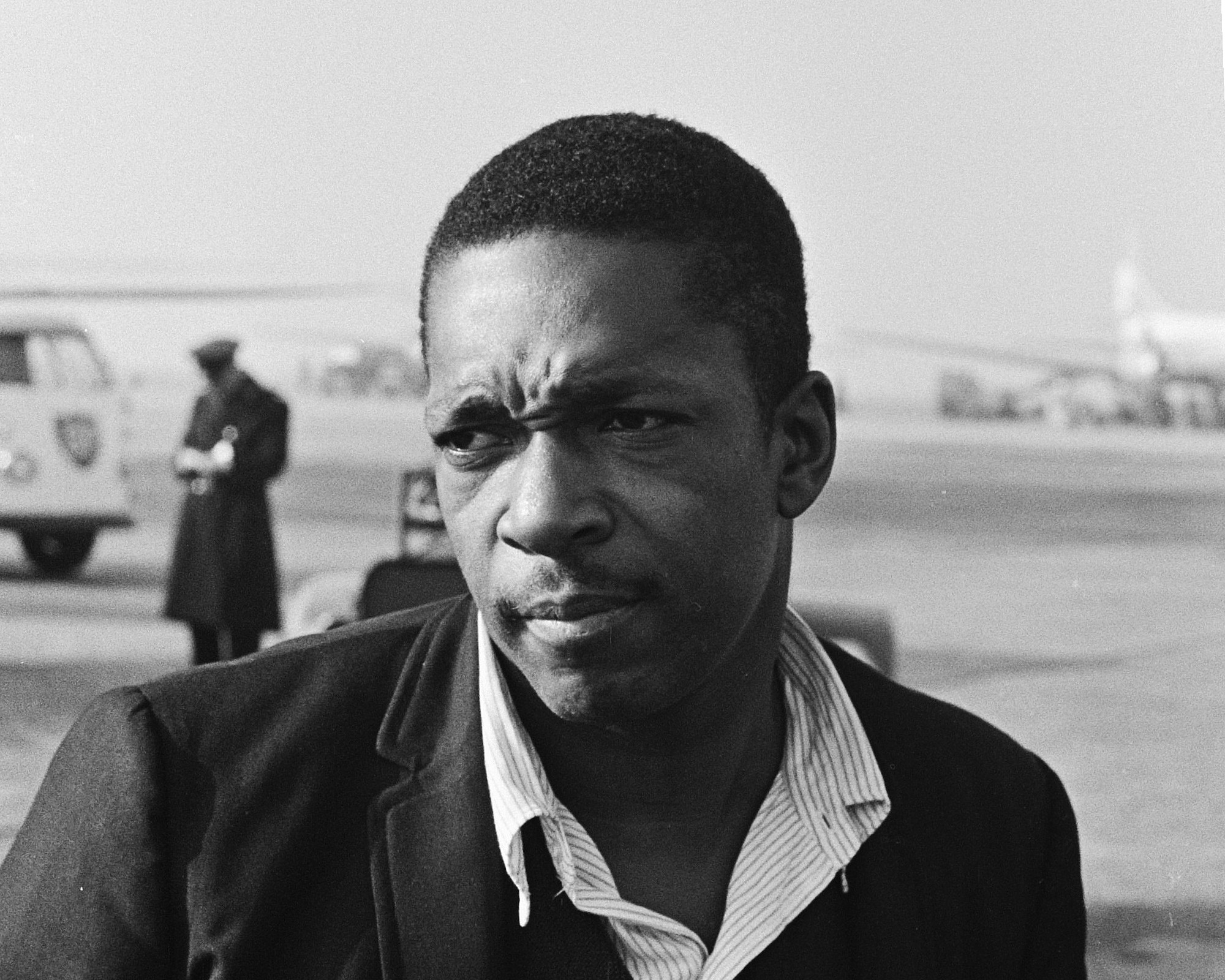

John Coltrane found God when he almost lost his life. In 1957, heroin and alcohol addiction had cost the legendary tenor saxophonist his gig in Miles Davis’s band, and his reputation was up in the air. He locked himself away for a week to kick his habits cold turkey, and the withdrawal nearly took him out.
Had Coltrane died at 30 instead of 40, the world wouldn’t have had his classic recordings, like “Alabama” and “Naima,” Davis’s “So What,” or Duke Ellington’s “Sentimental Mood.” Meanwhile, generations of musicians would have lost their roadmap for using their music to navigate their spiritual journey.
Thankfully, Coltrane emerged from the valley of the shadow of death victorious in the autonomy of his body and mind. “During the year 1957, I experienced, by the grace of God, a spiritual awakening which was to lead me to a richer, fuller, more productive life,” Coltrane wrote in the liner notes of his landmark 1965 album, “A Love Supreme.” “At that time, in gratitude, I humbly asked to be given the means and privilege to make others happy through music. I feel this has been granted through His grace. ALL PRAISE TO GOD.”
Coltrane attributed his rebirth to God, but his vision of God wasn’t typical, to say the least. The son of a preacher, his heart and mind were open to a menagerie of religions and beliefs, from Christianity and Buddhism to Ancestral Worship and Hinduism later, as his adulthood progressed. His music — innovative, transcendental, and popular — was a reflection of his growing amalgamation of faiths. The masterpiece “A Love Supreme” can certainly be interpreted as Coltrane’s love letter to a Christian God, since “Psalm” is a title of one of the four movements. However, when examining the other movement titles, “Acknowledgement,” “Resolution,” and “Pursuance,” it’s evident that Coltrane’s image of God involved a personal gathering of sources.
It is no accident that the final song of “A Love Supreme” is “Pursuance,” and the following year, Coltrane released an album called “Ascension.” After piling up classic albums and crossover recordings like “Blue Train,” “Giant Steps,” and “My Favorite Things,” Coltrane was more concerned with discovering new territory and less with appeasing his audience. For him, it was all part of his spiritual journey.
“There are always new sounds to imagine: new feelings to get at,” Coltrane wrote in the “Ascension” liner notes. “And always, there is a need to keep purifying these feelings and sounds so that we can really see what we’ve discovered in its pure state. So that we can see more clearly what we are. In that way, we can give to those who listen, the essence — the best of what we are. But to do that at each stage, we have to keep on cleaning the mirror.”
A century since his birth, the legacy of Coltrane’s unbridled instrumentation, his mathematical approach to composition and melody, and how his religious education played out through his catalog is his profound effect on so-called jazz. When backing away from the mirror, though, it’s evident that so much in the frame of said mirror bears a similar reflection as Coltrane. In a world with so many faith systems, it’s hard for some to know what the truth is. For Coltrane, it was all true, and cleaning the mirror was his way of explaining how the reflection of mankind is constantly being dirtied and clouded with manipulation and closed-mindedness. The man gave permission to so many Black musicians beyond jazz to not only include non-traditional religions in their music, but chronicle their development and changing beliefs.
In the 1950s and 1960s, the Black church was at its most powerful in terms of its influence on the Black family, Black values, and Black politics. While Muslims were increasing in the 1960s thanks to the growing prominence of the Nation of Islam, it was rare for the Black man or woman to stray far from the edict of Christianity. Coltrane, early in childhood, was a product of this way of life, born the son of a preacher in North Carolina. However, after his near-death experience in 1957 in kicking his substance abuse habits, his spiritual awakening prompted him to search and ingest what was out there.
To be fair, pianist Sun Ra had challenged conventional fusions of traditional religion in his music before Coltrane, but whereas Sun Ra was an icon of Afrofuturism, Coltrane was more grounded and relatable in the ways he was fusing spirituality and mysticism into his music.
Coltrane’s integration of different worldly influences in his music coincided with that of people like the Beatles and the Rolling Stones, who were simultaneously incorporating Eastern influences into their brand of pop music. In fact, Coltrane recorded a 29-minute composition, “Om,” that borrowed from Hindu scriptures and the Buddhist “Tibetan Book of the Dead.” John Lennon would go on to incorporate his own interpretations of the “Tibetan Book of the Dead” in the Beatles’ 1966 track, “Tomorrow Never Knows,” and he himself used the term “Om,” inspired by chantings he learned under the Maharishi, in the 1969 Beatles song “Across the Universe.”
Sure, Coltrane and the Beatles were on similar wavelengths when it came to injecting numerous religious influences into their music, but, except for the Beatles’ George Harrison, it was not a reflection of how they were changing their lifestyles and spiritual beliefs. Coltrane was genuine in the way he questioned and explored religion for his life outside of music.
Coltrane went beyond fusing the esthetic and tonal properties of Indian or African music into pop, rock, or jazz. He was finding himself, and the music reflected that traverse into the wilderness. Without Coltrane’s pioneering work, many artists after him might not have been as bold in using their art to illustrate their spiritual curiosities and personal journeys with religion.
Three years after Coltrane’s death, pianist Horace Silver composed the music and wrote the lyrics for his “The United States of the Mind” album trilogy (1970–1972), which culminated with the title track of the third album, “All.” Silver, who spoke later about his own interests in “Metaphysics and Indian philosophies, and Yoga philosophies,” wrote and sang lyrics that show little doubt that Coltrane’s approach had helped provide a template for him to follow:
Through many incarnations the All has brought about
The message of the oneness we all must soon find out
Hari Rama, Hari Krishna, Allah and Buddha too
Jehovah and Jesus Christ, just to name a few.
The final realization that everything is one
Will take a bit of doing but yet it must be done
Spirit, all is spirit, spirit is all there is
No matter what form it takes, be it yours, hers or his.
Coltrane’s unveiled search for spiritual truth can be heard in the music of Earth, Wind & Fire. Maurice White, the band’s founder and leader, revered Coltrane and even played with him as a sub for drum great Elvin Jones. Noticing how Coltrane dabbled in numerous belief systems, White was empowered to fuse his own curiosities about world religions, astrology, and mysticism into his own band. When listening to songs like “Fantasy,” “Jupiter,” “In the Stone” and “Burnin’ Bush,” as well as observing the gatefold artwork of albums like “Spirit,” “All N’ All” and “I Am,” it is clear that Earth, Wind & Fire were able to crack into the mainstream in the 1970s with their hodgepodge of spiritual exploration.
During the time Earth, Wind & Fire were ascending, Stevie Wonder was also using his music to reveal his own spiritual wonderment. On his Grammy-winning 1973 album “Innervisions,” Wonder was musing about not his fears of an impending apocalypse of mankind hastened by the collective injustice against the disenfranchised, but spiritual solutions to combat this imminent Armageddon. On “Jesus Children of America,” Wonder fused tenets of Christianity and transcendental meditation, something that even today seems quite off-putting. Wonder, according to flautist Bobbi Humphrey, was an avid listener to Coltrane albums as a teenager, so he also was influenced to fuse different spiritual melodies together aurally. On 1976’s “Pastime Paradise,” he juxtaposed Hari Kristina chanters with a gospel choir singing “We Shall Overcome,” further illustrating how much differing cultures can literally and figuratively harmonize.
Coltrane’s influence seeps well into hip-hop culture as well. Singer/rapper Lauryn Hill created her 1998 solo debut, the diamond-certified “The Miseducation of Lauryn Hill” with religion as its formative foundation. Throughout the album, Hill, an admirer of Coltrane’s wife and influential harpist/pianist Alice Coltrane, wrote lyrics that interwove several different Abrahamic texts, sourced from the Bible, Torah, and Qur’an. At times, references of all three scriptures were used in the same song, like the No. 1 single, “Doo-Wop (That Thing),” where Hill rhymed, “Talking out your neck, saying’ you’re a Christian/A Muslim, sleeping with the jinn/Now, that was the sin that did Jezebel in.”
There may be no other contemporary rapper today who leans into religion as unapologetically as Kendrick Lamar. The Compton MC has worn his love for God and Christ on his sleeve and on his records for his entire career thus far, dating back to songs like “Kush and Corinthians” and “Sing About Me, I’m Dyin’ of Thirst.” Lamar delved deeply into incorporating elements of jazz into his 2015 album, “To Pimp a Butterfly,” collaborating with Coltrane devotees like Kamasi Washington and Terrace Martin. With his 2017 album, “DAMN,” Lamar rhymed about Black Israelites. On the songs “Ya” and “Fear,” the 27-time Grammy winner quoted the Bible’s Book of Deuteronomy, saying that Black Americans were the true descendents of the people of Israel who wandered in the wilderness in the Book of Exodus. Had it not been for the fearlessness of Coltrane, who knows if Lamar would have had the courage to step out on that kind of limb, thus winning a Pulitzer Prize for “DAMN”?
John Coltrane’s non-complacency when it came to his music is what made him among the very best and most respected among his peers and revered by his fans. It was his commitment to using his music as a conduit to his growing curiosity about spirituality and religion’s role on the Earth and in his own existence that first alienated him from his fan base, but ultimately wound up deifying him in death. His musical apostles, from Horace Silver to Lauryn Hill, carry on this heritage, built on intellectual inquisitiveness and spiritual respect.
Or as Coltrane put it: “No matter what … It is with God. He is gracious and merciful. His way is in love, through which we all are. It is truly — A LOVE SUPREME.”
The post Commentary: John Coltrane gave Black artists a roadmap for tracking their spiritual evolutions through music appeared first on New York Amsterdam News.