Uganda Shilling Gains as Dollar Demand Eases
The Uganda shilling registered gains this week, a move largely attributed to subdued demand for the currency amidst inflows from commodity exporters, remittance firms and charity organizations. The local unit was seen trading stronger at 3765 / 3775 levels compared to the week’s opening of 3778 / 3788 levels. Looking ahead, the shilling is expected […] The post Uganda Shilling Gains as Dollar Demand Eases appeared first on Daily Star.
 Black News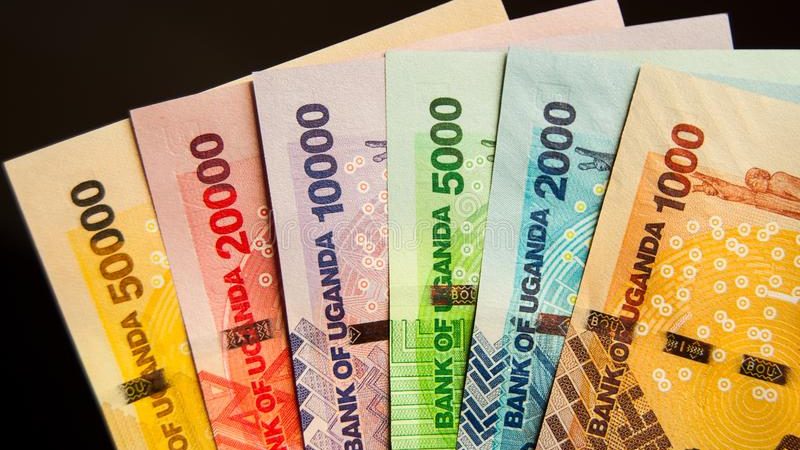
According to Richard Nsubuga, Ag. Head of Trading, CIB Markets at Absa Bank Uganda, money markets were liquid throughout the week, supported by coupon payments paid on Thursday.
This prompted the Central Bank to conduct open market operations during the week, issuing a series of Bank of Uganda bills to mop up excess liquidity from the system. Overnight and one-week rates averaged 10.00% and 10.58%, respectively.
“The USD/KES pair traded sideways during the week within a range of 129.30 – 129.80, supported by strong and balanced two-way flows. In the near term, the Kenya shilling is expected to trade within the 129.20–130.20 range,” he said.
The dollar index stayed near 99 on Friday after declining in the previous session, as news of a preliminary peace deal between the US and Iran reduced worries about inflation and potential future interest rate increases. Reports indicate that Washington and Tehran plan to prolong their ceasefire for another 60 days and start talks on Iran’s nuclear program, while also exploring the possibility of allowing unrestricted shipping through the Strait of Hormuz. However, the proposal has not yet been formally approved by President Donald Trump.
At the same time, the latest US PCE price index figures came in lower than expected, easing concerns that the recent surge in energy prices would significantly drive up inflation. Despite this, markets still anticipate that the Federal Reserve will keep interest rates unchanged well into next year.
He noted that the euro remained stable at around $1.165 (Shs 4,369) in the final trading session of May and was heading for a monthly decline of about 0.8% against the US dollar. Market participants assessed the latest inflation figures from major European economies for signals on the European Central Bank’s policy outlook, while also keeping a close eye on progress in US-Iran peace negotiations.
The pound recovered from earlier declines to trade modestly higher above $1.34 (Shs 5,025), as investors assessed ongoing diplomatic developments in the Middle East alongside changing expectations for UK interest rates.
Brent crude futures dropped below $92 (Shs 345,000) per barrel on Friday and were still on course for a significant monthly decline after reports suggested that the US and Iran had provisionally agreed to extend their ceasefire by 60 days and potentially allow unrestricted passage through the Strait of Hormuz.
The report also indicated that Iran would remove all naval mines from the channel within 30 days. However, it emphasized that President Donald Trump has yet to approve the proposed deal, while Vice President JD Vance warned that it is still unclear whether or when a final agreement with Iran will be reached.
“The global oil benchmark has fallen by nearly 15% this month as optimism increased that some form of agreement could be achieved, though key challenges persist, including Iran’s nuclear program, control over the Strait of Hormuz, and the issue of sanctions relief,” he said.
Meanwhile, gold prices continued to track headlines in the Middle East, recovering in the previous sessions and settling at USD 4,500 (Shs 16,875,000) per ounce on Friday.
The post Uganda Shilling Gains as Dollar Demand Eases appeared first on Daily Star.