Lower Fulladu West MP pleads patience, says residents in provinces endured 60-year blackout
Defending the government’s handling of the situation, Mballow accused some politicians of exploiting the crisis for political purposes and argued that the current outages should be viewed in a broader national context. “Fifty years since The Gambia attained independence, some of the communities in this country have never seen electricity. Thanks to the executive today, they are seeing electricity,” he told lawmakers. While acknowledging the difficulties caused by the outages, Mballow said the situation should not be turned into a political battle. “If it is happening only two weeks, let’s accept that, as Gambians, this is a problem. But let us not come and use political gimmicks in this House,” he said. The lawmaker insisted that the government had been working around the clock to resolve the crisis, and rejected claims that the executive was ignoring public suffering. “The Gambian people know that the executive is concerned day in, day out,” he said. “They are doing all it takes to ensure that the electricity crisis is taken care of,” he said. However, it was his comparison between urban and rural experiences with electricity that drew the strongest reaction. “If you go to provincial Gambia today, everybody is enjoying 24-hour electricity where electricity is. Those people have been seated in this country paying tax daily. For 60 years they were in blackout, and they bore it,” Mballow said. He then appealed for understanding from residents affected by the current outages. “We are saying sorry to the Greater Banjul Area residents, but they should understand that their brothers and sisters in the same country, the same taxpayers, have been going through this,” he said. Mballow maintained that the electricity crisis should unite Gambians rather than divide them, arguing that national problems require collective solutions rather than political point-scoring.
 Black News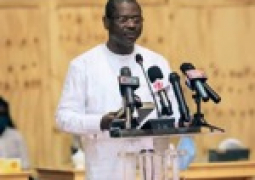
Defending the government’s handling of the situation, Mballow accused some politicians of exploiting the crisis for political purposes and argued that the current outages should be viewed in a broader national context.
“Fifty years since The Gambia attained independence, some of the communities in this country have never seen electricity. Thanks to the executive today, they are seeing electricity,” he told lawmakers.
While acknowledging the difficulties caused by the outages, Mballow said the situation should not be turned into a political battle.
“If it is happening only two weeks, let’s accept that, as Gambians, this is a problem. But let us not come and use political gimmicks in this House,” he said.
The lawmaker insisted that the government had been working around the clock to resolve the crisis, and rejected claims that the executive was ignoring public suffering.
“The Gambian people know that the executive is concerned day in, day out,” he said. “They are doing all it takes to ensure that the electricity crisis is taken care of,” he said.
However, it was his comparison between urban and rural experiences with electricity that drew the strongest reaction.
“If you go to provincial Gambia today, everybody is enjoying 24-hour electricity where electricity is. Those people have been seated in this country paying tax daily. For 60 years they were in blackout, and they bore it,” Mballow said.
He then appealed for understanding from residents affected by the current outages.
“We are saying sorry to the Greater Banjul Area residents, but they should understand that their brothers and sisters in the same country, the same taxpayers, have been going through this,” he said.
Mballow maintained that the electricity crisis should unite Gambians rather than divide them, arguing that national problems require collective solutions rather than political point-scoring.