David Oyelowo’s ‘Slave Accent’ Comment Exposed An Ugly Diaspora Insult About Southern Black Speech
This wasn't about Oyelowo discussing the nuances of dialect; it was how he described his idea of Southern Black blackness that ticked folks off.
 Black News
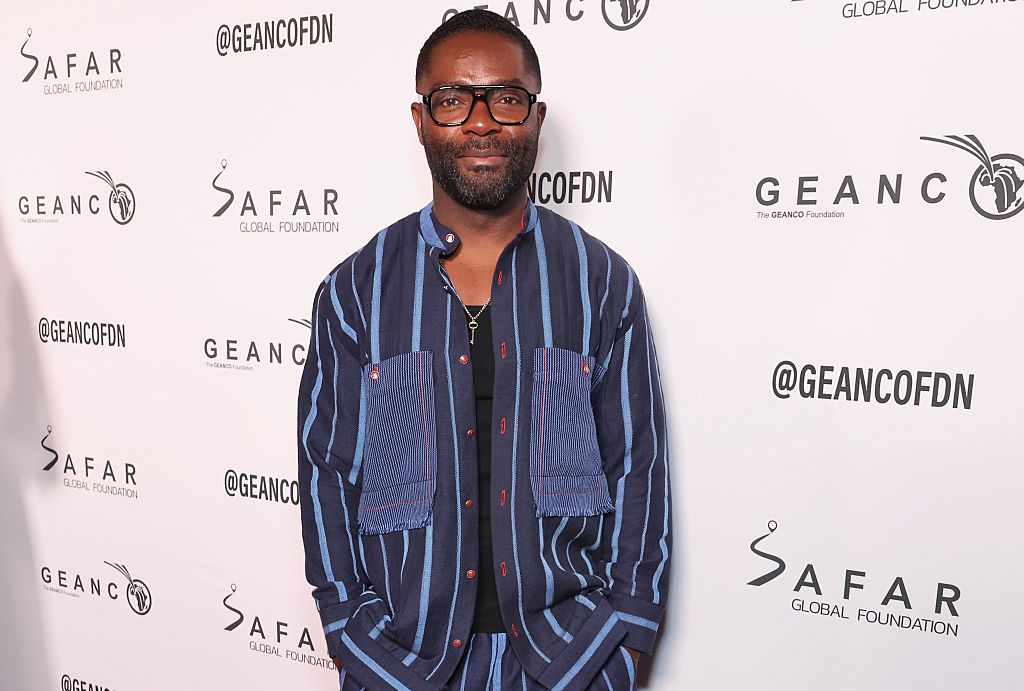
So, according to British-Nigerian actor David Oyelowo, southern Black speech is just a Nigerian accent damaged by slavery.
That’s fascinating, coming from a man whose people speak with the King’s English lodged in their throats and wearing the empire’s language like ancestral jewelry while pretending colonialism hasn’t shaped their own linguistic world or their views of Black Americans.
And this is exactly why a viral clip of Oyelowo on the One54 Africa podcast has triggered such backlash, before he later issued an apology via an Instagram post.
“I want to apologize unreservedly to all those who were rightly offended by my comments on the One54 Africa podcast regarding Southern Accents. It was the wrong thing to say and it is not how I feel,” Oyelowo wrote.
“I have nothing but deep respect and great love for Black people of all kinds, especially those from the American South,” he continued. “Reducing a dialect born from the richness and resilience of Black Southern culture to anything less was careless and wrong.”
“All I truly care about is lifting up my Black brothers and sisters from all places through my work and my words. Please forgive my failure to do that in this instance.”
Oyelowo, who has portrayed Black American characters including Martin Luther King Jr. in Selma, Bass Reeves in Lawmen, Louis Gaines in The Butler, Preacher Green in The Help, and Joe “Lightning” Little in Red Tails, was asked about African actors playing African Americans and how he’s able to move smoothly through different accents. But he didn’t just discuss the nuances of dialect. It was how he described his idea of Southern Black blackness that ticked folks off.
As Oyelowo performs the Black American accent, he slowly drops his head as his voice gets lower and slower, with a heavier Southern-sounding drawl. He stretches the vowels, rounds the words, and gives the delivery a subdued, almost bowed slave quality.
He said, “If you take the Nigerian accent, like this, and you slow it down, you put a lot of slavery in there, and then you start to put a little bit of subservience in it, this is what starts to happen to the Nigerian accent.”
Seasoned with subservience, y’all.
And then after this performance, he returns to a Nigerian accent. His body straightens, and his chest opens, his face brightens, the pitch and energy of his voice lifts, and the consonants snap back into a brisk Nigerian cadence. We literally witness a linguistic liberation from southern Black bondage as African fluency is restored.
“Now we are free! Now we are free! We are released,” he says.
That performance was giving the courtroom scene in the movie Amistad, where Cinqué rises to his feet with his chains shaking and cries, “Giv us, us free!” Cinqué’s cry is broken English forced through captivity, while Oyelowo’s bit made Black southern speech the broken thing that needs liberating.
The podcast hosts laughed along and seemed awed by the actor’s charming display of linguistic range. But strip away the humor for a moment, and what you’ll hear underneath all that dialect work is a man casually giving voice to a familiar old diaspora condescension and insult that says southern Black folks were damaged by bondage, slowed by suffering, bent into servility, and our speech is a degraded inheritance. Never mind the fact that Black Americans created one of the most powerful, adaptive, and influential linguistic traditions in the modern world.
Oyelowo’s comments treated southern Black language as something that’s broken rather than as creation. Enslaved Black folks in the American South didn’t simply lose Africa, or take a Nigerian accent, drag it through southern plantations, sprinkle in “subservience,” and come out speaking “broken” anything. This is how people who don’t study history think when they don’t know how language, slavery, or Black survival worked.
I’m sure Oyelowo has to know that enslaved Africans were not a monolithic people. Surely he knows they came from many ethnic, linguistic, regional, political, and spiritual backgrounds. Under brutal conditions on this side of the Atlantic, they forged new forms of speech, music, coded communication, religion, and humor. These were necessary tools to preserve their humanity and survival. And so southern Black American speech is not “Nigerian plus trauma.” It is a distinct cultural formation.
Linguistic scholars will tell you that enslaved Africans in the American South made languages and dialects inside the chokehold of empire and bent English into something new that carried African syntax, rhythm, tonal patterns, and meaning-making systems into the belly of a language that was never meant to free them. They made jokes white people could not hear. They made prayers laced with resistance plans that white people could not decode. They made songs like “Follow the Drinking Gourd,” that sounded like submission to enslavers and like escape routes to each other.
Does any of this sound like “subservience” to you? No, that is Black genius under the evils of white captivity.
Not to mention, subservience is not the same thing as enslavement. Enslavement was a condition violently imposed on Black people. Subservience, on the other hand, is a posture, a personality, and a willingness to bow. So, invoking subservience in his comment is both historically careless and politically dangerous because it turns the condition that was forced upon Black southerners into a defect lodged inside us.
For generations, Black folks in the south and beyond have been told by schools, employers, courts, and media that our speech is broken, lazy, ignorant, backward, ghetto, unprofessional, or inferior. Intraracially, Black elites have sometimes distanced themselves from our speech patterns. Some African and Caribbean communities have too often treated it as evidence that they are the more educated, disciplined, good Blacks who escaped whatever disease they imagine slavery left in us.
That is the backdrop of this controversy that we cannot ignore. Let’s go there because this controversy is not just about phonetics. It is also about the disturbing recurring diaspora fantasy that proximity to Africa, Britain, or immigrant striving somehow makes one Black person more intact than another. And at the bottom of that hierarchy, too often, sits the African American descendant of slavery who is supposedly too irreparably damaged, slow, culturally deficient, and trapped in the plantation past. Never mind that we have always managed to build creation after catastrophe.
And cannot ignore that this controversy is happening amid a much bigger casting debate over Black representation in Hollywood. African Americans keep asking: Why are our stories, ancestors, civil rights icons, and our historical struggles so often performed by Africans who may not fully understand the cultural inheritance behind them? And hearing Oyelowo’s comments is making some folks say, “See! This is exactly what we’re talking about.”
Cynthia Erivo, another British-Nigerian actress, sparked controversy when she was cast as Harriet Tubman, and old tweets resurfaced in which she mocked a “ghetto American accent.”
The Nigerian pop star Burna Boy sparked controversy from a Guardian interview where he was asked why his music was more popular with Black people in the UK versus Black Americans.
He said: “Most of the people from the UK, if not all the Black people from the UK, and the people of colour – they all know where they’re from. They know exactly where their roots are.” Unfortunately, the brothers in the US have been stripped of their whole knowledge of self. So it’s a bit harder for them, you know?”
Put all of them together, Oyelowo, Erivo, Burna Boy, and what you’ll see is not just a few careless celebrity comments but a resurfacing pattern inside the Black diaspora, where African Americans are condescendingly talked about as the damaged cousins of modern Blackness, especially southern Black descendants of slavery. We are supposedly rootless, uncultured, linguistically broken, historically confused, and forever marked by slavery as deficiency rather than survival.
Despite sneering down at Black American language and identity as something damaged, those same people see our culture as useful, cool, and profitable. That’s because at the end of the day, they know that our speech is not some failed African accent. It is one of the most powerful cultural engines this country has ever produced. America has stolen from it, sold it, danced to it, legislated against it, laughed at it, and then built billion-dollar industries around it.
Everybody wants the flavor except when it is attached to actual Black American people. That contradiction is exhausting.
So when Oyelowo or anybody else says you get to a “slave accent” by adding slavery and subservience to a Nigerian accent, please reject this nonsense.
You get to southern Black speech patterns through the history of conquest, bondage, migration, humiliation, resistance, invention, memory, and love. You get to it through millions of children born into captivity, but still learned to play with words. You get to it through grandmommas who could turn one syllable into a verdict.
You get to it through people who made a language, and still the places we were stolen from and the places we made anyway. Our language carries what the archive cannot hold, the tremor of the lash, and the laughter after midnight. That ain’t brokenness or subservience. That’s the audacity of Black survival, always talking back.
SEE ALSO:
Jeff Metcalf Called Karmelo Anthony A ‘Watermelon Felon’
America Still Wants To Snatch Our Black Children From The Future